News, Ideas, Tips, Great Fixes ......

Got something on your mind? Throw it out.

If you think it's important...... post it.

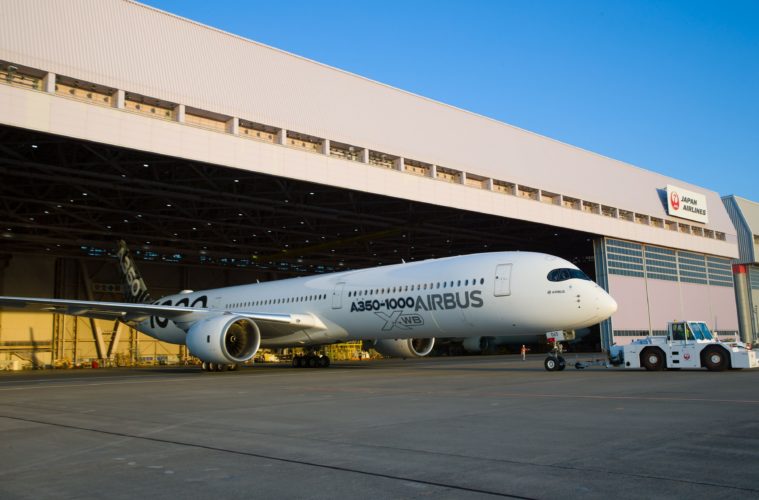
It's Airbus 13,000,000,000 - Boeing 0, On The First Day Of The Paris Air Show

From Zero Hedge

a350_619

By Tyler Durden

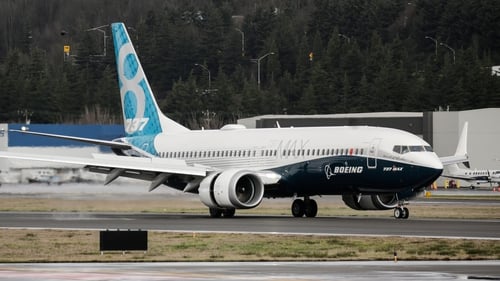
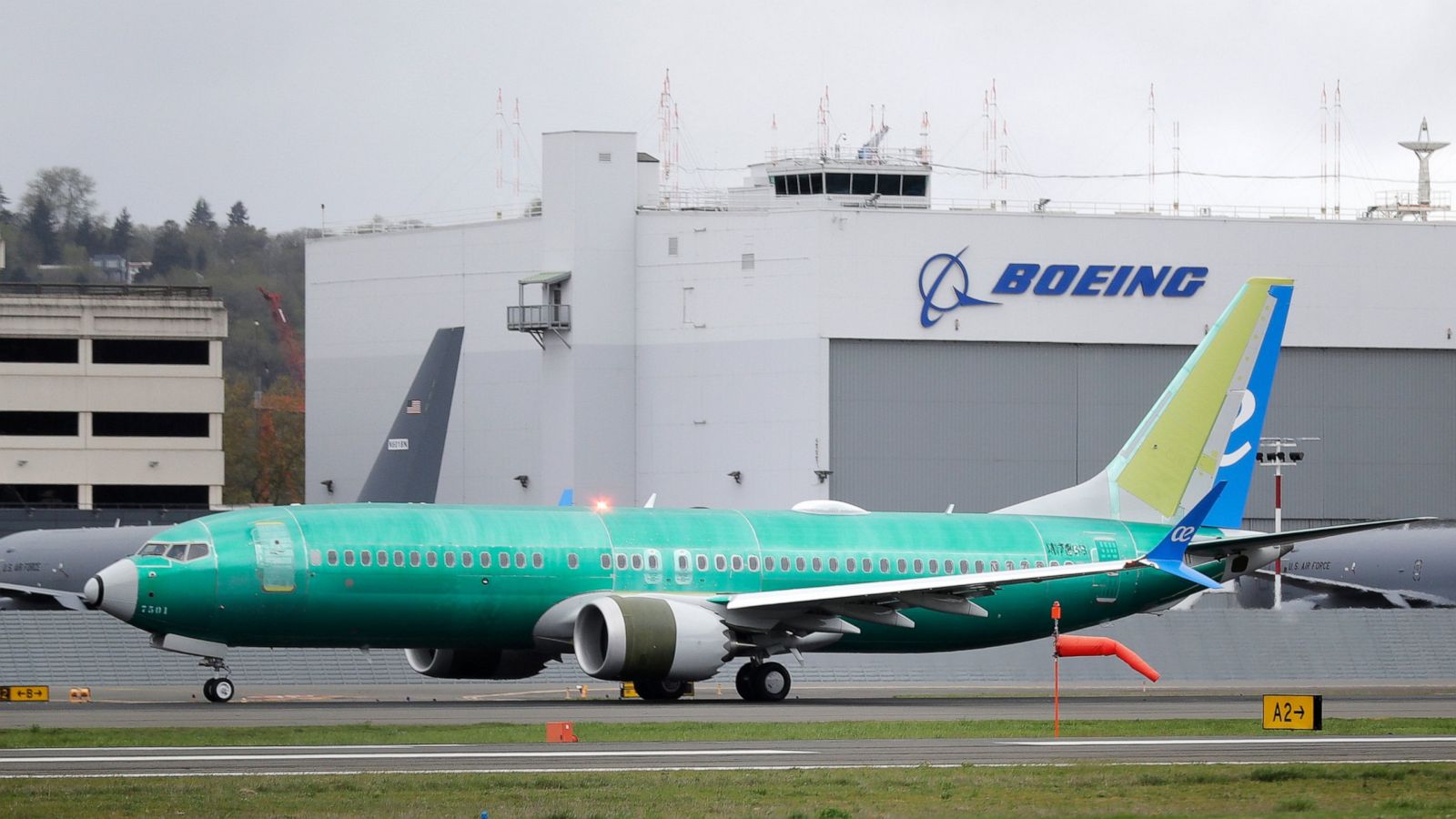
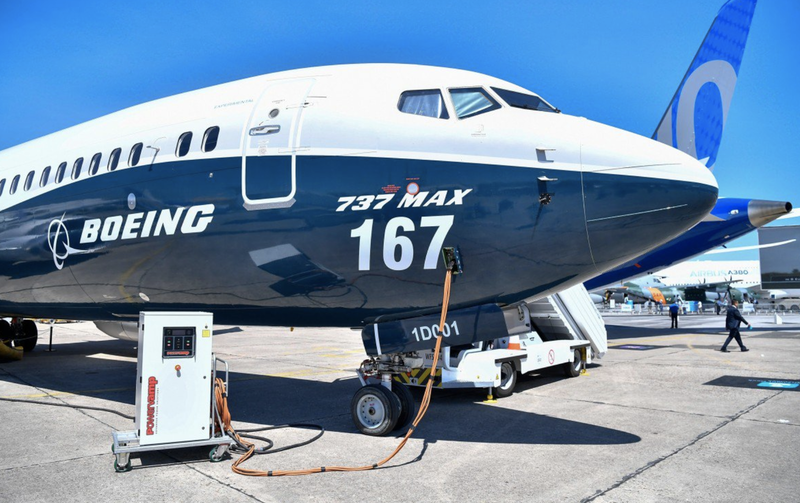
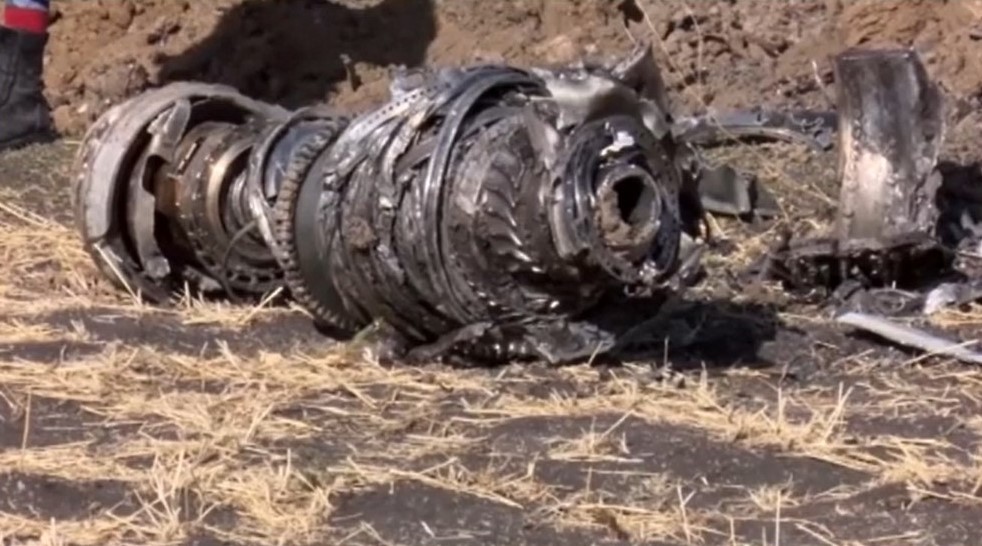
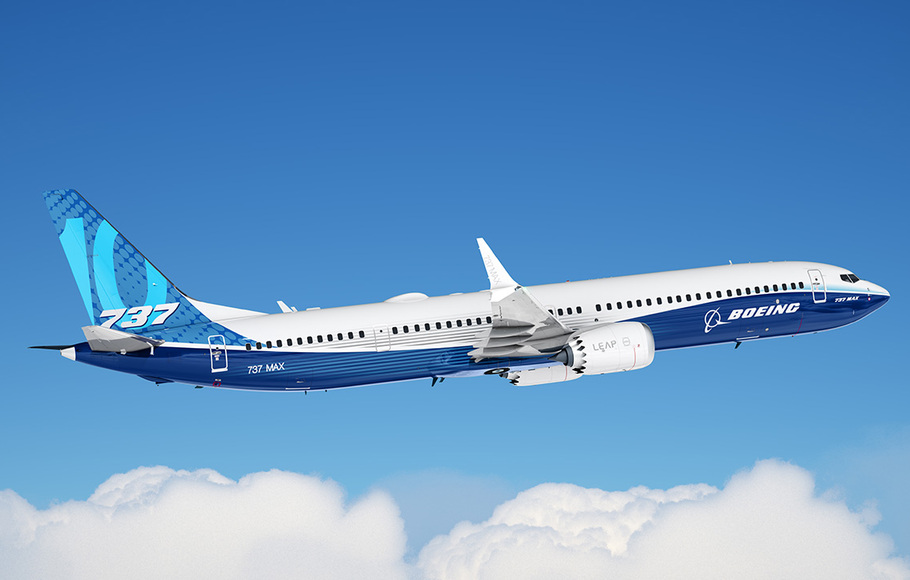
As the jarring truth about Boeing's "cost-cutting above all" philosophy involving the company's deadly, ill-fated 737 MAX (or whatever the company's ill-fated plane may be called soon) receives an ever-wider public appreciation, the company is finding it increasingly difficult to do business as usual.

Take the Paris Air Show, traditionally the venue where the world's largest aircraft makers lock in deals worth tens of billions of dollars. Well, the first day of the 2019 edition of this boondoggle couldn't have gone any worse for Boeing, and alternatively it couldn't have been better for Airbus, which locked in $13 billion in orders for new jets.

Boeing's tally? $0.

Among those lining up to order Europe's iconic (if subsidized) airlines included Air Lease Corp., the giant US leasing company, which agreed to buy planes worth $11 billion before customary discounts, including the new A321XLR. Virgin Atlantic also bought eight A330 wide-bodies with options for six more.

And that's just the beginning: according to Airbus CEO Guillaume Faury, "there’s room to run up the score", as Bloomberg reports, and with good reason: while Boeing is scrambling to drag the name of its workhorse 737 Max out of the mud as it languishes on the tarmac - literally - after it was idled indefinitely in March after two deadly crashes, Airbus said it was seeing “very strong demand” for its rival A320 family of single-aisle jets.

“As far as we are concerned, you should expect a very positive Paris Air Show with a lot of orders,” Faury said in an interview with Bloomberg Television. Boeing... not so much.

Which is ironic, because just one year ago, the tables were turned. Back then, Airbus, having just gone through a jarring management transition - fallout from a multi-year bribery investigation - announced 431 orders valued at $62 billion at the alternating Farnborough air show in the U.K. That lagged Boeing’s commitments for 528 jetliners valued at $79 billion through the week last year.

Of course, most of the Boeing buyers are now considering whether to cancel their orders depending on what the fate of the MAX will be.

So it is now Airbus' moment in the sun: according to Bloomberg, "the Air Lease order in particular provided a vote of confidence in the A321XLR, a twin-engine jet that can travel 4,700 nautical miles, more than any other narrow-body on the market. The plane is positioned as a more fuel-efficient successor to Boeing’s discontinued 757, able to connect smaller cities that can’t support service by big wide-body jets."

The model is also meant to take the wind out of the sails of Boeing’s planned “new midmarket airplane,” or NMA. That jet, dubbed the 797 by analysts, is on hold while the Chicago-based company works through the Max crisis. Airbus’s decision to start sales of the XLR could help sway customers who had been looking at both options.

Airbus’s Air Lease deal also included the A220 plane that the Toulouse, France-based company acquired last year from Canada’s Bombardier Inc. and has been marketing harder, providing a further fillip.

Defiant, Boeing CEO Dennis Muilenburg, gave no ground on either the Max or the NMA, saying that the former will return to service before the end of 2019 and remain the backbone of the company’s short-haul strategy for years to come, in a Bloomberg Television interview. He may be overly optimistic if the best strategy Boeing can come up with is rebranding the plane in hopes of putting its troubles away.

As we reported earlier, CFO Greg Smith said - in all seriousness - that the Max’s branding could be dropped depending on an assessment of consumer and airline sentiment. Perhaps observing the uniform derision that greeted the news, Boeing emphasized in a subsequent statement that it had no immediate plans for a name change.

But if the first day was bad, the final airshow total will be devastating for Boeing. According to aviation consultancy IBA Group, firm and outline orders will total 575 planes, with 435 going to Airbus. That would compare with close to 1,000 at Farnborough.

"Like Farnborough 2018, the Paris Air Show started relatively slowly," Morris said, suggesting Monday’s action would be eclipsed in coming days. "Perhaps the fashion is now for Day 3 to be the high-water mark."

Which begs the question: yes, buyers may be recoiling at the thought of buying a Boeing, so to speak, but just how much of a global collapse is there in aircraft demand right now, and is that an indicator that the global recession has - as Morgan Stanley mused earlier today - indeed arrived?

Continue reading
  2918 Hits

Is the Second Antonov AN-225 Close to Completion?

From Aviation Tribune

1antonov225_619

By Aviation Tribune

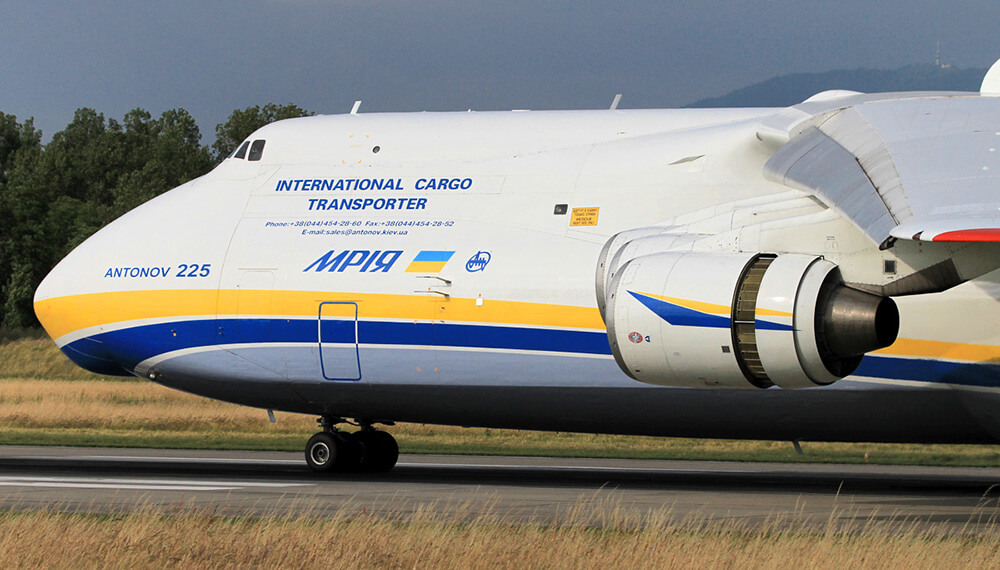
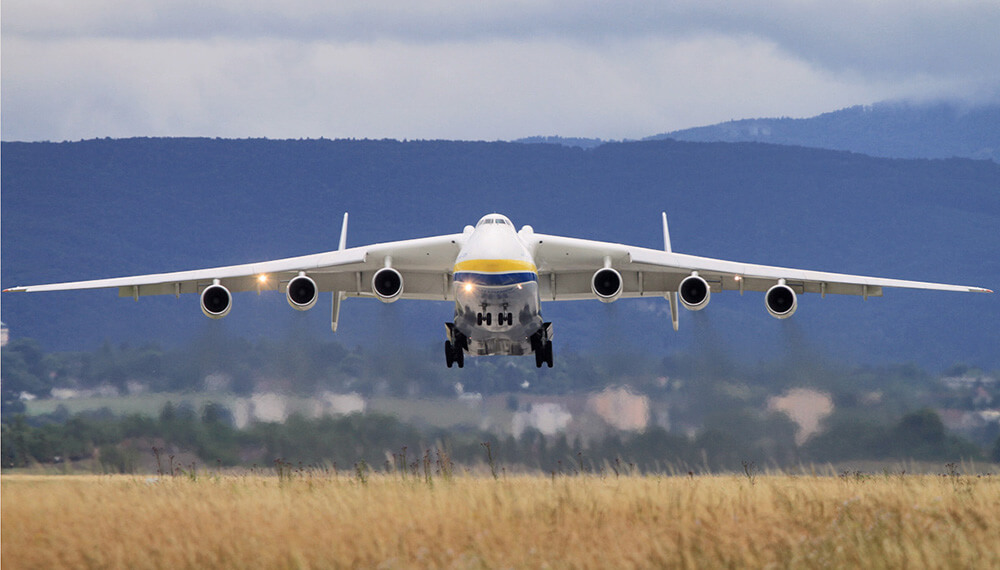
The Antonov AN-225 is known to be the largest cargo aircraft in the world. Developed in the 1980’s, so far just one model has been introduced onto the market. However, a second Antonov AN-225 which has been in development since the cold war, is now speculated to be near to completion.

So, just how close to completion is the second Antonov AN-225 and why has the aircraft generated such a huge reputation?

What is the Antonov AN-225?

The original Antonov AN-225 first took to the skies in 1988. The manufacturer named the plane “Mriya”, which translates to “Dream” in Ukrainian. It is the largest cargo plane ever to be built and has remained in service since its launch.

It was originally created to transport spacecraft as the United States and the Soviet Union were interlocked in a space race at the time. There wasn’t any aircraft large enough to transport the large equipment and spacecraft, so Antonov was tasked with building one.

It took just three years to build Mriya, and she successfully completed her original mission of delivering a Buran spacecraft over to Baikonur. Even decades later, Mriya remains the heaviest and largest cargo plane ever built. As it is so large, the pilots flying the plane need to undergo specialist training. This ensures they can successfully deal with the challenges which come from trying to manoeuvre the aircraft.


2antonov225_618


As the first AN-225 was successful, the Soviet Union planned to build an additional three models. Work began on the second in 1989 but was doomed when the Soviet Union collapsed in 1991. Although work continued on the aircraft, it eventually came to a stop in 1994.

What is the current state of the second Antonov AN-225?

The second AN-225 has sat half-built in a Ukraine warehouse for decades. However, in 2016, China signed a deal with Antonov to restart the second plane production. The initial goal was to complete the construction of the second plane by 2019. So, now we’ve reached that milestone, is the plane any closer to completion?

As of September 2018, the second AN-225 remains incomplete. It is thought to be around 70% completed, but additional funding is required. Antonov is hoping to secure from £190 million to £270 million in order to finalise the build.

The benefits and specifications of the AN-225

The AN-225 boasts extraordinary benefits and specifications. With just one operational model in the world, it’s unsurprisingly gathered interest from some of the biggest plane charter companies such as Chapman Freeborn.

Powered by six turbo engines, the plane is capable of traveling 9569 miles with a full fuel tank. Considering its huge size, it’s surprisingly fast too. It benefits from a maximum speed of 528mph, and a cruising speed of 497mph. One of its most impressive specifications is the fact it can carry a massive 250 tonnes of weight.


3antonov225_618


The Antonov AN-225 is certainly an impressive model. If the second plane is finalized, it offers a lot of potential in the cargo sector. Being able to move large loads would reduce the need for multiple trips, in turn benefitting the environment. All of the parts of the second plane have been manufactured. It just needs the additional funding to finish the build. Experts claim that once there is a demand for this type of carrier, it won’t take long to finalize it and get it in the air.

Continue reading
  4902 Hits

FAA Says No Timetable For MAX Return

From Airline Ratings

737max_519

By Steve Creedy

There is no timetable to return the Boeing 737 MAX back to flight and the decision will depend solely on whether or not the jet is deemed to be safe, a senior US Federal Aviation Administration official has said.

The comments came as the FAA and representatives of other global regulators met in an attempt to get a co-ordinated response to the grounding of the 737 MAX fleet after two fatal accidents.

Elwell was asked whether airlines that had taken the MAX out of their schedules would need to revise their plans to take into account a longer wait.

“No they don’t need to make any changes to their plans,’’ FAA acting head Daniel Elwell told CNBC. “But they just need to know there isn’t a timetable for bringing the 737 MAX back to flight.

“There are only one criteria: when we’re done without analysis and it’s safe to bring let the 737 MAX fly again.”

Elwell said it could be a month, two months or longer but it would depend on the FAA’s analysis of a software fix for the aircraft’s flight control software.

The FAA would prefer the lifting of the grounding to be global but there has been pushback from some regulators, including the Europeans.

Elwell would not be drawn on whether pilots needed to take simulator training before flying the jet again and said training was still under review.

Elwell said it was the FAA’s responsibility to make the approval and it would be the first to do so regardless.

“And if the rest of the world agrees with our analysis, which is why we have 33 countries here today, then that is the goal,” he said.

Four audits and investigations are underway into the FAA’s certification processes but Elwell said the MAX had been certified in the same way every aircraft had been certified and had made aviation the safest mode of transportation.

“We rely on those processes but we don’t sit still on those processes,’’ he said.

“We’re constantly learning how to refine them. The American public and the world will see that the 737 MAX is safe when we return it to flight and they’ll get back on the MAX and fly it again.”

“Our team, our airline customers, and regulators place the highest priority on the safety of the flying public,’’ Boeing said in a statement.

“Once we have addressed the information requests from the FAA, we will be ready to schedule a certification test flight and submit final certification documentation.”

Continue reading
  3060 Hits

Did The FAA Drop The Ball While Certifying Boeing Anti-Stall Software Suspected In 2 Deadly Crashes?

From Zero Hedge

737_51519

By Tyler Durden

It seems like barely a day goes by without the Wall Street Journal or some other news organization publishing some alarming scoop about oversights or unexplained lapses at Boeing or the FAA during the certification process of the 737 MAX 8.

We've already learned that Boeing didn't realize until after the Lion Air crash back in October that a warning system meant to alert pilots when MCAS - the anti-stall software suspected in contributing to two deadly crashes - was malfunctioning had been made an optional feature on all of the 737 8s it sold to Southwest, its largest customer. And neither did the FAA.

Now, ahead of a hearing before a House Transportation subcommittee on Wednesday, WSJ is reporting that senior FAA officials weren't involved in the agency's review of MCAS, despite the unprecedented power delegated to the system in the new generation of 737s, because the agency viewed the system as a "non-critical safety risk."

Asked how it arrived at this conclusion, the agency told WSJ that Boeing hadn't designated MCAS as a critical system, and the agency simply took the aerospace company at its word.

  • The results, these officials said, also indicate that during the certification process, Boeing didn’t flag the automated stall-prevention feature as a system whose malfunction or failure could cause a catastrophic event. Such a designation would have led to more intense scrutiny. FAA engineers and midlevel managers deferred to Boeing’s early safety classification, the inquiry determined, allowing company experts to conduct subsequent analyses of potential hazards with limited agency oversight. Boeing employees who served as designated agency representatives signed off on the final design, according to people familiar with the findings.
  • The people who described the report didn’t specify what information and safety data Boeing shared with the FAA during the approval process, a topic that is a major focus of various ongoing investigations. Also at issue is whether agency officials performed any assessment on their own about the system’s initial safety classification, according to aviation industry officials, pilot unions and others tracking the investigations.

According to the report details leaked to WSJ, it's not clear why Boeing didn't designate MCAS as a 'critical system', though the FAA doesn't believe the company intentionally violated any certification rules. It's also unclear what kind of oversight process, if any, the FAA exercised over Boeing's decision. Boeing, in turn, said that it didn't feel the system was 'critical' - and that relying on a single sensor for flight data was appropriate - because pilots could simply switch MCAS off. Though that didn't pan out in practice, as the pilots of the Lion Air and Ethiopian Airlines flights both tried, and failed, to disable MCAS before the system forced their planes into a deadly downward dive.

  • The FAA’s administrative review, launched in March in the wake of the second fatal crash, didn’t uncover efforts by Boeing to flout certification rules or intentionally provide faulty data to the FAA, according to people familiar with the findings. But it remains unclear what formal processes the FAA had in place to conduct an assessment independent of the initial determination by Boeing—that MCAS wasn’t critical to safety and therefore didn’t warrant close FAA scrutiny.

Still, the FAA doesn't really have an explanation for why it delegated so much authority to Boeing.

  • In testimony to the Senate Commerce, Science and Transportation Committee two months ago, Mr. Elwell said detailed safety assessment and approval of the suspect system was "delegated," or handed over, to Boeing relatively early in the approval process under standard procedures. But he didn’t tell senators how that initial decision was reached or exactly what role FAA officials played in subsequent safety assessments.

The revelations come as Congress has subpoenaed representatives from pilots unions and the major airlines to testify. The DOT is also ramping up its own investigation. One thing is becoming increasingly clear: Before the grounding of the 737 MAX 8 is lifted, lawmakers are going to want answers to why these lapses in oversight occurred.

Continue reading
  2951 Hits

Why Boeing’s emergency directions may have failed to save 737 MAX

From The Seattle Times

737max_pedestal51119

By Dominic Gates

The pilots of the Ethiopian Airlines 737 MAX that crashed last month appear to have followed the emergency procedure laid out by both Boeing and the Federal Aviation Administration — cutting off the suspect flight-control system — but could not regain control and avert the plunge that killed all 157 on board.

Press reports citing people briefed on the crash investigation’s preliminary findings said the pilots hit the system-cutoff switches as Boeing had instructed after October’s Lion Air MAX crash, but couldn’t get the plane’s nose back up. They then turned the system back on before the plane nose-dived into the ground.

While the new software fix Boeing has proposed will likely prevent this situation recurring, if the preliminary investigation confirms that the Ethiopian pilots did cut off the automatic flight-control system, this is still a nightmarish outcome for Boeing and the FAA.

It would suggest the emergency procedure laid out by Boeing and passed along by the FAA after the Lion Air crash is wholly inadequate and failed the Ethiopian flight crew.

A local expert, former Boeing flight-control engineer Peter Lemme, recently explained how the emergency procedure could fail disastrously. His scenario is backed up by extracts from a 1982 Boeing 737-200 Pilot Training Manual posted to an online pilot forum a month ago by an Australian pilot.

That old 737 pilot manual lays out a scenario where a much more elaborate pilot response is required than the one that Boeing outlined in November and has reiterated ever since. The explanation in that manual from nearly 40 years ago is no longer detailed in the current flight manual.

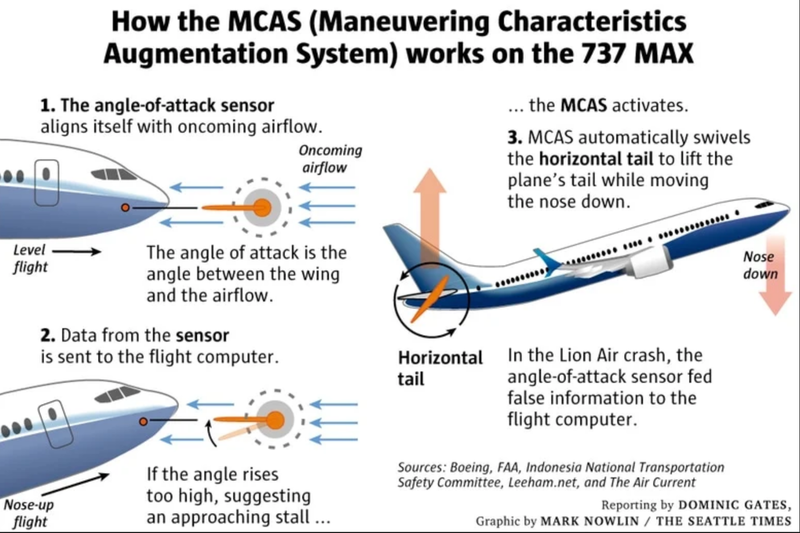
Just a week after the Oct. 29 Lion Air crash, Boeing sent out an urgent bulletin to all 737 MAX operators across the world, cautioning them that a sensor failure could cause a new MAX flight-control system to automatically swivel upward the horizontal tail — also called the stabilizer — and push the jet’s nose down.

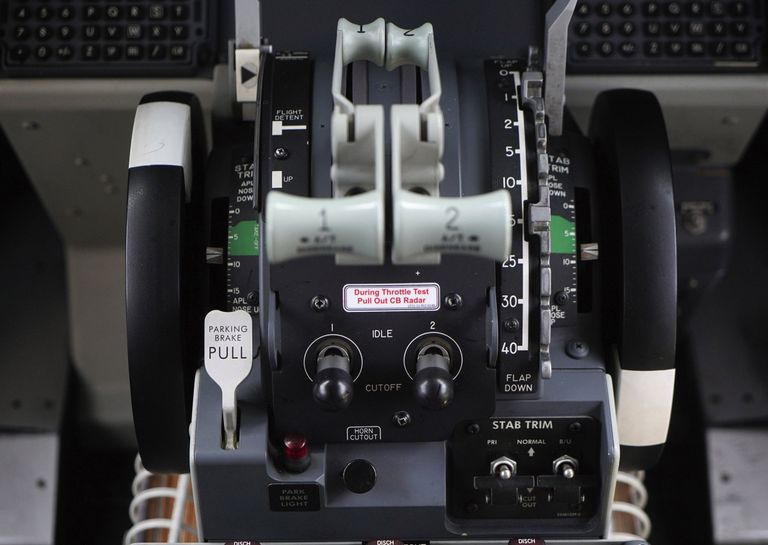
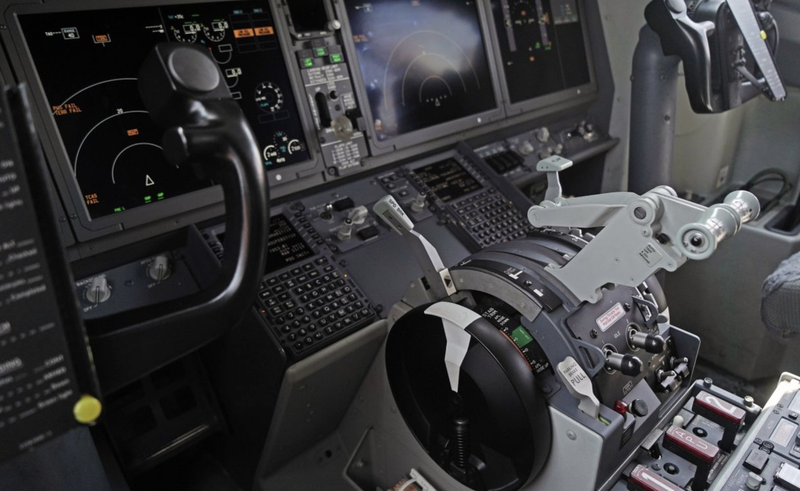
Boeing’s bulletin laid out a seemingly simple response: Hit a pair of cutoff switches to turn off the electrical motor that moves the stabilizer, disabling the automatic system — known as the Maneuvering Characteristics Augmentation System, or MCAS. Then swivel the tail down manually by turning a large stabilizer trim wheel, next to the pilot’s seat, that connects mechanically to the tail via cables.

Boeing has publicly contended for five months that this simple procedure was all that was needed to save the airplane if MCAS was inadvertently activated.
 

737max_51119


In a November television interview on the Fox Business Network, Boeing Chief Executive Dennis Muilenburg, when asked if information had been withheld from pilots, cited this procedure as “part of the training manual” and said Boeing’s bulletin to airlines “pointed to that existing flight procedure.”

Vice president Mike Sinnett repeatedly described the procedure as a “memory item,” meaning a routine that pilots may need to do quickly without consulting a manual and so must commit to memory.

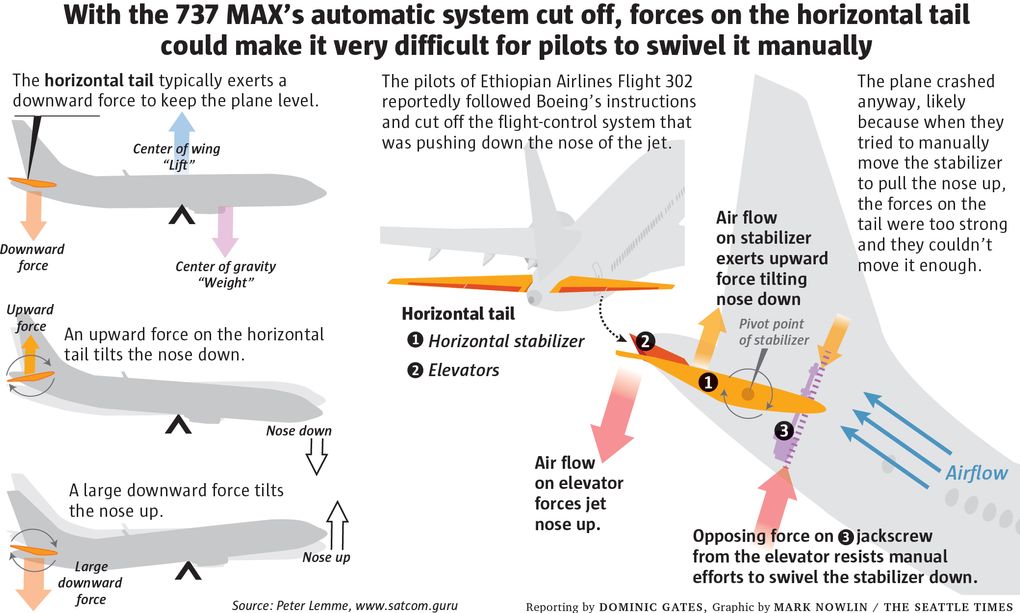
But Lemme said the Ethiopian pilots most likely were unable to carry out that last instruction in the Boeing emergency procedure — because they simply couldn’t physically move that wheel against the heavy forces acting on the tail.

“The forces on the tail could have been too great,” Lemme said. “They couldn’t turn the manual trim wheel.”

The stabilizer in the Ethiopian jet could have been in an extreme position with two separate forces acting on it:

  • MCAS had swiveled the stabilizer upward by turning a large mechanical screw inside the tail called the jackscrew. This is pushing the jet’s nose down.
  • But the pilot had pulled his control column far back in an attempt to counter, which would flip up a separate movable surface called the elevator on the trailing edge of the tail.

The elevator and stabilizer normally work together to minimize the loads on the jackscrew. But in certain conditions, the elevator and stabilizer loads combine to present high forces on the jackscrew and make it very difficult to turn manually.

As the jet’s airspeed increases — and with nose down it will accelerate — these forces grow even stronger.

In this scenario, the air flow pushing downward against the elevator would have created an equal and opposite load on the jackscrew, a force tending to hold the stabilizer in its upward displacement. This heavy force would resist the pilot’s manual effort to swivel the stabilizer back down.

This analysis suggests the stabilizer trim wheel at the Ethiopian captain’s right hand could have been difficult to budge. As a result, the pilots would have struggled to get the nose up and the plane to climb.

If after much physical exertion failed, the pilots gave up their manual strategy and switched the electric trim system back on — as indicated in the preliminary reports on the Ethiopian flight — MCAS would have begun pushing the nose down again.

Boeing on Wednesday issued a statement following the first account, published Tuesday night by The Wall Street Journal, that the Ethiopian pilots had followed the recommended procedures.

“We urge caution against speculating and drawing conclusions on the findings prior to the release of the flight data and the preliminary report,” Boeing said.

However, a separate analysis done by Bjorn Fehrm, a former jet-fighter pilot and an aeronautical engineer who is now an analyst with Leeham.net, replicates Lemme’s conclusion that excessive forces on the stabilizer trim wheel led the pilots to lose control.

Fehrm collaborated with a Swedish pilot for a major European airline to do a simulator test that recreated the possible conditions in the Ethiopian cockpit.

A chilling video of how that simulator test played out was posted to YouTube and showed exactly the scenario envisaged in the analysis, elevating it from plausible theory to demonstrated possibility.

The Swedish pilot is a 737 flight instructor and training captain who hosts a popular YouTube channel called Mentour Pilot, where he communicates the intricate details of flying an airliner. To protect his employment, his name and the name of his airline are not revealed, but he is very clearly an expert 737 pilot.

In the test, the two European pilots in the 737 simulator set up a situation reflecting what happens when the pre-software fix MCAS is activated: They moved the stabilizer to push the nose down. They set the indicators to show disagreement over the air speed and followed normal procedures to address that, which increases airspeed.

They then followed the instructions Boeing recommended and, as airspeed increases, the forces on the control column and on the stabilizer wheel become increasingly strong.

After just a few minutes, with the plane still nose down, the Swedish 737 training pilot is exerting all his might to hold the control column, locking his upper arms around it. Meanwhile, on his right, the first officer tries vainly to turn the stabilizer wheel, barely able to budge it by the end.

If this had been a real flight, these two very competent 737 pilots would have been all but lost.

The Swedish pilot says at the start of the video that he’s posting it both as a cautionary safety alert but also to undercut the narrative among some pilots, especially Americans, that the Indonesian and Ethiopian flight crews must have been incompetent and couldn’t “just fly the airplane.”

Early Wednesday, the Swedish pilot removed the video after a colleague advised that he do so, given that all the facts are not yet in from the ongoing investigation of the crash of Flight 302.

More detailed instructions that conceivably could have saved the Ethiopian plane are provided in the 1982 pilot manual for the old 737. As described in the extract posted by the Australian pilot, they require the pilot to do something counterintuitive: to let go of the control column for a brief moment.

As Lemme explains, this “will make the nose drop a bit,” but it will relax the force on the elevator and on the jackscrew, allowing the pilot to crank the stabilizer trim wheel. The instructions in the old manual say that the pilot should repeatedly do this: Release the control column and crank the stabilizer wheel, release and crank, release and crank, until the stabilizer is swiveled back to where it should be.

The 1982 manual refers to this as “the ‘roller coaster’ technique” to trim the airplane, which means to get it back on the required flight path with no force pushing it away from that path.

“If nose-up trim is required, raise the nose well above the horizon with elevator control. Then slowly relax the control column pressure and manually trim nose-up. Allow the nose to drop below the horizon while trimming (manually). Repeat this sequence until the airplane is trim,” the manual states.

The Australian pilot also posted an extract from Boeing’s “Airliner” magazine published in May 1961, describing a similar technique as applied to Boeing’s first jet, the 707.

Clearly this unusual circumstance of having to move the stabilizer manually while maintaining a high stick force on the control column demands significant piloting skill.

“We learned all about these maneuvers in the 1950-60s,” the pilot wrote on the online forum. “Yet, for some inexplicable reason, Boeing manuals have since deleted what was then — and still is — vital handling information for flight crews.”

Aviation safety consultant John Cox, chief executive of Safety Operating Systems and formerly the top safety official for the Air Line Pilots Association, said that’s because in the later 737 models that followed the -200, what was called a “runaway stabilizer” ceased to be a problem.

Cox said he was trained on the “roller coaster’ technique” back in the 1980s to deal with that possibility, but that “since the 737-300, the product got so reliable you didn’t have that failure,” said Cox.

However, he added, the introduction of MCAS in the 737 MAX creates a condition similar to a runaway stabilizer, so the potential for the manual stabilizer wheel to seize up at high airspeed has returned.

Cox said the failure of both Boeing and the FAA to warn pilots of this possibility will be “a big issue” as the Ethiopian crash is evaluated.

“I don’t think Boeing realized the complexity of the failure,” he said.

The procedure Boeing recommended to airlines after the Lion Air crash, which was repeated in an airworthiness directive issued by the FAA, includes a line near the bottom that “higher control forces may be needed to overcome any stabilizer nose-down” position. The instructions add that the pilots can use the electric system to neutralize the forces on the control column before hitting the cut-out switches.

But there’s no indication whatever in the wording that this is essential, and that heavy forces could render the manual stabilizer wheel almost immovable if the control column is not relaxed.

It’s possible the Ethiopian pilots, hyper alert after the Lion Air accident to the possibility that MCAS had activated, jumped straight to the end of the procedure checklist and hit the cut-off switches before attempting even to counter the nose-down movement with the thumb switches on the control column.

That would have subjected them almost immediately to the high tail forces that could have made recovery impossible.

The good news for Boeing is that the proposed software fix announced for MCAS should prevent the failure that led to this scenario in the cockpit.

“I think the MAX will be safe with the improved MCAS,” said Fehrm of Leeham.net.

On Wednesday, CEO Muilenburg joined Boeing test pilots aboard a 737 MAX 7 flight out of Boeing Field for a demonstration of the MCAS software fix and a test of various failure conditions. “The software update worked as designed,” Boeing said.

The bad news for Boeing is twofold, according to Fehrm. First, the original MCAS design was badly flawed and appears to be the principal cause of the Lion Air crash. Second, the procedure Boeing offered after that accident to keep planes safe now appears to have been woefully inadequate and may have doomed the Ethiopian Airlines jet.

On Wednesday the FAA , facing worldwide skepticism of its oversight, announced that it is establishing a team including foreign regulators to conduct a “comprehensive review of the certification of the automated flight control system on the Boeing 737 MAX aircraft.”

The Joint Authorities Technical Review, chaired by former NTSB Chairman Chris Hart and including experts from the FAA, NASA, and international aviation authorities, will evaluate all aspects of MCAS, including its design and pilots’ interaction with the system.

The preliminary investigation report into the Ethiopian crash is expected early Thursday and should offer definitive detail on what happened in the cockpit.


Continue reading
  3983 Hits

Boeing Suppliers Headed For Pain Amid Max Crisis

From Zero Hedge

737max_5719

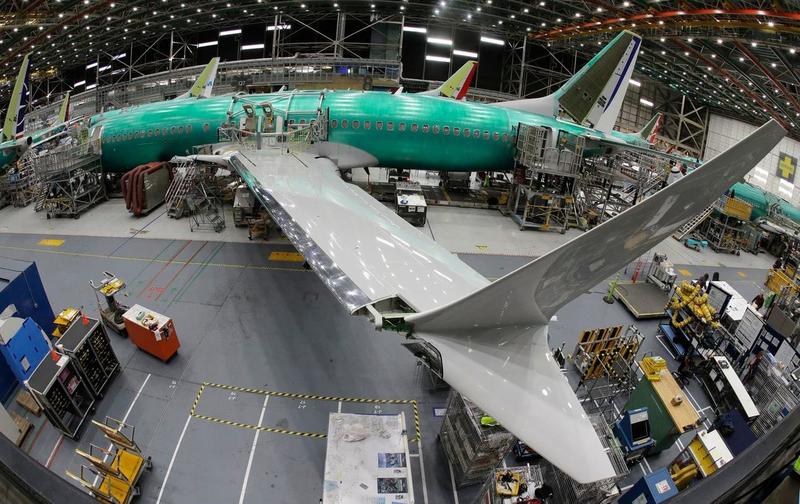
Last month, we reported that Boeing slashed production of the troubled 737 Max from 52 to 42 airplanes per month. Now, a new report from the Financial Times shows how production cuts are set to drive some of the company's suppliers into financial hardship.

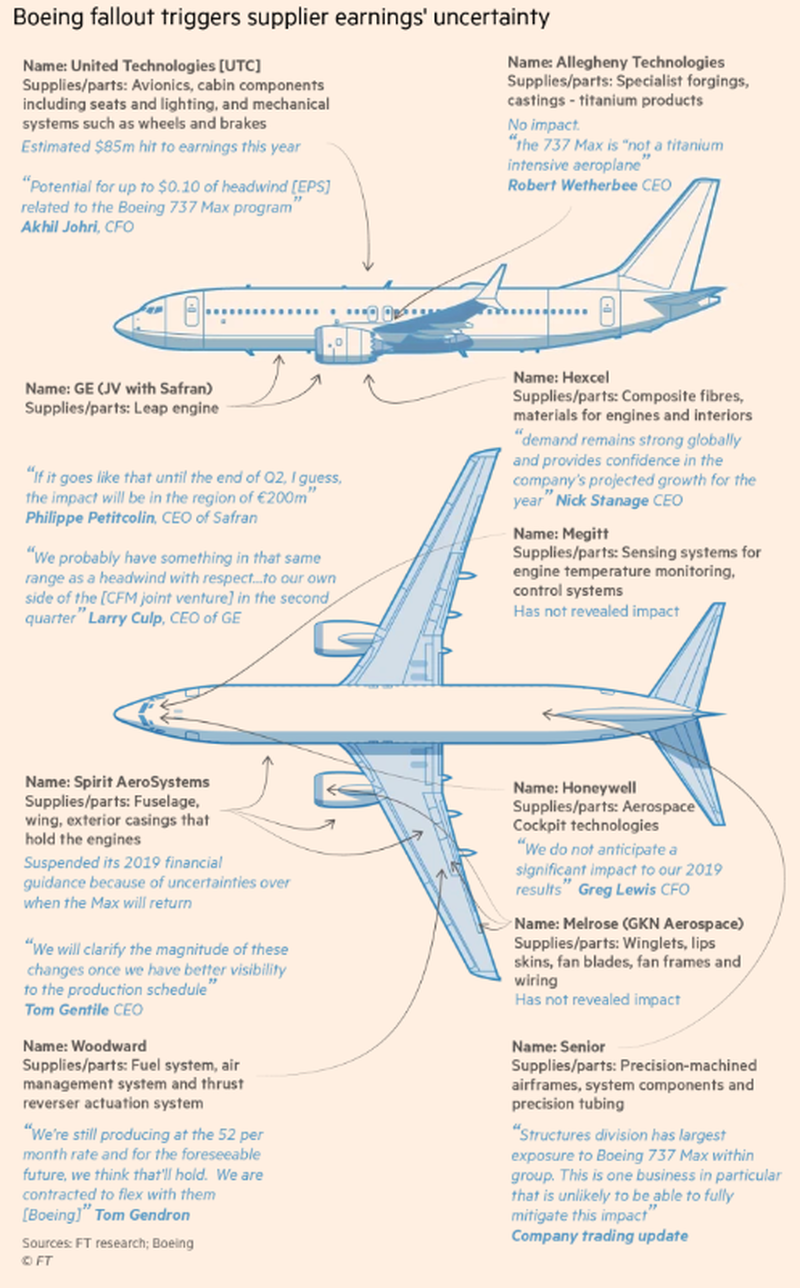
Spirit AeroSystems, a 737 Max supplier that produces 70% of the plane's aerostructure, pulled its 2019 financial guidance, warning that past guidance is no longer valid because of the production cuts and no visible timeframe of when the planes will be back in the air.

Financial Times notes that Spirit AeroSystems is for right now, insulated from the cuts because it worked out a deal with Boeing to continue producing at the old rate (52 planes). The supplier is quickly building inventory at its facilities. They're only a few of the suppliers that are producing at the old rate, while others have transitioned to 42 per month, a 20% decline from the old rate.

Safran, a French multinational aircraft engine company with a joint venture with General Electric that produces engines for the Max, expects a $224 million hit in the next quarter.

GE's new chief executive Henry Culp recently confirmed a similar view: "We probably have something in that same range as a headwind with respect . . . to our own side of the [CFM joint venture] in the second quarter."


boeing1_5719


Woodward, a Max supplier that produces avionics, seats and engine covers, said its production hadn't been affected by the Max slowdown, though it said the company holds no contractual agreements with Boeing that guarantees a specific production rate. "We are contracted to flex with them," chief executive Thomas Gendron told investors on an earnings call. Gendron said like many other suppliers in the Max supply chain, the downtime has been used to catch up on previous production delays.

He warned about "uncertainties and some risks in the second half" due to limited guidance from Boeing about production and ungrounding of the planes.

We reported that Boeing plans to coordinate with customers and suppliers to blunt the financial impact of the slowdown, and for now it doesn't plan to lay off workers from the Max program.

"When the Max returns to the skies, we've promised our airline customers and their passengers and crews that it will be as safe as any airplane ever to fly," Boeing Chief Executive Officer Dennis Muilenburg said in an April statement.

Boeing had planned to hike output of the Max, a workhorse for budget carriers, about 10% by midyear, to meet the backlogs.


boeing2_5719


As we noted, suppliers who provide the 600,000 parts needed for each plane had already started moving toward a 57-jet monthly pace under a carefully orchestrated schedule set in place long before the Lion Air and Ethiopian Airlines disasters, and it seems those suppliers could be hit with production declines in 2Q or possibly sometime in the 2H.

The bigger question, as we previously detailed, is what effect a 20% cut to Boeing's production will have on US GDP in Q2?

...a recessionary catalyst may be the fiasco involving the Max, which according to JPM economist Michael Feroli, could begin impacting the economic dataflow. According to the biggest US bank, the issues affecting the Max should have no short-run impact on GDP, as the production of this airplane is continuing, but will affect the composition of GDP, implying more growth in inventories and less growth of business investment and gross exports.

However, if the issues are not resolved in a timely manner and production of the Max needs to be halted for an extended period of time, it would send many of Boeing's suppliers into financial stress and could even shave off about 0.15% off the level of GDP, or about 0.6%-point off the quarterly annualized growth rate of GDP in the quarter in which production is stopped.


Continue reading
  10021 Hits

Boeing Admits 'Mistakes Were Made' During Development Of 737 MAX 8

From Zero Hedge

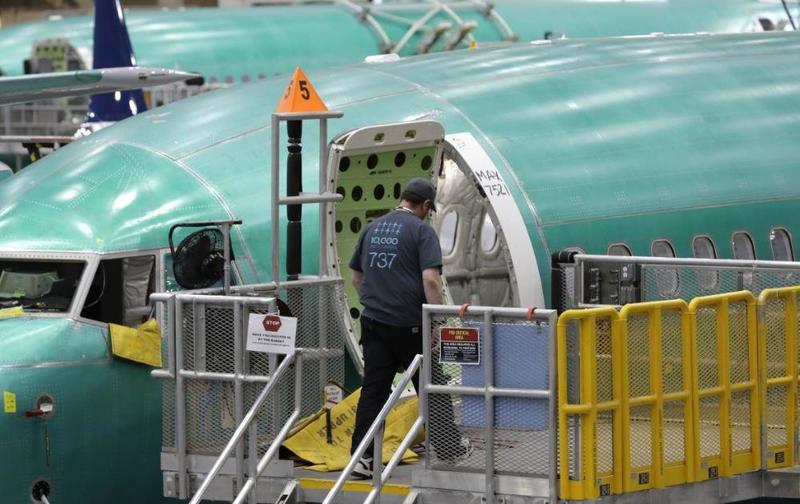
737assembly_519By Tyler Durden

Following a series of conflicting reports claiming that Boeing didn't inform the FAA or Southwest, the largest buyer of its 737 MAX 8 planes, that a safety alert warning pilots that an 'angle-of-attack' sensor on the planes might be feeding the system erroneous data, risking a misfire of the plane's anti-stall software, had been made an 'optional' safety feature, Boeing has admitted that it wasn't aware that the alerts had been disabled when it initially delivered the planes, and that it waited more than 13 months, until after the Oct. 29 crash of a 737 MAX 8 owned by Indonesia's Lion Air, to inform its regulator that it had inadvertently disabled the alerts.

A series of reports by the Wall Street Journal over the past two weeks uncovered the fact that Boeing had made the alerts - which it insists were not a critically important safety feature - optional. Shortly after that initial report, WSJ published a follow up suggesting that Boeing's decision to disable the alerts was inadvertent, though a spokesman declined to elaborate about how this happened.

Finally, on Sunday, Reuters and WSJ confirmed that the decision was, in fact, unintentional, but Boeing still waited to inform its regulator and its customers that the alerts had been disabled on planes that didn't include an 'optional' package of additional safety figures.

This is the first time since the crash of the Lion Air flight and a subsequent deadly crash on March 10 that Boeing has admitted doing something inadvertently during the development of the 737 MAX 8.

However, as we noted in our prior coverage, Boeing's insistence that the alerts weren't critical to safety appears to conflict with the preliminary findings from an investigation into the Ethiopian Air crash, which determined that the pilots of the doomed flight were taken by surprise when MCAS - the slight's anti-stall system - activated and started pushing the nose of the plane down. Their efforts to deactivate the system were unsuccessful, and after manually raising the nose of the plane four times, the plane plunged out of the sky and crashed into a field outside Addis Ababa, killing all 157 people on board.


MCAS_519


Some analysts have argued that if the pilots of the doomed Lion Air and Ethiopian Air flights had been alerted to the misfire, that more than 350 lives could have been saved.

  • Boeing has said the feeding of erroneous Angle of Attack data to a system called MCAS that pushed the planes lower was a common link in two wider chains of events leading to both crashes, but has stopped short of admitting error on that front.
  • The angle of attack measures the angle between the air flow and the wing and helps determine whether the plane is able to fly correctly. If the angle becomes too steep, the flow of air over the wing is disturbed, throwing the plane into an aerodynamic stall. That means it starts to fall instead of fly.
  • Although the angle itself is key for onboard systems, the industry has debated for years whether such data should be included in already crowded cockpit displays because it is directly related to airspeed, which pilots already scrutinize.
  • Some analysts and academics say having the AOA Disagree alert installed would have helped Lion Air maintenance crew diagnose a problem on the penultimate flight of the 737 MAX jet that crashed in October, killing all 189 on board.

Boeing blamed the mistake on software delivered by a third-party vendor. The company was let off the hook by the FAA after it came clean, with nothing more than a stern warning.

  • Boeing said a Safety Review Board convened after a fatal Lion Air crash in Indonesia last October corroborated its prior conclusion that the alert was not necessary for the safe operation of commercial aircraft and could safely be tackled in a future system update.
  • The FAA backed that assessment but criticized Boeing for being slow to disclose the problem.
  • Boeing briefed the FAA on the display issue in November, after the Lion Air accident, and a special panel deemed it to be “low risk,” an FAA spokesman said.
  • "However, Boeing’s timely or earlier communication with the operators would have helped to reduce or eliminate possible confusion," he added.
  • Boeing attributed the error to software delivered to the company from an outside source, but did not give details.

Boeing is working on a software update for the 737 MAX 8 to make MCAS less powerful and also ensure that two sensors are always feeding flight data to both the plane's internal systems and the cockpit. The company has said the update could be finished as early as this week, after it completes a final series of test flights.

However, Boeing's apparent lack of awareness about the functionality of the safety features on its jets is simply staggering. What's more amazing is that the market has been unwilling to punish the company's shares even after this latest batch of revelations that appeared to suggest that Boeing misled the FAA (shares were down Monday, but the move was appeared to be triggered by the broad-based selloff inspired by Trump's tariff threats).

Continue reading
  2901 Hits

Boeing Didn't Tell Southwest Or FAA That It Had Disabled Critical Safety Alerts On 737 MAX

From Zero Hedge

737max_419By Tyler Durden

It was a bad enough look for Boeing when reporters uncovered the company's decision to make some safety features optional on its 737 MAX 8s. Worse still that this decision was only made public after the deadly crash of Ethiopian Airlines Flight 302 just minutes after takeoff on March 10 - the second deadly crash involving the plane in six months, which spurred regulators around the world to ground the planes, erasing billions of dollars of Boeing market cap.

But a report in the Wall Street Journal published on Sunday that neither Southwest Airlines nor the FAA (Boeing's primary federal regulator) were aware that a safety feature intended to alert pilots to a potentially malfunctioning 'angle of attack' sensor - in other words, a feature that might have prevented both the crash of ET302 and the Oct. 29 crash of a 737 owned by Lion Air - had been disabled on the new 737s is simply staggering.

Not only did Boeing disable the alerts, which would notify pilots when the two sensors on the new 737 MAX 8s were reporting dramatically different data, and make them part of a new 'premium' package of safety features, but the manufacturer somehow neglected to tell the airline and its regulator that the alerts had been disabled. The result was that Southwest never updated its safety manuals for pilots to reflect the fact that the alerts had been disabled.

This is particularly egregious because the 737 MAX 8s featured the new MCAS anti-stall software which could be inadvertently triggered by erroneous data being reported by a malfunctioning sensor. Indeed, the preliminary findings from the investigation of the crash of Ethiopian Airlines flight 302 found that the misfire of the MCAS system effectively doomed all 157 people on board that day.

Pilots at Southwest and regulators at the FAA didn't learn that the alerts had been disabled until after the crash of the Lion Air flight, more than a year after the new jets had gone into service.

Plane maker Boeing Co. didn’t tell Southwest Airlines Co. when the carrier began flying 737 MAX jets in 2017 that a standard safety feature, found on earlier models and designed to warn pilots about malfunctioning sensors, had been deactivated.

Federal Aviation Administration safety inspectors and supervisors responsible for monitoring Southwest, the largest MAX customer, were also unaware of the change, according to government and industry officials.

Boeing had turned off the alerts which, in previous versions of the 737, informed pilots if a sensor known as an “angle-of-attack vane” was transmitting errant data about the pitch of a plane’s nose. In the MAX, which featured a new automated stall-prevention system called MCAS, Boeing made those alerts optional; they would be operative only if carriers bought additional safety features.

Southwest’s cockpit crews and management didn’t know about the change for more than a year after the planes went into service. They and most other airlines operating the MAX globally learned about it only after the fatal Lion Air crash last year led to scrutiny of the plane’s revised design. The FAA office’s lack of knowledge about Boeing’s move hasn’t been previously reported.

"Southwest’s own manuals were wrong" about the status of the alerts, said Southwest pilots union president, Jon Weaks. Since Boeing hadn’t communicated the modification to the carrier, the manuals still reflected incorrect information.

Perhaps most stunning of all, once the FAA and Southwest learned that the feature had been disabled, it set off a furor at the FAA that nearly pushed it to recommend that all 737 MAX 8s be grounded until the alerts had been turned back on. If the regulator had followed through, it's possible that the crash of ET302 might have been averted.

Following the Lion Air crash, Southwest asked Boeing to reactivate the alerts on planes already in its fleet. This move, along with questions about why they had been turned off, prompted FAA inspectors overseeing Southwest to consider recommending that the airline’s MAX fleet be grounded while they assessed whether pilots needed additional training about the alerts. Those internal FAA discussions, however, were brief and didn’t go up the chain, according to documents reviewed by The Wall Street Journal.

[…]

Less than a month after the Lion Air jet went down, one FAA official wrote that AOA-related issues on 737 MAX jetliners “may be masking a larger systems problem that could recreate a Lion Air-type scenario."

Roughly two weeks later, other internal emails referred to a “hypothetical question” of restricting MAX operations with one message explicitly stating: “It would be irresponsible to have MAX aircraft operating with the AOA Disagree Warning system inoperative.” The same message alluded to the FAA’s power: “We need to discuss grounding [Southwest’s] MAX fleet until the AOA Warning System is fixed and pilots have been trained” on it and related displays.

The email discussions, previously unreported, were fleeting red flags raised by a small group of front-line FAA inspectors months before the Ethiopian jet nose-dived last month. The concerns raised by the FAA inspectors never progressed up the agency. Within days, they were dismissed by some involved in the discussions who concluded that the alerts provided supplemental pilot aids rather than primary safety information, and therefore no additional training was necessary. During that stretch and beyond, Boeing and the FAA continued to publicly vouch for the aircraft’s safety.

Boeing has never explained exactly why it decided to make these features optional. In the wake of the second crash, the company apologized profusely for this decision, and said that all safety features would be made available on all jets once it finished the software update to make MCAS less powerful, widely seen as an important prerequisite for FAA and other regulators to lift their grounding order.

Without a doubt, Sunday's report is the most damning news about the federal oversight of Boeing since reports that surfaced immediately after the March 10 crash revealed just how much of the approval process for the 737 MAX 8 had been delegated to Boeing itself.

But will either the FAA or Boeing be held accountable for this neglect? That remains to be seen...

Continue reading
  16639 Hits

Boeing Hits Back at New York Times’ “Inaccurate” Reporting

From Airline Ratings

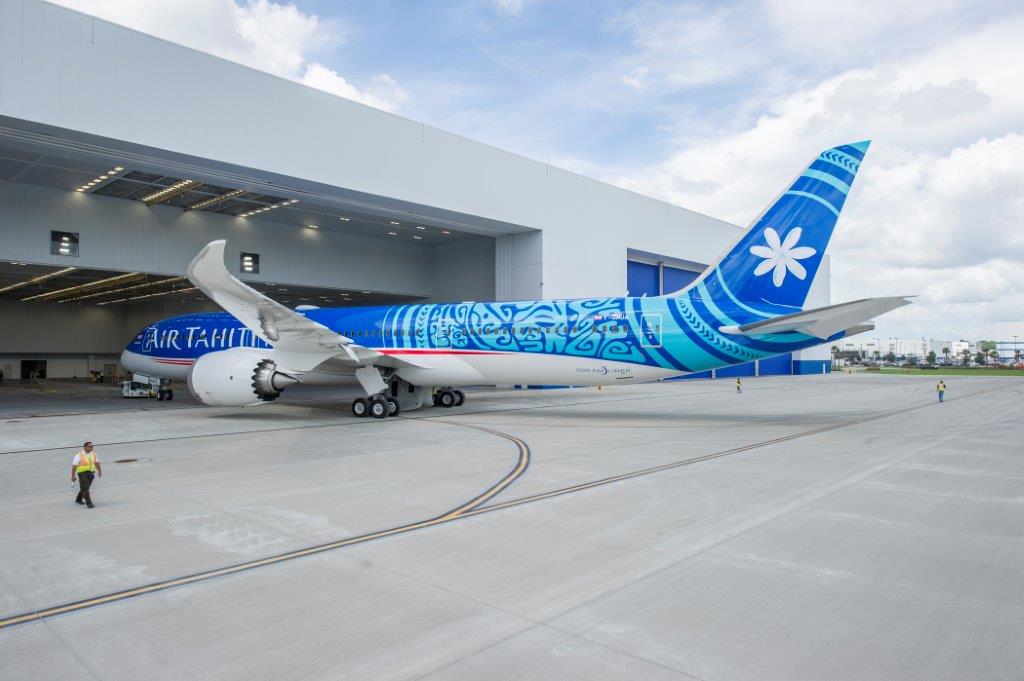
AirTahiti787_419By Geoffrey Thomas and Steve Creedy April 22, 2019

Boeing has hit back at a New York Times’ article about the production quality of the 787s being built at the company’s South Carolina plant.

The NYT’s article, which has been distributed widely, claimed that Boeing’s factory in Charleston, South Carolina, has been plagued by shoddy construction and weak oversight.

Citing internal emails, corporate documents, federal records as well as interviews with former and current employees, the story claimed Boeing pushed its workforce to quickly turn out Dreamliners while ignoring issues raised by some employees.

It said safety lapses at the plant had drawn the scrutiny of airlines and regulators, while workers had filed nearly a dozen whistle-blower claims and safety complaints with federal regulators.

The workers, a number of whom are involved in legal action against Boeing, described issues such as defective manufacturing, debris left on planes and pressure not to report violations.

The story acknowledged there was no evidence that the problems had led to any major safety incidents.

The North Charleston plant is one of two producing the 787 Dreamliner and started operations in 2011.

The non-unionised factory has been a big boost to the local economy but has been the subject of rancorous disputes with organized labor that some observers blame for the adverse publicity.

While the NYT claims are not new — similar allegations were raised by Al Jazeera in 2014 and dismissed by the company — they come at a bad time for Boeing as it grapples with the fallout of two Boeing 737 MAX crashes.

This message from Brad Zaback, Vice President and general manager of the 787 Program, was sent to all Boeing South Carolina teammates Saturday, April 20.

Team,

The 787 program has a lot to be proud of these days. Our transition to Rate 14 continues to be the most seamless rate transition in the program’s history, and our Boeing South Carolina 787 manufacturing operations are the healthiest they’ve ever been. More importantly, our quality metrics show that we are performing at all-time high levels as well. That is a testament to each of you, demonstrating your pride and your ongoing commitment to excellence with respect to both safety and quality.

A story that posted in today’s New York Times, however, paints a skewed and inaccurate picture of the program and of our team here at Boeing South Carolina. This article features distorted information, rehashing old stories and rumors that have long ago been put to rest.

I want all BSC teammates to know that we invited the New York Times to visit Boeing South Carolina once they contacted us, so that they could see first-hand the great work that is done here. They declined this invitation.

The allegations of poor quality are especially offensive to me because I know the pride in workmanship that each of you pours into your work every day. I see the highest quality airplanes – airplanes that meet rigorous quality inspections and FAA standards – deliver on time on a regular basis from Boeing South Carolina, where they perform exceptionally well in service for our valued airplane customers around the world. Our customers feel the same way, and shared their own thoughts with the New York Times:

American Airlines said it conducted rigorous inspections of new planes before putting them into service. “We have confidence in the 787s we have in our fleet,” said Ross Feinstein, a spokesman for the airline.

In a statement, Qatar Airways said it “continues to be a long-term supporter of Boeing and has full confidence in all its aircraft and manufacturing facilities.” Note that only a portion of their quote was included in the story, and we wanted to ensure you had their full perspective: “Qatar Airways continues to be a long-term supporter of Boeing and has full confidence in all its aircraft and manufacturing facilities as a strong commitment to safety and quality is of the utmost importance to both our companies. We have over 100 Boeing aircraft in our fleet, manufactured in both Everett and Charleston, with many more to join in the coming years as part of our significant, long-term investment in the US economy.”

In fact, we also heard from Suparna Airlines and Norwegian in response to the story, and here’s what they told us:


suparna_419


Suparna Airlines: “The entire process of the aircraft delivery was very smooth. We want to thank the Boeing team in South Carolina who worked diligently with the Boeing standard and discipline to make the delivery a pleasant experience for us. The airplane has carried out more than 200 scheduled flights with total flight hours up to 500 at operational reliability of 99.99%. We are happy with the performance of our first Dreamliner.”


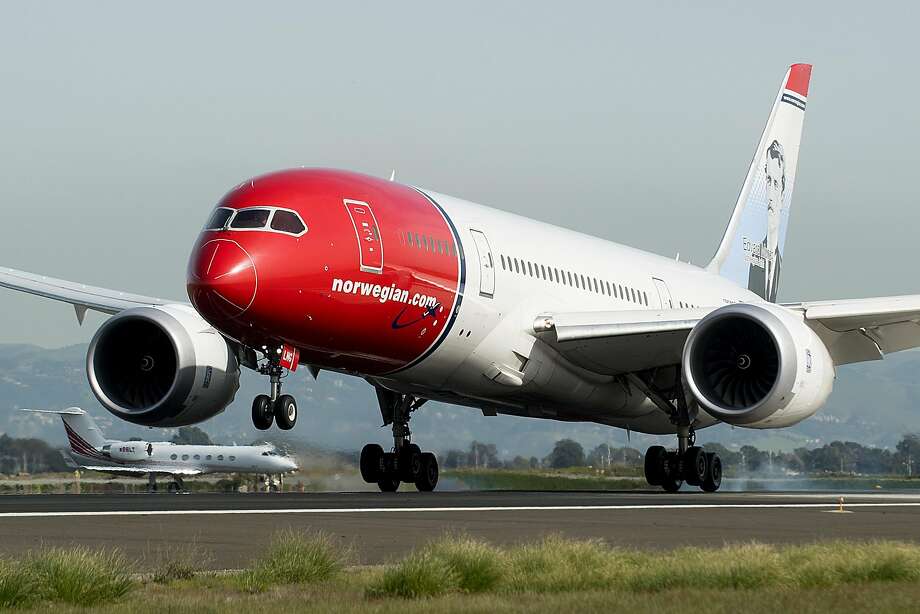
norwegian_419


Norwegian: “We are very satisfied with the quality and reliability of all our 33 Dreamliners, regardless of where they have been assembled.”

The inaccurate picture the New York Times paints is also offensive to me because they are counter to our company’s core values. Quality is the bedrock of who we are. That’s why we relentlessly focus on quality improvements and FOD elimination at all Boeing locations. No matter how good we are today, we always believe we can be even better tomorrow. That drive to be the best will never change at Boeing as we continue to strive to be a Global Industrial Champion and the leader in quality.

It’s unfortunate and disappointing that the New York Times chose to publish this misleading story. This story, however, does not define us. Our company and our customers recognize the talent, skill and dedication of this excellent Boeing South Carolina team that works together to assemble and deliver incredible airplanes. I want to leave you with a word from Kevin McAllister, Boeing Commercial Airplanes president and CEO, which was not included in full from the New York Times:

“Safety and quality are at the core of Boeing’s values – there is nothing more important than that. The 787 program has delivered 823 airplanes to more than 76 customers since its launch. As Boeing marks 10 years in North Charleston, our more than 7,000 Boeing South Carolina teammates are producing the highest levels of quality in our history. And, we are seeing this translate across our work and the in-service performance with our customers. We test our airplanes and verify components are fully operational, and when we find a component that is not, it is replaced and tested again. This is core to our quality system, as it is for the industry. I am proud of our teams’ best in-process quality of production and stand behind the work they do each and every day.”

This is a team that I am very proud to be a part of, and I’m thankful for all that you do every day.

Continue reading
  3507 Hits

Boeing's Nightmare Continues

From Zero Hedge

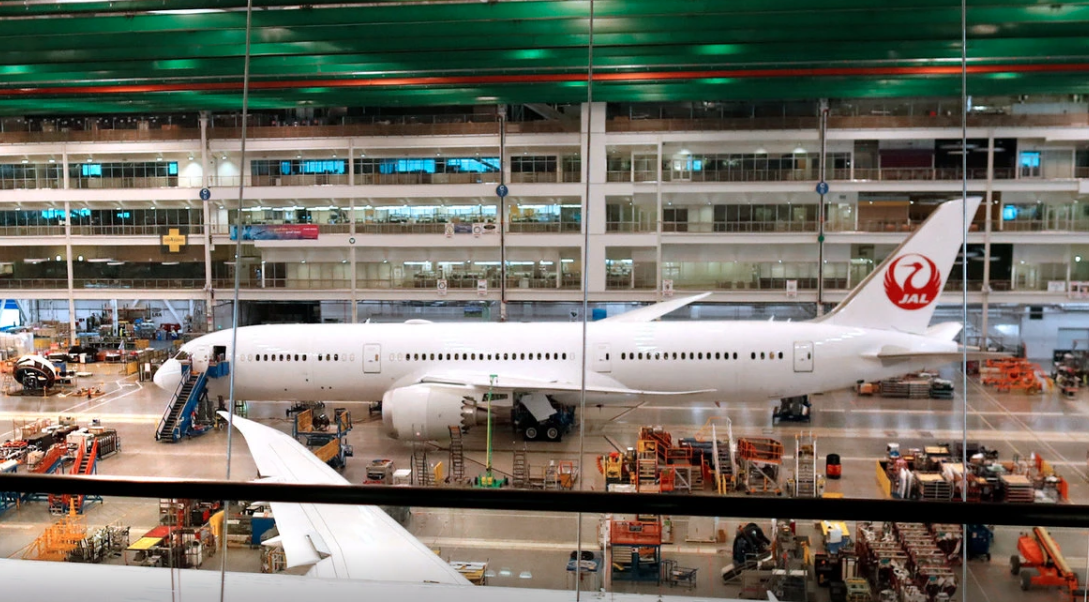
787Plant_419Boeing's Nightmare Continues: Dreamliner Workers Warn Of Defective Manufacturing, Dangerous Quality Lapses

By Tyler Durden

Just as it looked like the fallout from the Boeing 737 MAX crashes was finally fading into the background, the New York Times is raising new questions about an entirely different Boeing plane, the Dreamliner 787. Workers at a Boeing plant in South Carolina are complaining about "defective manufacturing, debris left on planes and pressure to not report violations".

An investigation that incorporated reviewing hundreds of emails and documents, as well as interviews with more than a dozen current and former employees, has arrived at the conclusion that Boeing pushed speed over quality when it came to its Dreamliners - a story similar to the 737 MAX, which we reported faced similar critiques. This has lead to the question whether the issues at Boeing are limited to the 737, or if they are systemic.

According to the report, Boeing's North Charleston plant has come under fire for safety lapses, and the facility has also drawn the scrutiny of airlines and regulators. In fact, Qatar Airways even stopped taking planes from the factory after "manufacturing mishaps damaged jets and delayed deliveries".

On top of that, there have been nearly 12 whistleblower claims about the plant with regulators. They describe issues like manufacturing, debris left on planes and pressure to not report violations. Additional whistleblowers have skipped that step and gone right to suing Boeing, claiming that they were victims of retaliation for bringing up manufacturing mistakes.

Joseph Clayton, a technician at the North Charleston plant claimed he often found debris dangerously close to wiring beneath cockpits. He said: "I’ve told my wife that I never plan to fly on it. It’s just a safety issue."

Kevin McAllister, Boeing’s head of commercial airplanes, said in a statement: "Boeing South Carolina teammates are producing the highest levels of quality in our history. I am proud of our teams’ exceptional commitment to quality and stand behind the work they do each and every day."

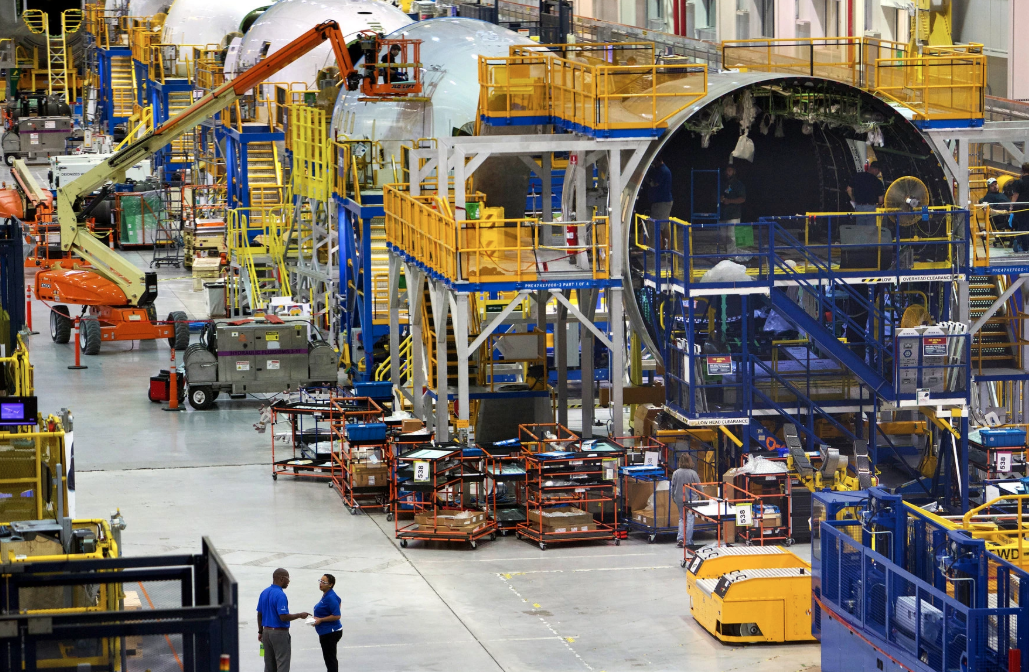
Among other things, employees have claimed that faulty parts have been installed in planes, tools and metal shavings have routinely been left inside jets, often near electrical systems, and aircraft have taken test flights with debris in an engine and a tail, risking failure.

John Barnett, a former quality manager who worked at Boeing for nearly three decades said that he found metal slivers hanging over the writing that commands the flights controls. Barnett said if the sharp pieces penetrated the wires, it would be "catastrophic". He was so concerned that he filed a whistleblower complaint with regulators. He said he had repeatedly urged his bosses to remove the shavings, but they refused and then transferred him to another part of the plant.


787plant2_419


An FAA spokesman said the agency conducted inspections on several plans certified by Boeing as free of debris, but found the same metal slivers. It is a problem that can lead to electrical shorts and cause fires. Officials also believe the shavings may have been the cause of damage for an in-service airplane on an occasion in 2012. The FAA wound up issuing a directive in 2017 that Dreamliners needed to be cleared of shavings before delivery.

Barnett said: "As a quality manager at Boeing, you’re the last line of defense before a defect makes it out to the flying public. And I haven’t seen a plane out of Charleston yet that I’d put my name on saying it’s safe and airworthy."

But wait there's more: another issue popped up right after the 2nd 737 MAX crash: customers were finding random objects in new planes.

The North Charleston plant called a meeting to discuss the issue, where a Senior Manager urged the team to check more carefully, stating: “The company is going through a very difficult time right now.”

Employees are supposed to clean the aircraft as they manufacture it so they don’t contaminate the planes with shavings, tools, parts or other debris. But it has still been a problem in SC. Brad Zaback, the head of the 787 program, reminded the North Charleston staff in an email this month that debris “can potentially have serious safety consequences when left unchecked.”

Customers like the Air Force have also been turned off by the manufacturing sloppiness. In March, they stopped deliveries of the KC-46 tanker after finding a wrench, bolts and trash inside new planes.

Will Roper, an assistant secretary of the Air Force, said: “To say it bluntly, this is unacceptable. Our flight lines are spotless. Our depots are spotless, because debris translates into a safety issue.”

Workers at the SC plant said debris is a continual issue.

Rich Mester, a former technician who reviewed planes before delivery said: “I’ve found tubes of sealant, nuts, stuff from the build process. They’re supposed to have been inspected for this stuff, and it still makes it out to us.” Mester has been fired and a claim on his behalf was filed with the National Labor Relations Board.

He continued: "Employees have found a ladder and a string of lights left inside the tails of planes, near the gears of the horizontal stabilizer. It could have locked up the gears.”

Dan Ormson, who worked for American Airlines said he used to "regularly" find debris when inspecting Dreamliners. The debris included loose objects touching electrical wiring, rags near the landing gear and once finding a piece of bubble wrap near the pedal the co-pilot uses to control the plane’s direction. He also once saw that a bolt was loose inside one of the engines, which could have caused it to malfunction.

Another Dreamliner built for American Airlines suffered a flood in the cabin so bad that ceiling panels, seats and electronics had to be replaced.

One current technician at the plant recently found chewing gum holding together a door’s trim. He said: “It was not a safety issue, but it’s not what you want to present to a customer.” Several former Boeing employees also told the NYT that managers pushed quality inspectors to stop recording defects.

Cynthia Kitchens, a former quality manager, said: “It was intimidation. Every time I started finding stuff, I was harassed.”

Mester concluded: "They’re trying to shorten the time of manufacturing. But are you willing to sacrifice the safety of our product to maximize profit?"

You can read more troubling details in the extended NYT report here.

Continue reading
  3374 Hits

Nine regulators join Boeing 737 MAX review

From Airline Ratings

737max_419

By Steve Creedy

Regulators from Australia, Brazil, Canada, China and Europe are among the nine authorities that have confirmed they will participate in the Boeing 737 MAX Joint Authorities Technical Review due to begin at the end of the month.

The US Federal Aviation Administration announced the list Friday US time and said the first meeting is due to take place on April 29.

The review is expected to take 90 days and is being chaired former national transportation safety Board chairman Chris Hart.

“The team will evaluate aspects of the 737 MAX automated flight control system, including its design and pilots’ interaction with the system, to determine its compliance with all applicable regulations and to identify future enhancements that might be needed,” the FAA said.

Confirmed participants are:

Australia
Civil Aviation Safety Authority (CASA)

Brazil
Agencia Nacional de Aviação Civil (ANAC)

Canada
Transport Canada Civil Aviation (TCCA)

China
Civil Aviation Administration of China (CAAC)

European Union
European Aviation Safety Agency (EASA)

Japan
Japan Civil Aviation Bureau (JCAB)

Indonesia
Directorate General of Civil Aviation (DGCA)

Singapore
Civil Aviation Authority of Singapore (CAAS)

United Arab Emirates
General Civil Aviation Authority (UAE GCAA)

The review is one of several being undertaken into the certification of the MAX following the crash of two aircraft in less than five months.

Boeing is working on modifications to a controversial software linked to both crashes, the maneuvring augmentation characteristics system, MCAS.

Boeing chief executive Dennis Muilenburg tweeted on April 16 that the company was making steady progress towards certification of the software and related training changes.

The company had just completed the last official engineering test flight of the updated software prior to a certification flight with the FAA.

Muilenburg said this had involved 120 MAX flights totaling more than 203 hours of flying time.

He had completed a demonstration flight and had seen first hand the software in its final form “operating as designed across a range of flight conditions”.

However, potential differences emerged between Canada and the US on whether training for the new software should be in a simulator or be computer-based.

Continue reading
  3275 Hits

More Boeing Backlash: China Suspends $6 Billion Order For 100 737s

From Zero Hedge

737max_4819

Dealing another blow to public confidence in Boeing's ability to swiftly reassure regulators that its 737 MAX 8 can be made safe for passenger travel, the South China Post on Monday reported that China Aircraft Leasing Group Holdings has put an order for 100 new 737s on hold, until it can be assured of the aircraft's safety.

This follows a decision by Indonesia's national carrier to cancel a $6 billion 737 MAX order. The airline had been planning to order 49 planes. Boeing last week said it would cut its pace of production by 20% to just 42 a month.

China was the first country to ground the 737s after Ethiopian Airlines flight ET302 crashed just minutes after takeoff - the second deadly incident involving the planes in just 5 months. A preliminary report from investigators found that the pilots followed Boeing's safety procedures, but were still unable to right the plane.

Boeing is working on an update of its MCAS anti-stall software, which is believed to have contributed to both the crash of ET302 and a deadly Lion Air crash that occurred just five months earlier, but the fix is taking longer than anticipated.

Per its original delivery schedule, the first 737 was supposed to be delivered to the aircraft lessor in Q3 of this year. Originally, the lessor signed its contract with Boeing in June 2017, ordering 50 aircraft, then increasing it by 25 with an option for another 25. The order for the initial 50 aircraft was valued at $5.8 billion.

The company said it has stopped paying installments on the planes it has ordered.

The Hong Kong-listed lessor, controlled by the state-owned conglomerate China Everbright Group, placed an order for 50 aircraft in June 2017. CALC then increased it by another 25 in December with an option for 25 more as part of its plan to grow its overall fleet from 133 in 2018 to 232 by 2023. According to the original schedule, the first MAX jet was expected to be delivered to CALC in the third quarter of this year and continue up to 2023.

"The purchase has been suspended and we have stopped paying the installments," said Chen Shuang, chairman of CALC and chief executive of China Everbright, the financial arm of China Everbright Group.

Airlines around the world have grounded the 737s, and last week, the FAA set up a joint review task force that is expected to include other aviation regulators, including possibly China's, which has been invited to join.

Most of the deliveries weren't expected until 2021, so the hold won't impact the lessor's operations, its spokesman said.

A CALC spokeswoman said that since most of the deliveries to the company were to be made from 2021, "so we see little or no impact on our operations."

Chen said that they have received assurances from Boeing that “a better solution will be submitted to CALC within two months”, adding that they have not yet discussed compensation.

Chen said both sides are actively seeking a solution to the problem.

"One option being considered is to replace it with other aircraft. But there aren’t too many options," said Chen.

Of course, the last thing Boeing shareholders wanted to hear after last week's string of negative headlines was more bad news, particularly after the late-Friday announcement of its production cut, which the company had clearly hoped to sneak by the market. And following the revelation that Boeing might soon have a second large cancellation on its hands, Boeing's shares - already lower - have sunk even further in premarket trading, weighing on the Dow.

Continue reading
  13060 Hits

Whistleblowers Claim FAA Inspectors Not Properly Trained On Boeing 737 Max 8

From Zero Hedge

737max_4219

Multiple whistleblowers have come forward claiming that Federal Aviation Administration (FAA) safety inspectors were not properly trained and did not hold valid certifications on the Boeing 737 Max aircraft, according to a letter to FAA Acting Administrator Daniel Elwell from Sen. Roger Wicker (R-MS).

"Allegations from these whistleblowers include information that numerous FAA employees, including those involved in the Aircraft Evaluation Group (AEG) for the Boeing 737 Max, had not received proper training and valid certifications," the letter reads.

"Some of these FAA employees were possibly involved as participants on the Flight Standardization Board (FSB)," a group formed to evaluate the 737 Max 8 to determine requirements to rate pilots, develop minimum training recommendations, and to ensure "initial flightcrew member competency."

Two Boeing 737 Max 8s were involved in similar crashes within a five month period, while investigators are pointing to sensor failures connected to an anti-stall system known as the Maneuvering Characteristics Augmentation System (MCAS).

Of note, an off-duty pilot flying in the jumpseat on a Lion Air 737 Max 8 last October was able to talk pilots through disabling the MCAS system on the same plane that crashed a day later off the coast of Indonesia, killing all 189 on board.

The FAA whistleblowers also claim that the FAA may have been informed of the 737 Max 8s deficiencies as early as August 2018, two months before the Lion Air crash.

As we noted last month, several Pilots repeatedly warned federal authorities of safety concerns over the now-grounded Boeing 737 Max 8 for months leading up to the second deadly disaster involving the plane, according to an investigation by the Dallas Morning News. One captain even called the Max 8's flight manual "inadequate and almost criminally insufficient," according to the report.

***

"The fact that this airplane requires such jury-rigging to fly is a red flag. Now we know the systems employed are error-prone — even if the pilots aren't sure what those systems are, what redundancies are in place and failure modes. I am left to wonder: what else don't I know?" wrote the captain.


737maxletter_4219


At least five complaints about the Boeing jet were found in a federal database which pilots routinely use to report aviation incidents without fear of repercussions.

The complaints are about the safety mechanism cited in preliminary reports for an October plane crash in Indonesia that killed 189.

The disclosures found by The News reference problems during flights of Boeing 737 Max 8s with an autopilot system during takeoff and nose-down situations while trying to gain altitude. While records show these flights occurred during October and November, information regarding which airlines the pilots were flying for at the time is redacted from the database. -Dallas Morning News

One captain who flies the Max 8 said in November that it was "unconscionable" that Boeing and federal authorities have allowed pilots to fly the plane without adequate training - including a failure to fully disclose how its systems were distinctly different from other planes.

Continue reading
  3061 Hits

Investigators Believe MCAS Involved In Both Boeing Crashes

From Airline Ratings

737max_4119

By Steve Creedy

Investigators believe the controversial software update implicated in the crash of a Lion Air Boeing 737MAX was also involved in the March 10 destruction of an Ethiopian Airlines jet.

Quoting sources familiar with a high-level briefing to the US Federal Aviation Administration, The Wall Street Journal reported that an emerging consensus among investigators was that the Manoeuvring Characteristics Augmentation System, or MCAS, was involved in both crashes.

The two crashes claimed a total of 346 lives and plunged manufacturer Boeing into crisis.

The newspaper warned that that preliminary finding from the flight data and cockpit voice recorders was subject to revision and said a preliminary report from Ethiopian investigators was due “within days”.

The global Boeing 737 MAX fleet remains grounded because of worries about similarities between the two crashes.

The FAA, which is facing several investigations into the certification of the plane, was the last agency to ground the MAX on March 13.

It defended the delay by arguing hard data suggesting a link between the two flights was not available until just prior to the decision.

That new information included a newly refined satellite data of the aircraft’s flight path and evidence found on the ground, believed to be a jackscrew that moves the horizontal stabilizer.

Boeing was already working on changes to MCAS and pilot training when the second crash occurred and this week released details of the changes.

It said it had complete confidence in the safety of its new software fix.

MCAS activates in manual flight when the flaps are retracted and is part of the speed trim system that automatically commands changes to the horizontal stabilizer to trim the plane so there are no net forces on the control column.

Erroneous data from an angle of attack (AoA) sensor prompted MCAS to repeatedly push down the nose of aircraft in the Lion Air crash, something the pilots fought instead of deactivating the system. The angle of attack measures the position of the aircraft nose in relation to airflow.

The original version of MCAS took information from just one Angle of Attack sensor but there are two on the aircraft and the new version will compare inputs from both.

If the sensors disagree by 5.5 degrees or more with the flaps retracted, MCAS will not activate and an indicator on the flight deck display will alert the pilots.

If MCAS activated in abnormal conditions, the new software will only provide one input for each elevated AoA event instead of resetting itself repeatedly.

It will also not be able to apply more force to the horizontal stabilizer than can be counteracted by the flight crew pulling back on the column.

Boeing is also making standard an AoA disagree alert that will tell the pilots if the two AOA sensors disagree by more than 10 degrees for more than 10 seconds.

“We’re going to do everything we can to ensure that accidents like these never happen again,’’ Boeing Commercial Airplanes vice product of product development Mike Sinnett told reporters this week.

“We are working with customers and regulators around the world to restore faith in the industry and to reaffirm our commitment to safety and to earning the trust of the flying public.”

Continue reading
  3023 Hits

Broken Dreams: The Boeing 787

From aljazeera.com

787_31719

This is a major project by the Al Jazeera Investigative Unit focusing on the 787 “Dreamliner”, the flagship passenger jet of the Boeing Company.

Our journalism reveals the deeply-held safety concerns of current and former Boeing engineers, who in some cases fear to fly on the 787, the plane they build.

We uncover allegations of on-the-job drug use, quality control problems and poor workmanship.

We explore the roots of the battery problems that led to the plane’s grounding due to safety concerns for three months from January 2013.

Credits: Senior Producer/Director: Marc Shaffer, Producer/Director of Photography/Editor: Colin McIntyre, Producer: Kevin Hirten, Reporter/Producer: Will Jordan, Music: Ryan Whittier, Additional Music: Sean Hirten.


Continue reading
  3480 Hits

737 Max: Finally The Scrap from Seattle Has To Stay On The Ground

From AnderweltOnline.com

737max_31619

By Peter Haisenko

The B 737 MAX is a faulty design from the beginning. Anyone who knows anything about aerodynamics will recognize it immediately if they only look at the aircraft.

The example of the Boeing 737 and especially the latest development stage MAX 8/9 shows how fatal it is when it is not engineers who make the decisions, but merchants. No engineer in his right mind would have built the 737 MAX like this if he hadn’t been forced to do so by greedy managers. The nearly 400 deaths in two crashes were caused by Boeing’s board of directors, as well as the threatening bankruptcy of the entire company.

Boeing’s B 737 was a crutch right from the start. When Boeing planned the B 737-100 in the early 1960s, a seat configuration of 2/3 was planned, as with the DC 9. Lufthansa, as the largest first customer for the “City-Jet”, wanted a 3/3 version, as with the B 727 and the B 707. However, the construction was already advanced and so the tinkering began in order to save costs. Boeing simply left the already planned cockpit as narrow as it was and so the pilots still have to squeeze themselves into a cockpit for all versions of the 737 for which you actually need a shoehorn to get in. But this mini cockpit is of course lighter than an ergonomically sensible one and so the merchants are happy.

But that wasn’t the only cost-saving (lazy) compromise.

In order to save costs, Boeing has designed flying crutches

The nose and main landing gear were not designed for the now larger hull from the beginning. Our flight engineers told me that during their studies of aeronautical engineering in the 1960s the nose landing gear of the 737 was presented to them as a negative example of how not to do it. Nevertheless, the B 737-100 became a successful model, which was mainly due to a lack of competitor models. In the 1970s, the B 737 was modernised for the first time with the model B 737-200. The more powerful JT-8 engines were still small in size and fitted under the low wings. Boeing responded to the contemporary requirements for bad weather conditions with an autopilot construction that was a crutch from the beginning but is still used in all B 737 models today.

This led, for example, to the crash of the “Fly Dubai” in Rostow in April 2016.

Boeing introduced the 737-300 model in the mid-1980s. It had a “glass cockpit” like the Airbus A 310 (with screens instead of a “clock shop”) and modern engines with a large front rotor. Boeing would have had to carry out a new design already here, because the engines no longer fit under the low wings. In order to save the costs for a new construction and above all the complex approvals for it, the next crutch came. The engine was placed a bit higher and further forward and the intake of the engine was flattened at the bottom so that it wasn’t too close to the ground and so absorbed every stone from the ground, which would have destroyed the engine.

In the further years Boeing has “drilled” the 737 more and more with the models up to -800. Boeing has not changed anything about the basic construction from the 1960’s with its deficits. It is simply inexpensive for the production to continue using already certified units.

At the end of the 1980s Airbus introduced the A 320, which was a completely new design and Airbus set standards in terms of flight guidance systems and design. The A 320 became a direct and successful competitor for the B 737. Boeing came under pressure, but was able to win more customers for its crutch 737 because of the favourable purchase price. This was also because Airbus could not deliver as many aircraft as the worldwide demand was. Here we are faced with a fundamental problem in international aviation: enormous growth, especially in Asia and Africa. There is a lack of qualified junior pilots and mechanics with sufficient experience. Airbus had anticipated this problem and designed the A 320’s flight guidance systems to provide meaningful support for even less experienced pilots. Boeing is trying to catch up, but is not able to reach the A 320, which was designed more cleverly from the start. Airbus has once again set new standards with the A 320-neo.

Now we have to look at the markets for this class of aircraft. They are not just now in areas where other qualities are desired than in Europe. Even in the USA, airlines do not have the capacity to land in extremely poor visibility. To date, there are only a few airports in the USA that offer the ground-based conditions for a landing according to “Category III”, i.e. for visibility below 100 metres. These conditions are expensive, on the ground and in the air. In Africa or Southeast Asia they practically do not exist at all, simply because the demand is not there. This also explains why Boeing never set about bringing its crutch from an autopilot to a decent level. An estimated 90 percent of customers have no need.

With high oil prices, the demand for fuel-saving models has increased. Airbus has once again set standards with the A 320-neo and its particularly efficient engines. Boeing was in a tight spot. But the super engines of the A 320 simply did not fit under the wings of the old B 737 anymore. But instead of finally constructing a completely new model, the Boeing merchants decided to build the ultimate crutch beyond all aerodynamic rules. The engines that were too big for the 737 were moved even further forward and upwards.

During the first test flights it turned out that the physics cannot be outwitted so simply. The airflow of the engine now passed directly under the wing, which must have several negative effects. Once the lift is influenced negatively, but the biggest problems were in the extreme slow flight, that is shortly before the stall, which can lead to a crash.

In this situation, the airflow from the engine of the 737 MAX is located under the entire lower outer wing, which puts the aircraft in an uncontrollable state. Instead of finally redesigning the aircraft, Boeing’s managers opted for the worst crutch: they had a system installed that takes full control of the aircraft at this limit. If a sensor, and only one sensor, detects this limit, the attached computer causes the aircraft to move the tailplane trim to “nose down”. That wouldn’t be wrong in principle, but it would overshoot the mark.

The fact that this deadly system has no control system, which as such should not occur in aviation, has now proved fatal twice. This means that if this single sensor gives an error message, pilots have little chance of preventing their aircraft from flying into the ground without being pointed. The hole in Ethiopia’s ground speaks for itself.

It’s not the engineers who are responsible, it’s the managers.

Now you should know that the tailplane trim of all smaller Boeing models has always been a prone crutch. It’s a motor-spindle unit that tends to “run away” or jump out and jam if a relay fault occurs. For this reason there was a prominently placed emergency switch on the B 727 with which the trim motor could be switched off. This was practiced in the simulator. The newer 737 models no longer have this emergency shutdown device.

So the pilots can’t switch off the trim motor and save the plane even if they recognized the error. They would have to switch off the entire busbar on which the trim motor hangs. But this would shut down other elementary systems and it is a process that cannot be carried out in a fraction of a second. So if the only sensor for the angle of attack sends a wrong signal to the only computer, then this aircraft can no longer be saved, at least if it flies at low altitude.

The B 737 MAX is a faulty design right from the start. Anyone who knows anything about aerodynamics will recognize it immediately if he only looks at the aircraft. It forms the tip of a series of crutch constructions that run through the entire history of B 737 development. It is not engineers who are responsible for this, but the managers who force the engineers to build crutches against their better judgement.

The fact that this better knowledge is actually happening again is proven by the fact that there is an e-mail from summer 2018, i.e. before the first crash, in which Boeing employees already document what effects this design error can have. Boeing’s board of directors did not react and accepted so approvingly that exactly what happened twice within a few months happens – with almost 400 dead.

Ethiopia trusts neither the manufacturer, nor the US licensing authority FAA

In addition to Boeing’s managers, the heads of the FAA, the American regulatory authority, must of course also be called to account. They certified the airworthiness of the 737 MAX, although they had to know what kind of crutch it was. So it is not surprising that the FAA was the last to ban the 737 MAX from flying. It is already a unique event in the history of aviation that individual countries all over the world first had to rush ahead with flight bans, before the authority actually responsible for them desists to do so. However, this was preceded by a unique process.

It was not the FAA or the manufacturer Boeing that banned the 737 MAX from flying in the USA. It was Donald Trump who pulled the emergency brake with a decree. After that, the FAA and Boeing could no longer help but to follow the step that would have been due by summer 2018 at the latest. Also interesting is the next procedure, which is again unique: Ethiopia did not leave the accident investigation to the FAA or Boeing.

Contrary to standard procedures, the investigation was transferred to the French BEA and the flight recorder was sent to Paris for investigation. This is almost a declaration of war on the American aircraft industry, but at least a demonstration of how little trust remains in the integrity of American institutions. This is probably also a consequence of the fact that in expert circles a large number of deliberately falsified results are known which the American authorities have delivered on aircraft accidents. Let us just think of the TWA 600, which was downed by an American rocket and which was concealed from the public and even from us pilots with all its criminal methods.

The history of the B 737 MAX and all 737 models shows the state of the USA and its (aircraft) industry. For even short-term profit, all rules are set aside that have been developed for decades out of bitter necessity. What role do a few hundred deaths play when it comes to saving profit? The FAA itself is obviously corrupted through and through and here comes the next interesting aspect.

Donald Trump obviously knows this, because he wanted to put his personal chief pilot on the FAA’s executive chair, but this met with massive resistance. There we have the next point, why the American establishment hates Trump so much. He obviously wants to dry up the swamp at all levels. If he had his way, it’s not unlikely that the 737 MAX in this configuration wouldn’t have been approved and 400 people wouldn’t have been crushed. Another piquant detail is that from the beginning warnings came from Russia regarding the airworthiness of the 737 MAX.

Turbo-capitalism cannot persist in the long run

The disasters with the B 737 MAX have put the entire aviation industry in great distress. There will also be bottlenecks in Europe in the charter summer of 2019. But for Boeing itself it can mean the end. After all, several hundred copies of the 737 MAX have already been delivered and will probably have to be scrapped, because a simple retrofit with software cannot solve the basic problem of the faulty design. Simply resuming production of the old models of the 737 is no solution. It’s not that simple and who would want to have an airplane that can’t survive next to the A 320 neo?

The 737 MAX case makes it clear that turbo capitalism cannot exist in the long run. The whole world cannot function “sustainably”, and aviation certainly cannot, if only profit is the determining element. Not only the “diesel scandal” shows this, now drastically Boeing.

So what we need is a radical rethink. Capital and its managers and profiteers must be deprived of power and given back to reason and public spirit. This applies not only to the aircraft and car industries, but above all to the pharmaceutical industry, which does not want to heal people at all, but pursues the primary interest of selling more and more medicines to healthy people.

However, in order for an improvement to be possible, and in order to prevent thousands of people from continuing to lose their lives because of profit-seeking, the entire system must be fundamentally overhauled. This must be radical and must not leave out anything that should have been questioned long ago.

In this sense we have developed “The Human Market Economy” from scratch and I don’t think it is excessive to say that exactly this revolutionary system according to Haisenko/von Brunn has the potential to solve all, repeat all, the problems under which humanity suffers under the religious-capitalist dictatorship.

Peter Haisenko was a pilot with Lufthansa and flew for 30 years in worldwide service as a co-pilot and captain. Since 2004 he has worked as a freelance author and journalist. He is the owner and publisher of the online portal www.anderweltonline.com

Continue reading
  3649 Hits

737 MAX 8 Software Update Coming, Calls For Ground Intensify

From AvWeb

737max_31219

By Marc Cook

Amid a rising chorus of calls for the FAA to ground the Boeing 737 MAX 8 after this weekend’s crash of Ethiopian Airlines Flight 302, Boeing announced that software updates are being readied ahead of an expected Airworthiness Directive “no later than April.” Meanwhile, two US Senators have demanded the FAA ground the airplane.

The FAA has not moved toward grounding the 737 models, stating that it is working with the NTSB and local accident investigators, and "will take appropriate action if the data indicates the need to do so."

Senators Dianne Feinstien (D-Calif.) and Richard Bluemthal (D-Conn.) have written to FAA Acting Administrator Daniel Ellwell asking that the agency ground the 737 MAX 8 “until their safe use has been confirmed,” wrote Feinstein. “Continuing to fly an airplane that has been involved in two fatal crashes within just six months presents an unnecessary, potentially life-life-threatening risk to the traveling public.”

Boeing issued this statement regarding the software changes. “For the past several months and in the aftermath of Lion Air Flight 610, Boeing has been developing a flight control software enhancement for the 737 MAX, designed to make an already safe aircraft even safer. This includes updates to the Maneuvering Characteristics Augmentation System (MCAS) flight control law, pilot displays, operation manuals and crew training. The enhanced flight control law incorporates angle of attack (AOA) inputs, limits stabilizer trim commands in response to an erroneous angle of attack reading, and provides a limit to the stabilizer command in order to retain elevator authority.”

Boeing says it has been working closely with the FAA on the software changes, and that they “will be deployed across the 737 MAX fleet in the coming weeks. The update also incorporates feedback received from our customers.” The expected AD follows AD2018-23-51 issued in December that called for revisions to the 737-8 and 737-9’s operating procedures. “This AD [2018-23-51] was prompted by analysis performed by the manufacturer showing that if an erroneously high single angle of attack (AOA) sensor input is received by the flight control system, there is a potential for repeated nose-down trim commands of the horizontal stabilizer.”

Focus on the 737 MAX’s MCAS continues as a possible explanation for the Ethiopian Airlines crash based on initial reports of its flight path, with a rapid descent that is eerily similar to the Lion Air 737 that crashed last November. However, Reuters is reporting that witnesses saw the Ethiopian aircraft “making a strange rattling noise and trailing smoke and debris” just before impact.

Accident investigatgors from the NTSB and Boeing are due at the crash scene today. As we reported earlier, both the Cockpit Voice Recorder and Flight Data Recorder have been recovered from the crash site.

Continue reading
  3272 Hits

New Bill Pushes for Secondary Security Door to Protect Cockpits

From Travel Pulse

doorlock_219

By Alex Temblador

Last year, Congress passed a law that required future, newly-manufactured commercial airplanes to be installed with secondary security doors between the cabins and cockpit so as to prevent terrorists from attacking pilots who took bathroom breaks or meals.

The legislation did not address existing aircraft, so some lawmakers have introduced a new bill, called the Saracini Enhanced Aviation Safety Act after the pilot Victor Saracini who was killed in the 9/11 attacks. It would require this new security measure on all passenger jets, currently in operation or otherwise.

Airplane hijackings are extremely rare these days, with only one occurring in 2018, none in 2017, and seven in total in the last five years, all without casualties according to the Aviation Safety Network.

However, Democrats Andre Carson and Josh Gottheimer and Republican Brian Fitzpatrick and Peter King, who are leading the new bill, said that hijackings remain a threat and secondary barriers would allow pilots to close a cockpit door before opening another to the rest of the plane.

Carson said, “This is a critical next step, ensuring that all passengers, no matter which plane they fly on, are protected against cockpit incursions. I’m looking forward to working with my colleagues on both sides of the aisle to address this security gap and make certain American skies remain the safest in the world.”

He was echoed by Rep. Josh Gottheimer: "Securing the safety of our skies is absolutely critical to preventing another terrorist attack like 9/11. I was proud to cosponsor bipartisan legislation last Congress requiring secondary barriers on new commercial aircraft to help stop terrorists on airplanes. Now that it’s law, we need to go a step further to protect our country by requiring all commercial aircraft to have secondary cockpit barriers. We must do everything we can to prevent all terror attacks on our country, and that includes in our skies."

Rep. King argues that such a bill would protect more than just pilots: “We must do all that we can to ensure the attacks of September 11th are never repeated. I am proud to cosponsor this measure which will go a long way to protecting not only the pilots and flight crews but the passengers as well.”

Perhaps, they’re right. A study by the Federal Aviation Administration found that secondary doors would be the most efficient, cost-effective form of protection for pilots, who are vulnerable when they step out of the cockpit.

The barrier would be a lightweight, wire-mesh door that costs only $5,000 per aircraft.

According to the Daily Mail, Airlines for America, an industry trade group that represents airlines like United and American, argues that carriers should take the lead on whether to install such systems or not.

Ellen Sarcini, the widow of Captain Sarcini, is among many who are pushing for this new bill:

“It is unacceptable that, more than 17 years after terrorists breached the cockpit of my husband’s airplane on September 11, 2001, our skies are still susceptible to repeat this act of terrorism. It is my mission to ensure we are doing everything we can to protect the flight deck aboard our nation’s airliners because, without secondary barriers, we are just as vulnerable today as we were on that fateful day.”

She added, “We need to call on the FAA to act swiftly on legislation passed last Congress to implement a secondary barrier on newly manufactured aircraft for delivery. I’m pleased that a bipartisan group of leaders in the 116th Congress are wasting no time to address retrofitting the remaining aircraft with secondary barriers and continue protecting all who travel in the skies above us.”

Continue reading
  3647 Hits

Tornado Tosses Airliners In Turkey

From AvWeb

oops1_119

By Russ Niles

A tornado ripped through the airport at Antalya Turkey on Saturday, injuring 12 people and causing millions of dollars in damage as it marched down a line of airliners parked on the ramp. None of the injuries are considered life threatening. The wind knocked over buses and service vehicles on the ramp and pushed equipment into the airliners. Large pieces of debris also struck the planes and the terminal building. Officials said three buses and several pieces of ground equipment were toppled.

The twister was one of as many as five that touched down in Antalya, which was just recovering from a tornado and major storm that hit the region on Thursday. The same storm brought heavy rain to the coast and snow to the mountains of the Balkan region and Turkey.


Continue reading
  14067 Hits

727 Ends Scheduled Passenger Service

From AVWeb

iran727_119By Russ Niles

The last scheduled passenger flight of a Boeing 727 was reportedly conducted Jan.12 by Iran Aseman Airlines. The aircraft, a relatively new Boeing 727-200 Advanced (it was built in 1977), flew as EP851 on a domestic flight from Zahedan to Tehran. The low-key final flight marked the end of a remarkable 55-year run for the tri-engine jet that was a state-of-the-art improvement in speed and efficiency when it was introduced in 1962.

Although a few 727s remain in freight and even executive service, most of the 1,831 produced until 1984 were retired by early in this century because they’re noisy and gobble fuel. When the 727 entered service with Eastern Airlines in 1964, it carried as many passengers as four-engine airliners but flew higher and went faster. It became a fixture on domestic routes but was eventually eclipsed by twin-engine short-haul models. Thanks to decades of trade sanctions, Iran hasn't been able to buy new airliners or spare parts for the legacy airliners it operates.

Continue reading
  3158 Hits

Police Arrest 2 Suspects In Bizarre Gatwick Airport 'Drone Shutdown'

From Zero Hedge

drone_1219

By Tyler Durden

Police have arrested two suspects - a 47-year-old man and 54-year-old woman from Crawley - believed to be the perpetrators of a bizarre incident that brought air traffic at Sussex's Gatwick airport to a grinding halt for 36 hours this week when drones were spotted flying over the airport's runway, according to the BBC.

Due to the risks of a collision between the drones and commercial aircraft, departing and arriving flights at Gatwick were cancelled for 36 hours, impacting the travel plans of some 140,000 people and leaving some stranded in the airport for more than a day. If found guilty of violating laws prohibiting the piloting of drones within one kilometer of an airport, the couple could face up to 5 years in jail - not to mention the enduring ire of the British people. Though delayed passengers are still in the process of being accommodated, Gatwick said Saturday it aimed to run "a full schedule" of 757 flights carrying some 125,000 passengers. During the disruption, some 1,000 flights were cancelled.

According to the Sun, the couple was arrested after a cyclist was spotted "frantically" packing a drone into a bag near the airport.

Sussex Police said today: "A 47-year-old man and a 54-year-old woman, both from Crawley, were arrested in the town on suspicion of disrupting services of civil aviation aerodrome to endanger or likely to endanger safety of operations or persons."

"They remained in custody at 11am on Saturday."

A witness who said he spotted one of the suspects described the scene to the Sun:

It comes as driver Paul Motts, 52, told The Sun how he spotted the man "in this 30s and in hi-vis clothing" in a country lane four miles from the runway on Thursday night.

The EDF Energy manager said: "I was delivering a parcel and drove past a suspicious man in fluorescent cycling gear crouching over a large drone which was all lit up."

"It was a big thing with lights on its arms and roughly 4ft across."

"He had a smaller drone, about 2ft across, next to him."

"He was leaning over and doing something to it. He was totally focused and did not look up when I drove past."

"It looked like he was packing the drones away. Two minutes later we turned around and came across him cycling away."

"I expect he wanted to disassemble the drone as quickly as possible and get away as fast as he could."

"It was pretty weird considering what had happened at the airport during the day."

Police said the arrests were made following raids "in the Gatwick area". Though they added that the investigation into the incident is ongoing.

Sussex Police confirmed last night they had arrested a man and a woman after raids were carried out "in the Gatwick area".

Police Superintendent James Collis said: "As part of our ongoing investigations into the criminal use of drones which has severely disrupted flights in and out of Gatwick Airport, Sussex Police made two arrests just after 10pm on 21 December."

"Our investigations are still ongoing, and our activities at the airport continue to build resilience to detect and mitigate further incursions from drones by deploying a range of tactics."

"We continue to urge the public, passengers and the wider community around Gatwick to be vigilant and support us by contacting us immediately if they believe they have any information that can help us in bringing those responsible to justice."

The runway at Gatwick reopened this morning but passengers are urged to check their flights before travelling as as delays and cancellations are set to enter a fourth day."

To bring about an end to the chaos, the Army employed "drone killer" technology used in the fight against ISIS to try and disable the drones, though it's unclear how effective the technology was (particularly after the drone made at least one return appearance after flights resumed on Friday). The technology uses radio-jamming frequencies to crash the drones. The Israeli-made tech has been used in the fight against ISIS in Mosul last year.

Ruling out the possibility that the drone activity was some kind of accident, a spokesman for Gatwick said the flight patterns suggest the drone flights were a deliberate attempt to paralyze traffic on the busy holiday weekend. At one point, the drone was flown close to Gatwick’s control tower and even flashed its lights at police officers in what the Sun described as a deliberate taunt.

Now that the incident is (hopefully) resolved, here's a timeline of events that showcases just how disruptive the incident was. Given the relatively high ROI in terms of disruption compared with the cost and difficulty in pulling this off, airports around the world are on high alert for copy cat attacks that could prove even more disruptive.


drone1_1219

Continue reading
  3125 Hits

Army Called In To Deal With 'Drone Situation' At Gatwick Airport

From Zero Hedge

drone_killer1218

By Tyler Durden

Update 2: All flights out of Gatwick (Europe's eighth largest airport) remain grounded as the army is helping local police hunt for the anonymous drone pilot (or pilot) who has disrupted the holiday travel plans of tens of thousands of people, according to AFP.

British Prime Minister Theresa May vowed to take action, and said she sympathized with those affected.

"We will continue to work with the Gatwick authorities and police will be working...in order to bring this to a close," she said at a press conference in London.

It's still unclear when flights might resume.

Update (11:20 am ET): The military has arrived, and the 'dronekillers' are coming out.

According to the latest reports, the Royal Army is deploying 'specialty equipment' to take down the troublesome drones that have ground traffic at the airport to a halt by lingering over the airport's runway.

* OPERATION AT GATWICK IS TO `ASSIST' POLICE: DEFENCE MINISTRY
* U.K. MILITARY IS `DEPLOYING SPECIALIST EQUIPMENT' AT AIRPORT
* UK POLICE CONFIRM REQUEST FOR MOD HELP WITH GATWICK DRONES

 It's also possible that the military could deploy new technology to 'jam' the drone signals and take control of the aircraft, as one official told the House of Lords, according to the Telegraph.

On Thursday morning, Lord West of Spithead, a retired senior officer of the Royal Navy, told the House of Lords on Thursday that the Army and GCHQ have developed the capability to both jam drones and over-ride their control systems enabling them to land the aircraft safely.

Talking to Aviation Minister Baroness Sugg, he said: "Our military and GCHQ have developed the ability to be able to identify the frequency very rapidly to actually be able to jam it or take control of the drone and land it.

In any case, the headache from the drone incident will linger for longer than the drones are in the air. Airport authorities have said it could take days for the holiday disruptions to be resolved.

* * *

Update (10:50 am ET): The Royal Army has been called in to try and help neutralize the drones that have brought traffic at London's second largest airport to a standstill, according to the Telegraph.

The Army has been called in to help deal with the mayhem at Gatwick caused by drones flying near the airport.

Sussex Police have formally requested the help of the military and a source told The Telegraph assistance could come in the form of helicopters, vans or soldiers on the ground.

Ministry of Defence officials currently in a meeting to discuss whether or not they need to deploy, and how to do so.

An MOD spokesman said: "There are ongoing discussions with the police about any military capability that could be provided to assist with their operation."

The culprits responsible for piloting the drones have continued to evade capture.

While Sussex police have said they can't shoot down the drones with conventional bullets for fear of unspecified collateral damage, we imagine they wish they were in possession of some experimental weapons designed by Lockheed Martin that could probably come in handy in London today.


Read More......

Continue reading
  3166 Hits

Aussies Investigate Rare Dual Flameout on Virgin Plane

From Airline Ratings

virgin_121918By Steve Creedy

Australian air safety investigators are looking into a rare double flame-out on a twin-engine commuter plane descending into the nation’s capital.

Both engines on a Virgin ATR-72-600 turboprop, registration VH-FVN, experienced problems near Canberra Airport on December 13.

Although the disruptions were momentary and the aircraft landed safely, the probability of both engines shutting down during a flight is low and the Australian Transport Safety Bureau (ATSB) is treating the incident as serious.

Turboprops use gas turbine engines to power the propeller and a flameout occurs when the flame in the combustion chamber is extinguished. A flameout is believed to occur once in every 100,000 non-military flights, according to Air & Space Magazine.

“While the aircraft was descending through 11,000 ft in heavy rain, the right engine’s power rolled back (decreased) and the engine flamed out,’’ The ATSB said. “The engine automatically re-started within five seconds.

“The descent continued and, while passing through 10,000 ft, the left engine’s power also rolled back and that engine flamed out before automatically relighting.

“The crew selected manual engine ignition for the remainder of the flight and the landing.”

Although engines are designed to cope with extremely heavy rain, experts say it is normal to switch to continuous ignition as a precaution when heading into storms.

This allows an engine to quickly relight in the case of a flameout, as was the case with the Virgin ATR.

The aircraft spent three days on the ground before being returned to service. Virgin said the incident had not impacted customers and it was assisting the ATSB with its inquiries.

The ATSB has downloaded the flight data recorder and is gathering additional information that will be included in a final report.

“Should a critical safety issue be identified during the course of the investigation, the ATSB will immediately notify relevant parties so appropriate action can be taken,’’ it said.

There have been a number of instances of jet engines flaming out in bad weather, not all of them with the happy ending in Canberra.

In 1977, a Southern Airways DC-9 was forced to land on a highway in the US state of Georgia after suffering hail damage in a thunderstorm and losing thrust in both engines. Sixty-three people died.

In 1988, A Salvadoran Boeing 737 operated by TACA flew through thunderstorms around New Orleans when both engines quit.

The crew managed to relight them but they would not accelerate from idle speed and dangerously rising tailpipe temperatures forced the pilots to shut them down again.

The captain dead-sticked the aircraft into a levee embankment and ditched the plane without loss of life.

In 2002, a Garuda Indonesia Boeing 737 flight encountered severe thunderstorm activity on approach to Yogyakarta and suffered a flameout in both engines.

The pilots tried several times to restart the engines but were forced to ditch in a shallow river with the loss of one life.

Continue reading
  3099 Hits

Fly Jamaica’s Dramatic Runway Accident Turns Fatal

From Airline Ratings

flyjamaica_111918

By Steve Creedy

The list of 2018 fatal jet airliner accidents continues to grow after an 86-year-old Canadian passenger died after a Fly Jamaica Airways Boeing 757 veered off the runway in Georgetown, Guyana.

Authorities initially reported six passengers were taken to hospital with minor injuries after the plane left the runway and was severely damaged November 9.

That changed when it was revealed on November 18 that an 86-year-old Canadian woman died.

The Aviation Herald reported the crew declared an emergency and returned to Georgetown after experiencing a hydraulic failure and attempted to land on Georgetown’s runway 06.

It was initially reported the plane, with 120 passengers and eight crew, veered right off the runway.

The Aviation Herald subsequently quoted a ground observer who reported the aircraft overran the end of the runway and hit a concrete barrier that caused the right main gear to collapse and the aircraft veer off the runway.

“The aircraft subsequently slid sidewards for about 275 meters coming to a stop abeam the upcoming new threshold as part of the ongoing runway extension,” it said.

The Herald also noted it had been able to verify that the runway had already been lengthened by approximately 390 to 400 meters, the runway markings were already completed, the extension is still marked closed with crosses.

“However, none of the official documents in the AIP or NOTAMs released by Guyana’s Civil Aviation Authority makes any reference to the runway extension although crucial to make pilots aware of the possible confusion over thresholds.”

Commercial aviation recorded its safest year on record in 2017 with no jet airliner crashes and just 10 fatal commercial aircraft accidents.

The International Air Transport Association calculated a passenger on a commercial airliner in 2017 would have needed to fly every day for 6,033 years before experiencing an accident in which at least one person was killed.

Fatal jet crashes this year included a Saratov Airlines Antonov An-148 in Russia in February that killed 71 people, a Cubana de Aviacion Boeing 737 crash in May with 112 fatalities and October’s Lion Air Boeing 737 MAX 8 crash involving 189 deaths.

Continue reading
  3190 Hits

Pilots Not Told About 737 MAX Auto Trim System

From AvWeb

lionair737max8_111318

By Paul Bertorelli

Boeing kept airlines and pilots in the dark about an automated background trim system on the 737 MAX that may be implicated in the first crash of the new model in Indonesia last month. The trim system, which is meant to improve pitch characteristics and stall protection, wasn’t even described in any of the documentation provided to pilots transitioning to the new aircraft.

Lion Air JT610, a new MAX8 with only about 800 hours on the airframe, plunged into the Java Sea off Jakarta on Oct. 29, killing all 189 people aboard. Prior to the crash, the aircraft flew through repeated pitch, airspeed and vertical speed excursions before diving almost directly into the water about 12 minutes after takeoff.

According to sources at two airlines operating the MAX series, the system in question is called Maneuvering Characteristic Augmentation (MCAS) and is intended to improve pitch response at high angles of attack. It was added to the MAX models partly because the aircraft has heavier engines than the previous 737 NG models and the airplane's center of gravity is biased more forward.

MCAS is activated without pilot input and would typically come alive in steep turns with high load factors, but only when the airplane is being flown manually. According to a minimal description provided to AVweb, MCAS operates only in flaps-up flight and is inhibited in any other configuration. MCAS intervenes at a threshold angle of attack and automatically trims nose down at a rate of 0.27 degrees per second to a maximum of 2.5 degrees. Stabilizer input is lower at high Mach numbers, but more aggressive at low Mach. The Wall Street Journal said Boeing didn't disclose MCAS details to cockpit crews because it was worried about overwhelming them with more technical detail than needed or could digest. Boeing also said pilots were unlikely to encounter MCAS intervention during their normal flying.

Pilots trained on the MAX weren’t given even minimal briefings on MCAS, according to an interview with Jon Weaks, president of the Southwest Airlines Pilots Association published in the Seattle Times early Tuesday. “We do not like the fact that a new system was put on the aircraft and wasn’t disclosed to anyone or put in the manuals,” Weaks told the Times. And both Boeing and the FAA have warned that the system may not be performing as it's supposed to.

American Airlines, which also operates the MAX8, also provided its pilots with new documentation on MCAS hurriedly provided by Boeing after the Lion Air crash. Because MCAS relies on angle of attack data from the aircraft’s vane-type sensor, one focus of the Lion Air investigation is on the AoA sensor itself, which appears to have been replaced as faulty prior to the accident. The aircraft also reportedly had a history of unreliable airspeed indications. It's unclear if the two are related to the accident or how they affect MCAS operation.

On the Pilots of America online forum, an American Airlines pilot posted an informational bulletin from a pilot’s association and added this: “We had NO idea that this MCAS even existed. It was not mentioned in our manuals anywhere (until today). Everyone on the 737 had to go through differences training for the MAX and it was never mentioned there either.”

Boeing said Monday that it’s working closely with investigators and taking every measure “to fully understand all aspects of this incident.” Meanwhile, Indonesian investigators say they expect to release an initial report by the end of November.

Continue reading
  3282 Hits

Rolls-Royce engine cleaning procedures blamed for Qantas A380 engine explosion

From Airline Ratings

Qantas A380_102018

By Geoffrey Thomas

Australia’s crash investigator has found that faulty cleaning of fan blades by Rolls-Royce resulted in an engine failure on a Qantas A380 on route to Melbourne.

The incident happened on May 20 last year about two hours after take-off as the crew initiated a climb to a higher flight level.

The Australian Transport Safety Bureau said that as the aircraft passed 32,500ft (FL 325), “the crew on the flight deck heard a loud bang and felt a sudden and unusual vibration of the aircraft.”

Flight data showed that as the A380 passed FL 325, the No. 4 engine intermediate pressure turbine experienced an over speed and its N2 (Intermediate pressure shaft speed) increased from 92 percent to the red line limit of 98.5 percent over the next 2 seconds.

The crew were presented with various warnings and reduced the thrust on engine No. 4 to idle.

Then the engine fire warning message was displayed, which confirmed reports from the cabin.

The flight crew shut the engine down and pushed the engine No. 4 fire button and discharged one fire retardant agent.

The A380 was turned back to LA and landed without further incident.

Initial engineering inspection of the No. 4 engine following the incident found damage to the low-pressure turbine blades.

There was also minor damage to the right flap and flap fairing from debris exiting the rear of the engine.

Rolls-Royce, the manufacturer of the aircraft’s Trent 900 engine, conducted an investigation into the engine failure that caused the shutdown and found that the cleaning process caused corrosion to the low-pressure turbine stage 2 blades.

Rolls-oyce also maintains the engines for Qantas.

The ATSB said that “the corrosion led to fatigue cracking and subsequent release of blade shroud debris, resulting in significant downstream engine damage.”

“The corrosion resulted from chemical residue in the hollow blades from cleaning operations at the last service in July 2015.”

Rolls-Royce advised the ATSB that it found another 12 engines with blades potentially affected by the cleaning process.

As a result, the European Aviation Safety Agency released an Airworthiness Directive (AD), effective in June relating to the potential for blade corrosion due to residual cleaning contaminants.

Continue reading
  3558 Hits

Hit Job for Boeing: Devious US Sanctions Strategically Target Russia's Nascent Civil Aviation

From Russia Insider

mc-21_100218

By Arkady Savitski

The US Department of Commerce has imposed restrictions on 12 Russian corporations that are “acting contrary to the national security or foreign policy interests of the US.” The notice has been published in the Federal Register. US corporations are banned from exporting dual-use goods to the sanctioned companies.

A closer look at the list makes one wonder. The companies under fire have no relation to defense production and have no ties at all with the Russian Ministry of Defense. None of them have signed any contracts with the military.

AeroComposite, part of Russia’s state-run United Aircraft Corporation, produces wings for the civilian MC-21 airliner, Aviadvigatel produces engines for military aviation, it has neither technology nor experience to get involved in defense projects, Divetechnoservice is a civilian diving equipment producer, Nilco Group deals in grain, oil products, steel, wood, port services, paper, electronic parts and cement.

It’s not the military the US aims at this time. The real target is Russian civil aviation, which is on the rise. It’s enough to remember that as soon as Aeroflot Company announced its plans to acquire 100 Superjet SSJ-100 airliners instead of American Boeings, the US Treasury said it was considering the possibility of introducing sanctions against the Russian company Sukhoi, allegedly because its combat planes may have been used in Syrian chemical attacks.

A closer look at the blacklist shows the US has sanctioned those who are involved in the production of civilian airliner Irkut MC-21. Aviadvigatel is to supply PD-14 and PD-35 engines, which cannot power combat planes. AeroComposite, a producer of composites, is responsible for the development and creation of the composite wing for the aircraft. The MC-21 will be the world’s first airliner with a capacity of more than 130 passengers to have composite-based wings. The estimated share of composites in the overall design is 40%. So far, the company has produced composite parts only for MC-21 and no other aircraft.

True, the share of Russia-produced components is growing. Russia belongs to the club of the chosen. There are few aviation engines and composite wings producers in the world. The US wants no competitors. The way to deal with the problem is a sanctions war waged under the pretext of fending off imaginary threats to national security instead of fair competition.

The US aims to strike the soft underbelly. Russia does buy some components for the MC-21’s black wing abroad. Black wing is specific revolutionary knowhow to radically enhance the aircraft’s performance and make the new plane attractive for foreign customers. The vacuum infusion technology used for mass production is a breakthrough achievement. The Irkut is the only aircraft in the world to combine a composite wing with a narrow-body. Today, only wide-body aircraft boast composite wings.

Russia-produced composite materials make the aircraft lighter and consequently cheaper. Carbon fiber and binders may be a problem if sanctions are in place. The US Commerce Department knows where to hit.

Engines are also a problem. Until now MC-21s have been powered by Pratt & Whitney engines. The PD-14 – the first new engine built in Russia since the Soviet Union’s break-up ­– is ready to take their place. It is 100 percent Russia-made. The PD-14 is going through tests with serial production expected to start this year. With PD-14 operational, MC-21 will have an advantage over the competitors – A320 and Boeing-737.

Avionics is where Russia is lagging behind. Progress is there but it’s still a weak point. The aircraft’s production depends on Rockwell Collins. Honeywell, UTC Aerospace Systems, Goodrich Corporation, Hamilton Sundstrand, Eaton, French Thales, British Meggitt, Swedish CTT System and Israeli Elbit - each of them exports components for the new Russian airliner.

It’s impossible to substitute all the imported parts in one fell swoop. The production of all the needed equipment in Russia will take time and effort. At the same time it would greatly spur the Russian airspace industry. Some components could be purchased in other countries, such as China, to give the industry time to meet the challenge. The worst outcome is a two-year delay in mass production of MC-21. It’s sad but Russia can live with that.

The other consequence – the US sanctions in place can scare customers away. That’s the main goal the US is pursuing. The message is “Don’t buy Russian even if it’s civilian products, be on the safe side.” With no demand on the world market, the project may not survive. This is the way to nip the Russian competitor in the bud.

The sanctions will also negatively impact the plans to build a Russia-Chinese wide-body airliner. Aviadvigatel is developing new engine specifically for this plane. Its PD-35 will have no analogues in the world. The project is the first and only challenge to the monopoly of Boeing and Airbus. Russia is the only competitor with experience of its own. The Soviet Union has built the Il-96, a four-engined long-haul wide-body airliner designed by Ilyushin. That’s why China joined Russia in the effort – it needs its expertise. The last thing the US wants is to see this project come into life. It praises free market until its monopoly is preserved. The emergence of competitors makes America forget its principles and shift to protectionist policy. International agreements and the rules of WTO become immediately forgotten. The Russia’s technological progress is met with punitive measures.

Forget about Crimea, Ukraine, Syria, the Skripal poisoning story and other things not even mentioned by President Trump in his address to the UN Security Council on September 27. The US uses pressure to eliminate competitors and do away with any hope for fair competition. Washington protects Boeing by resorting to the policy of twisting arms. On September 24, the EU, Russia, China and Iran met on the sidelines of the UN General Assembly to agree on introducing a special purpose vehicle (SPV) to counter US sanctions against Iran.

That’s the first and a very significant step to repel the US attacks. The EU, Russia, China and other nations face a common threat. They can unite and on their own rules while creating their own markets protected from American pressure with fair competition as the basic principle. If the US wants to be isolated, let it. It’s free to choose its fate but so are others. The time has come to teach the bully a lesson.

Continue reading
  3422 Hits

Close Call for Falcon with DEF-contaminated Fuel

From AIN Online

falcon900ex

By Curt Epstein

Another mishap involving jet-A contaminated by diesel exhaust fluid (DEF) occurred on August 14 when a Fair Wind Air Charter-operated Dassault Falcon 900EX was forced to make an emergency return to Miami Opa-Locka Airport after suffering failure of two of its three engines. DEF, a urea-based solution that lowers nitrogen oxide pollutants in diesel exhaust, is not approved for use in jet fuel. When the two are accidentally mixed, crystals form, causing potentially catastrophic clogs throughout aircraft fuel systems.

According to Alexander Beringer, COO of Fair Wind, the problem manifested itself soon after takeoff, as the aircraft indicated a clog in its number-two engine fuel filter, followed quickly by the same indication in the number-three powerplant. The crew decided to return to base and then declared an emergency when the number-two engine failed. At 8,000 feet on approach, the number-three engine became unresponsive to throttle input, yet the crew landed safely on just the number-one engine, which also reported a filter clog. "We got lucky," he said, noting the entire incident occurred in less than 12 minutes from start to finish.

While the damage is still being tallied, Beringer noted that all three engines will have to be removed and undergo hot-section inspections; the APU will have to be removed, inspected and repaired; fuel pumps, filters, and control units will require replacement, and all the aircraft’s fuel tanks will have to be opened up and thoroughly cleaned. Estimates call for at least a month of downtime and more than $1 million in cost.

Beringer said the FBO, which he declined to identify, has claimed full responsibility for the incident. "Their safety controls were good. It fell apart on one issue and that could have happened anywhere.” He said his company performed an on-site investigation and it is believed that a refueler-mounted Prist tank, which was removed for repair, was accidentally filled with DEF in a leak test before it was reinstalled.

The FAA is investigating the situation and is expected to issue a Special Airworthiness Information Bulletin similar to the one it issued last December, after an incident at a Nebraska airport.

Last November, seven turbine-powered aircraft at Omaha’s Eppley Air Field were serviced with jet fuel that had accidentally been treated with DEF instead of fuel system icing inhibitor, while a further six aircraft were serviced using equipment that had been exposed to DEF.

Beringer believes that this mistake can happen again unless all airport service vehicles are exempted from any DEF-usage requirements. “That gets the fluid off airport properties and fixes it for good,” he told AIN. "The industry needs to petition, as a group with one voice, federal and state regulators to come up with a permanent fix to this risk."

Continue reading
  4343 Hits

Royal Air Maroc Dreamliner Hits Turkish B777

From AeronauticsOnline

opps_818

By Kaan Dincer

Istanbul’s Ataturk Airport has had multiple collisions on the ramp in recent months.

Earlier today, a Royal Air Maroc B787 Dreamliner, taxiing to runway 35L for its flight to Casablanca, hit a Turkish Airlines B777-300ER, which had just arrived from New York JFK. After the collision, TK B777 had severe damage to its APU, while the RAM B787 has damage in its right wing tip.

According to an ground employe, RAM B787 was being escorted by a “follow me” car during its taxi.

The RAM Dreamliner, registration CN-RGT, and Turkish B777, registration TC-JJZ, were towed away to Turkish Technic for further investigation.

After this accident, Turkish Airlines probably lost its one of the B777s for a long time which will make things difficult in this super busy summer schedule.

In May, an Asiana A330 sheared the tail off of a parked Turkish A321 while taxiing at Ataturk. More recently, another Asiana A330 barely avoided colliding with a Turkish Airlines plane.


Continue reading
  3945 Hits

Air Vanuatu ATR 72 skids off runway at Port Vila

From Vanuatu Daily Post

av1_718

By Dan McGarry

Shortly before 11:00 this morning, an Air Vanuatu ATR-72 made an emergency landing in Port Vila. The aircraft, which had 39 passengers and 4 crew aboard, landed in a gentle tail wind. According to a statement issued by Air Vanuatu Ltd, the aircraft "was involved in a runway excursion. The incident occurred at the end of the runway on landing."

Neither the pilots nor the passengers on board sustained any injuries. Civil Aviation Authority Vanuatu is investigating the incident.

The aircraft was inbound to Port Vila from Tanna. It apparently suffered loss of power to one engine as it overflew the island of Erromango, about 20 minutes away from Bauerfield airport in Port Vila. Multiple sources told the Daily Post that there was smoke in the cabin when the aircraft landed.

Subsequent to the publication of this article, passenger Tanika Pratten insisted that "smoke was everywhere in the cabin for 20mins prior to us landing".

Passenger Janis Steele added some details on a Daily Post social media discussion board:

"The cabin was filled with smoke from a fire below and they cut off the starboard engine mid flight. No oxygen masks dropped and visibility in the cabin was only a couple of meters and breathing was difficult. The plane went off the runway during the emergency landing and cut through the front half of a [Unity Airlines] plane before we stopped. We then (elderly included) had to jump down from the cabin with about a meter and a half drop. So relieved that everyone appears to be physically OK."

An aviation expert told the Daily Post that ATR 72 aircraft don't have drop-down oxygen masks, because they are not designed to fly over 25,000 feet. At such altitudes, he explained, a person can continue to breathe for a few minutes. In these conditions, the pilot has ample time to reach a safer altitude, where masks are not necessary. Oxygen feeds exist for individuals, but a mask has to be attached manually.

All passengers were given an emergency medical assessment by first responders. ProMedical staff report no injuries, but confirmed that 13 people reported discomfort due to the smoke, and requested further medical assessment.

The plane landed and after it had run a significant distance, it veered to the left, into an area in which several small charter aircraft were parked. One plane belonging to Unity Airlines was a 'write off' according to its owner. The nose section of the plane was obliterated, and there is a visible dent in one engine enclosure.

Another aircraft, operated by Air Taxi, suffered significant damage to its tail section. The owner of the aircraft told the Daily Post that she had not been allowed to approach her aircraft to assess damage.

In an update received by the Daily Post shortly after 1:00 p.m. today, Air Vanuatu offered additional detail:

"Air Vanuatu has advised all domestic and international services are continuing after the re-opening of Bauerfield airport.

"Passengers booked to travel on domestic services are advised to reconfirm their flights with Air Vanuatu by calling 22000.

"Air Vanuatu management is working closely with authorities to investigate the runway excursion of one of their ATR-72 aircraft.

"Chief Executive Officer Derek Nice has spoken with passengers and the operating crew of the flight and praised the crew for their professionalism and skill which contributed to no injuries from the incident."

The Daily Post visited the emergency operations centre established by Airports Vanuatu Ltd, which operates Bauerfield airport. Staff refused to comment, except to confirm that an incident had occurred. They declined to confirm the number of aircraft involved or, curiously, whether airport operations were resuming. They referred the newspaper to Air Vanuatu for this last piece of information.

Air Vanuatu Ltd later confirmed that the airport had reopened, and the confirmed that one flight, from Port Vila to Nadi, was cancelled. All other flights were going ahead according to schedule, they said.

First responders spoke glowingly of the professionalism of the AVL fire crew. One person with professional firefighting experience told the Daily Post that the ground personnel acted with professionalism and at the highest standard.

The identity of the pilots on board the aircraft has not yet been released.

Continue reading
  4078 Hits

Malaysia Airlines In spotlight Over Pitot Tube Incident

From Airline Ratings

malaysia_a330

By Steve Creedy

Less than a week before the release of the final report into the mysterious disappearance of Malaysia Airlines flight MH370, the Malaysian carrier is again in the limelight over a potentially serious incident.

An Airbus A330 heading from Brisbane to Kula Lumpur on July 18 declared a PAN alert and was forced to return to the airport after its pilots reported its airspeed indicators failed.

The aircraft returned the runway after dumping fuel but landed hard and had to be towed from the runway. It is understood problems with nosewheel steering and the main landing gear doors meant it took 90 minutes to remove the plane.

It has been widely reported, initially by Seven News Brisbane, that the airspeed indicators were not working because covers on the pitot tubes were not removed.

Pitot tubes measure static and kinetic air pressure in a moving aircraft to determine the indicated airspeed.

They are considered critical to an aircraft’s safety and there have been several incidents and accidents related to pitot tube failures, including the crash of Air France Flight 447, also an A330, in the Atlantic Ocean in 2009.

The pitot covers have red tags attached and pilots say they should have been detected during a walk-around by one of the flight crew or by ground crew during the aircraft pushback.

The Malaysia Airlines pilots should also have seen a discrepancy during the takeoff roll.

The Australian Transport Safety Bureau is investigating the incident and is expected to issue a preliminary report in coming weeks.

“As part of the investigation, the ATSB will examine the aircraft, collect recorders, and interview maintenance and flight crew,’’ the ATSB said on its website.

Pitot tubes on aircraft staying in Brisbane are covered because of the presence of wasps that can build a nest in the devices.

The pilots of an Etihad A330 aborted a take-off in November, 2013, after the captain observed an airspeed indication failure in his primary flight display.

The aircraft took off again after an inspection and the pilots again became aware during the takeoff roll of an airspeed discrepancy that resulted in the autothrust system and flight directors disengaging automatically.

The Etihad crew declared a MAYDAY and returned to Brisbane for an overweight landing.

A subsequent inspection found the captain’s pitot tube was almost totally obstructed by a nest identified as belonging to an Australian Mud Dauber wasp.

“Operators can minimize the risk of pitot probe obstruction by consistently using pitot covers even during short transit periods,’’ the ATSB’s investigation into the Etihad incident concluded.

“Standard operating procedures include the cross-checking of airspeed during the take-off roll. These checks are an important last line of defence in preventing an aircraft from becoming airborne with airspeed indication problems.”

The residue blocking the pitot tube was built up while the aircraft was on the ground for two hours but Australia’s Civil Aviation Safety Authority says it has anecdotal evidence the wasps can build a significant nest capable of blocking a pitot tube, vent or drain within 20 minutes.

In May of 2018, CASA also issued a warning about Key Hole wasps in Brisbane, a species that has been around the airport since 2010.

Continue reading
  4416 Hits

Watch: Drone Flies Dangerously "Feet Away" From An Airbus A380

From Zero Hedge

200FOOT_DRONESHOT

Fresh off the internet, an incredible video shows the moment an unmanned aerial vehicle (UAV) flies into the path of the world’s largest passenger airliner.

Video of the incident was first reported by HelicoMicro, which has since circulated many drone and photography forums. The video shows just how stupid someone can be while operating a recreational drone near an airport.

According to Oliver Kmia, a photo analyst for Fstoppers, he confirms the A380 airliner belongs to the Dubai-based company Emirates, which took off from runway 14 at Plaine Magnien Airport located on the Mauritius Island in the Indian Ocean. As the jumbo jet gains altitude, “the pre-positioned drone films the plane passing dangerously close at about 200 feet from the tip of the left wing,” Kmia said.


The A380 is a double-deck, wide-body, four-engine jet airliner manufactured by Airbus. It is the world’s largest passenger airliner, and can carry more than 500 passengers in a typical three-class seat configuration and up to 850 passengers in a densified all-economy cabin version.

Kmia mentions that there is no information about the identity of the pilot. However, he did indicate the video was initially posted on Facebook by Thierry Paris who describes himself as an A380 captain for Air France.

Paris wrote in the video caption: “That’s what a little crazy guy managed to do with a drone in Mauritius. Hello flight safety!!!”

The Airbus A380 of Emirates flight EK702 gaining altitude after takeoff from runway 14 in Mauritius Island. (Source: Facebook video)

Watch video here - https://www.facebook.com/anthonyyoutubevlog/videos/2270055023223165/

Please read more at - https://www.zerohedge.com/news/2018-07-20/watch-drone-flies-dangerously-feet-away-airbus-a380


Continue reading
  3987 Hits

Airbus Rebrands CSeries, JetBlue Orders 60

From AirWise

A220

Airbus announced the rebranding of the CSeries of aircraft it took control of last week from Bombardier, as JetBlue ordered 60 of the A220-300 jet.

The CSeries’ CS100 and CS300 are now the Airbus A220-100 and A220-300, covering the 100 to 150 seat range, aimed at thinner routes than the company’s larger single-aisle aircraft.

“Everyone at Airbus has been looking forward to this historic moment. Today, we are thrilled to welcome the A220 to the Airbus family and are honoured to see it wearing its new Airbus colours for the first time,” Airbus president of commercial aircraft Guillaume Faury said at the launch.

New York-based JetBlue is the first customer for the rebranded A220, signing an MoU for 60 firm orders for the larger 130-seat A220-300. The agreement includes options on a further 60 A220s.

Airbus said deliveries of JetBlue’s A220s will start in 2020, and if the options are taken up, the second batch would be delivered from 2025. All JetBlue’s A220s will be assembled at the Airbus Mobile, Alabama plant.

“We expect the A220 to be an important long-term building block in our goal to deliver superior margins and create long-term shareholder value,” JetBlue EVP Steve Priest said.

“We are confident the A220 will perform well in every aspect, including network, cost, maintenance, or customer experience. Simply put – our crewmembers, customers and owners are going to love this aircraft.”

JetBlue will use the A220s to replace its fleet of 100-seat Embraer E190s.

Speaking of the move to the A220, Priest said “We expect a seamless transition, and we’ve worked with Airbus and Bombardier to build in maximum flexibility to the order book as market conditions shift over time.”

JetBlue will take delivery of the first five aircraft in 2020, and expects to start phasing out its E190s shortly after.

As part of the agreement, JetBlue also converted part of its A320neo-family order. It will now take 25 of the larger A321neos instead of A320neos and adjust the timing of deliveries.

Continue reading
  3773 Hits

777 Main Gear "Axle" Breaks

From AvWeb

axlebreak_718

777 Main Gear Breaks

By Russ Niles

Operators of Boeing 777s will likely be taking a close look at the landing gear on their aircraft after an unusual incident at Narita Airport in Japan on Friday. A Korean Air 777-300 was taxiing to the gate when the axle holding the rear set of wheels on the main gear broke. The wheels folded up onto themselves and the aircraft ground to a halt. The rear set of wheels touch first on landing because the gear is articulated at the strut and angles rearward in the air. There were no injuries but the passengers and crew had to leave via airstairs.

There was no indication the landing was particularly hard although newsinflight.com quoted a passenger as saying “the right side was tilted down when landing.” The Japanese transport ministry classified it as a “serious incident” and is doing a full investigation.

Continue reading
  4548 Hits

Hijack Alert Accidentally Triggered by Plane at JFK Airport

From Travel Pulse

jetblue_618

By Donald Wood

Travelers coming through a busy New York City airport had a security scare Tuesday night after a pilot accidentally entered a hijack alert.

According to FoxNews.com, JetBlue Flight 1623 was scheduled to take off for a journey to Los Angeles from John F. Kennedy International Airport at 7:30 p.m. ET when the plane stopped responding to air traffic control communications.

The loss of response to the tower was caused by the pilot entering a hijack alert by mistake, which caused the Port Authority Police Emergency Services to send heavily armed officers to board the plane and investigate the terror notice.

Several of the passengers on the JetBlue flight believed they were experiencing a terrorist attack.

“I hate guns. They were pointing them, like, at us. It was traumatizing,” passenger Alexa Curtis told CBS Los Angeles. “People were, like, crying. Everyone’s texting their family, and we were on ground, so usually this would happen in the air if it was going to happen. People were ready to die.”

The Federal Aviation Administration also released a statement about the accidental hijack alert:

“JetBlue 1623, an Airbus A320, experienced a radio equipment problem while taxing for departure at John F. Kennedy International Airport tonight at 8 p.m. The crew requested to return to the ramp. The FAA will investigate.”

Port Authority spokeswoman Lenis Rodrigues said the JetBlue aircraft was inspected and authorities cleared it before deeming there was no security threat.

Continue reading
  3978 Hits

To Anyone Applying To Delta - Don't Bother

From Mark

delta_618

Thank you for your interest in a career with Delta Air Lines.

We received an overwhelming response to the Aviation Maintenance Tech II position (271831) in Raleigh/Durham which makes us feel both humble and proud that so many talented individuals like you want to join our team. This volume of response makes for an extremely competitive selection process. Although your background is impressive, we regret to inform you that we have decided to pursue other candidates for this position at this time.

We value our job candidates and invite you to review other job openings. We hope you see another job that you are qualified for and that sparks your interest!

Thanks again for your interest in a career with Delta Air Lines!

Sincerely,

The Delta Air Lines Talent Acquisition Team

To say that Delta's Human Resource computers are impenetrable, would be the understatement of the century.

I've applied for at least a dozen mechanic positions at different locations. With each application..... I'm sent the message above. Sometimes I'll send one in on a Saturday and get a negative reply on Sunday. Does anyone actually look at these things?? No!!

So Delta...... I won't be bothering you anymore. Edit: Actually this can be kinda fun. I'm going to keep applying. I'll see if I can note the apply date and time along when the refusal letter comes in.

Continue reading
  4275 Hits

Rolls-Royce To Cut 4,600 Jobs

From AVweb

Rolls Royce Trent-1000By Kate O'Connor

Rolls-Royce announced on Thursday that it will be eliminating 4,600 jobs—nearly 10 percent of the positions at the company—over the next 24 months as part of a company-wide restructuring plan. The UK-based engineering firm says that after an initial cost of £500 million ($665 million), it expects the restructuring to reduce annual costs by £400 million ($532 million) by 2020. The first third of the job cuts are expected to be made by the end of 2018.

In the same statement in which it announced the job cuts, Rolls-Royce reiterated that it intends to focus on civil aerospace going forward. The company says it currently has orders for over 2,700 engines for wide-body aircraft and business jets and plans to increase engine production “targeting over 600 wide-body engines a year by the end of this decade.” According to the company, it has launched six new engines for the civilian market including the Trent XWB and the Pearl 15.

Rolls-Royce has been struggling with its Trent 1000 engine—primarily used on the Boeing 787 Dreamliner—since issues involving excessive wear were discovered in 2016. Due to the durability problem, an AD was issued in April 2018 limiting extended single-engine operations to within 140 minutes of an airport for some 787s equipped with Trent 1000s. The company has also recently had trouble with parts shortages for the engines. It has been reported that Rolls-Royce has spent almost £1 billion ($1.3 billion) to address the issue so far.


Continue reading
  3761 Hits

Oops!!

From AVweb

tail_shear0518

By AVweb Staff

Authorities in Turkey are investigating why an Asiana Airlines Airbus 330-300 sheared off the vertical stabilizer of a parked Turkish A321 in Istanbul over the weekend. Video taken of the incident reveals that the Asiana flight was taxiing for a flight to Seoul when it struck the other airplane parked in an alleyway. No one was hurt in the incident.

The Turkish aircraft’s vertical stabilizer collapsed and folded over the fuselage, although the base of it appeared to remain attached. According to Flightradar 24, the damaged A321 was manufactured in 2006 and acquired by Turkish Airlines in 2014. The Korea Times said Asiana confirmed that its aircraft struck the Turkish airplane and this caused a fire in the stub of the stabilizer that’s just visible in the video.


wing_shear0518


Continue reading
  5213 Hits

Southwest Airlines Flight 1380: an Uncontained Engine Failure?

From Engineering,Com

CFM56_418

By Andrew Wheeler

It's every passenger's nightmare: flying miles above the Earth and an explosion occurs. You might check the loudness of it relative to your position on the plane. Air rushes, objects are flying around the cabin means there’s a hole somewhere…Oxygen masks drop from the ceiling, confirming your fears.

On Tuesday April 17th, 2018, this nightmare became real. A Boeing 737-700 flown by Southwest Airlines, with 144 passengers inside, two jet engines underneath, took off from LaGuardia (NY) for Dallas. About 20 minutes after takeoff, the flight reached cruising altitude of 32,000 ft and the captain turned off the seat belt sign. But, encountering turbulence, the crew requested seat belts back on, according to a passenger. Right after, the left engine seemed to explode and debris broke a window. A passenger was sucked into the window and was struck, half in and half out. Passengers tried to pull her back into the cabin, succeeding only after the plane performed a rapid descent and an emergency landing, but the damage was done. The passenger died from blunt force trauma to the head, neck and torso.

The Victim

Several rows back from the fan blades, in the window seat sat Albuquerque resident and mother of two Jennifer Riordan. There had been an announcement of turbulence, according to a passenger on the aisle seat of the same row, and both the middle seat and the aisle seat passengers had secured their seat belts. Riordan had secured her seat belt, too, say NTSB inspectors.

Cabin Pressure

The pilot, in this case former US Navy Pilot Tammy Jo Shults, set the cruise altitude on a cabin pressure controller during pre-flight procedures. After the wheels come off the ground during takeoff, the outflow valve began to close, which initiates pressurization of the cabin.

The 737-700 would take about 20 minutes to ascend to a cruising altitude of 30,000 feet. That is when flight SWA 1380 lost its blade. The cabin air pressure is about 10 pounds per square inch, which is equal to the air pressure at about 6000 feet above sea level.

The stronger the structure of an airplane, the more differential pressure it can tolerate. The average is 8 lbs. per square inch. When the cabin window of flight SWA 1380 was shattered, the pressurized air blew outward.

According to Federal Aviation Regulations, pilots begin to need oxygen when they fly above 12,500 feet for over 30 minutes without cabin pressurization. Passengers however, need to use oxygen continuously anywhere above 15,000 feet in altitude without cabin pressurization.

After the engine failure, Shults and her co-pilot descended to 10,000 feet in just five minutes, high enough to not hit anything, but low enough so that everyone aboard can breathe safely.

Engine Failures

Commercial airplanes have a variety of safeguards to protect the passengers during engine failures—the use of multiple engines, for example. Pilots are trained to cut off fuel to a failing engine and land a plane on the remaining engine.

A modern jet engine assembly has thousands of moving parts, many of them rotating at very high speeds. The fan blades, visible from the front, are the biggest. The largest of jet engines spin the fan blades at about 4,000 RPMs generating forces of up to 7,000g. Parts can exit the cowling at speeds of 1,000 ft/s, about the speed of a handgun bullet, but with considerably more mass.

A turbofan blade’s tendency to break off is well documented and has caused a number of tragic mishaps. A turbine blade part will destroy the engine, but the plane will most likely land. Passengers will have a very bad day, but will be able to walk out to kiss the ground. The Federal Aviation Administration (FAA) calls this a category 3 event. Category 4, the dreaded uncontained engine failure, occurs when the blade or debris exits the engine and fatally damages flight systems, rips into the aircraft cabin and/or causes a crash landing—or worse

Uncontained Engine Failure

A jet engine under development must show that it can withstand an uncontained engine failure. In the video below is what may be the first such test available to the public, test engineers hold their breath as a Rolls-Royce engine destined for the Airbus A380 spins up. An explosive device shoots a fan blade off its mounting, reducing the engine to a smoking ruin. In a protected facility, the engineers exhale and congratulate each other. Nothing shot out of the engine where it should not have.


The number of uncontained “gas turbine engine rotor failures” has been on a steady decline over the years, as reported by the FAA in a 1997 report, even though the number of miles flown has increased.

Protection rings surround the fan blades to contain them should they come off. In this and the previous Southwest failure, the containment rings seem to appear intact. However, in both cases, the inlet cowl was torn away and is completely missing. It is likely that pieces of the inlet cowl formed a cone of debris, with at least one piece striking the window of the airplane.

The fuselage is protected by a Kevlar band wrapped around it. It's wrapped in the same position aft on the plane as the fan blades. That’s why there’s no windows there [row 11], according to John Baker, PE, in EngTips, our online engineers forum.

In light of damage occurring from debris blown back from the engine in flight, it would seem the Kevlar bands, in line with the fan blades would only offer protection while the aircraft is on the ground, which is not when the blades are spinning their fastest and would be encountering their highest forces.

U.S. National Transportation Safety Board (NTSB) investigators at Philadelphia airport found that the No. 13 fan titanium alloy blade broke off near the disk hub. The disk hub was examined, and evidence of fatigue cracking was discovered.

According to NTSB Chairman Robert Sumwalt, the fan blade separated in two places, and that it appears the secondary failure of the turbofan engine was caused by this fatigue fracture. Sumwalt described the damage to the leading edge of the left wing, saying it “was banged up pretty good,” and that they could “see paint transfer.” The NTSB found no acrylic shards from the windows inside the airplane around row 14, where the victim was seated, and the window was broken.

Sumwalt spoke highly of the CFM56 engines and the entire Boeing 737 fleet, but indicated awareness about the similarity of the uncontained engine failure of the August 27thSouthwest Airlines flight of 2016.

Southwest

An August 2016 Southwest Airlines flight 3472 from New Orleans to Orlando also suffered an uncontained engine failure, also from a from a fan blade breaking off and also destroying the front cowling. It also made a foot-long tear in the wing. However, flight 3472 landed with all 104 passengers and crew intact.

After the 2016 incident, engine manufacturer CFM issued guidance protocol for ultrasonic inspection of specific high-time fan blades and the FAA released a proposed Airworthiness Directive to require engines that logged more than 15,000 cycles-in-service to undergo ultrasonic inspection in June of 2017.

According to Reuters, Southwest, along with other airlines, pushed back on CFM’s protocol, saying the engine manufacturer had “vastly understated” the cost and number of engines in operation and inspecting all engines in 12 months was not enough. Southwest also requested not all fan blades be inspected. The FAA proposed the testing be done in 18 months, to which the airlines agreed. However, there is little to indicate that the tests were done as proposed. Former NTSB chairman Mark Rosenker said, “There did not seem to be an urgency” at the FAA to complete the inspections.

MRO-Networks.com reports that Southwest was looking to cut maintenance costs by using parts from old engines in a 2012 report. It is not known if the fan blades were taken from old August 2016 engines.

Southwest CEO Gary Kelly said the engine had logged only 10,000 cycles since being overhauled. A cycle is one takeoff and one landing. The plane had been inspected Sunday. NTSB inspector Sumwalt said in him preliminary report that a crack appeared towards the inside of the fan blade and would not have been visible in a visual inspection.
The Engine

In August 2016, Southwest Airlines Flight 3472 suffered a similar failure, an uncontained engine failure with a CFM56 turbofan engine -- the same engine as last week's Flight 1380.

The CFM56 engine is the world’s bestselling jet engine, according to CFM, with over 30,000 delivered and powering both Boeing and Airbus planes. CFM is a joint venture composed of equal parts GE (US) and Safran (France).

Southwest announced in 2012 that it is phasing out the 737 "Classic" with the CFM56-3 engines starting in 2012 and finishing by 2017. Several parts on the CFM56-3 engines are interchangeable with the CFM56-7 which is used on Boeing 737-700. It is not knows if the turbine blades in either incident were from the older engines.

What Happens Next?

In the next two weeks, the FAA will issue an airworthiness directive requiring inspections of specified CFM56-7B turbofan engines. According to a statement released by the FAA on April 18th, “The directive will require an ultrasonic inspection of fan blades when they reach a certain number of takeoffs and landings. Any blades that fail the inspection will have to be replaced.”

In response to the recent tragedy, Southwest released a statement saying they would be accelerating ultrasonic inspections of CFM56 engine fan blades, which they said would take about 30 days. Southwest Airlines reported operating 693 737-700/800s as of December 31st, 2017.


bladeoff_418

Continue reading
  5268 Hits

ATC Privatization Derailed

From AvWeb

atctower_218

By Russ Niles

Rep. Bill Shuster, R-Pa., has announced he is no longer pursuing the separation of air traffic control from the FAA. After a couple of attempts and massive opposition from hundreds of groups with a stake in aviation, Shuster, House Transportation and Infrastructure Committee Chairman, conceded Tuesday his bill doesn’t have the support to pass. “Despite an unprecedented level of support for this legislation – from bipartisan lawmakers, industry, and conservative groups and labor groups alike – some of my own colleagues refused to support shrinking the federal government by 35,000 employees, cutting taxes, and stopping wasteful spending,” Shuster wrote in a statement. Instead, he said he’ll work toward long-term funding for the FAA in a proper reauthorization bill.

Shuster proposed moving air traffic control to a nonprofit corporation run by a board of directors that most in general aviation believed would be dominated by airline interests. The initiative also had the support of President Donald Trump but Shuster could not muster enough congressional support. AOPA was the first to react and while President Mark Baker acknowledged the massive lobbying effort that helped kill Shuster’s bill, he also pledged support for Shuster’s call for stable funding for the FAA. “We look forward to working with Chairman Shuster and other leaders in Congress on a bill that improves aviation for every American and ensures our skies remain the safest in the world,” Baker said.

Continue reading
  4247 Hits

TSA Gives Up On GA Security Plan

From AvWeb

CorporateJets_318

By Mary Grady

The Transportation Security Administration has withdrawn its proposal to establish a security program that would have affected private and corporate aircraft operators, the agency said on Friday. The agency had proposed the “Large Aircraft Security Program” in 2008, suggesting operators of GA aircraft that weigh more than 12,500 pounds should be required to implement security programs, vet their crews and check passengers against federal watch lists. The TSA held a series of public meetings and reviewed more than 7,000 comments from the public that were submitted in response to the Notice of Proposed Rulemaking. On Friday, the TSA said that based on all of the information they received, and “a re-evaluation of the proposal in light of risk-based principles,” they have decided to abandon the effort.

Nobuyo Sakata, AOPA’s director of aviation security, said the GA community’s active opposition to the plan was key to the TSA’s decision to withdraw the proposal. AOPA said in a statement they will continue to actively participate in the Aviation Security Advisory Committee and work cooperatively with the TSA to address security concerns and improve other security programs such as the DCA Access Standard Security Program for Ronald Reagan Washington National Airport and the Alien Flight Student Program. NBAA, GAMA and EAA also lobbied against the proposal.

Continue reading
  4202 Hits

“Undetectable” Defect Blamed For Engine Failure

From AvWeb

american383_feb18By Mary Grady

An internal defect caused an uncontained engine failure, leading to a fire, during the takeoff roll of a Boeing 767 in October 2016, the NTSB said in its probable-cause hearing on Tuesday. The subsurface defect led to cracking in a turbine disk. The cracks were undetectable using current inspection methods, the investigators found. “Even though there have been significant advances in the safety performance of passenger airplanes over the last few decades, this accident shows there are still improvements that can be made,” said NTSB chairman Robert Sumwalt. “Current inspection methods – those that can fail to uncover a defect in a safety-critical component of an airliner – need a closer look.”

The American Airlines flight, bound for Miami, was on its takeoff roll at Chicago O’Hare International Airport when a turbine disk in the right engine failed, sending metal fragments through a fuel tank and wing structure. Leaking fuel fed a fire. The flight crew aborted the takeoff and stopped the airplane on the runway. All passengers and crew evacuated and survived. One passenger was seriously injured after encountering jet blast from the good engine, which was still running. The NTSB found several problems with the evacuation procedures, including a lack of communication between the flight crew and cabin crew. The airplane was damaged beyond repair.

The NTSB made one recommendation to American Airlines, one to Boeing, and seven new recommendations to the FAA. The NTSB also reiterated two recommendations to the FAA on emergency evacuations because that agency has yet to favorably act upon them. The complete accident report will be available in a few weeks. The findings, probable cause and safety recommendations, as well as Sumwalt’s prepared remarks and the PowerPoint presentations given on Tuesday, are all available online.

Continue reading
  4366 Hits

Warning To Pilots To Monitor Critical Approaches

From Airline Ratings

AirAsia_118

By Geoffrey Thomas

Australia’s crash investigator has urged airlines and pilots to give heightened attention to risk areas such as understanding your aircraft systems, and adhering to cockpit monitoring and communication procedures to ensure a stabilized approach during the approach and landing phases of flight.

In a special release, related to a serious incident in Perth in 2016, the Australian Transport Safety Bureau said that “unexpected events can substantially increase an already-high cockpit workload. If the criteria for safe continuation of an approach are not met, flight crew should initiate a go-around.”

The incident occurred at night on 19 February 2016, when an Indonesia AirAsia A320 was arriving from Denpasar, Indonesia. During the cruise, the captain’s flight management and guidance computer (FMGC1) had failed, and the flight crew had elected to use the first officer’s duplicate systems.

The ATSB said that “the flight crew were conducting an instrument landing system (ILS) approach to Perth Airport. They made a number of flight mode changes and autopilot selections – normal for an ILS approach with all aircraft operating systems available, but some of which relied on data from the failed FMGC1. As a result, the autothrust system commanded increased engine thrust and the crew, who had not expected this response, elected to conduct a go-around. An increased crosswind then prompted air traffic control to effect a change of runway to a runway without a precision instrument approach procedure.”

The unresolved system failures, the conduct of the go-around, and the subsequent runway change all resulted in a significant increase in cockpit workload. This, combined with the crew’s unfamiliarity and preparation for the non-precision instrument approach to the new runway, hampered their management of the next descent said the ATSB.

“During the approach to the new runway, the crew descended the aircraft earlier than prescribed, but believed that they were on the correct flight path profile. They became concerned that they could not visually identify the runway, and focused their attention outside the aircraft. This distraction meant that the crew were not effectively monitoring the descent and the captain descended the aircraft below the segment minimum safe altitude.”

As the aircraft continued to descend, the air traffic controller received a “below minimum safe altitude” warning for the aircraft. The air traffic controller alerted the crew to their low altitude and instructed them to conduct a go-around. The crew then conducted another approach and landed without further incident.

ATSB Chief Commissioner Greg Hood said that the approach to land is one of the most critical phases of flight, and stressed the importance of flight crews understanding their aircraft systems and adhering to cockpit control, monitoring and communication procedures to ensure a stabilised approach during the approach and landing phases of flight.

“The approach and landing phases of flight are amongst the highest of workload for flight crews, and domestically and internationally where we see the highest accident rate” Mr Hood said.

“It’s a complex operation at the best of times, but when something unexpected occurs such as a failure of an aircraft system in-flight, it can add substantially to flight crews’ workload.

“It is critical that flight crew fully understand their aircraft systems and how they will respond in a degraded mode, and adhere to cockpit protocols and procedures to ensure a stabilized approach resulting in a safe landing. In this case, there was considerable added complexity for the flight crew as a result of adverse weather, and an air traffic control change to a runway without a precision approach.”

“The ATSB urges all flight crew to ensure that they understand their aircraft systems, and how the aircraft will respond in a degraded mode, and to adhere to cockpit protocols and procedures to ensure a safe approach and landing. If there’s any doubt or confusion, or if the stable approach criteria is not being met, communicate it, and never hesitate to conduct a go-around,” said Mr Hood.

Continue reading
  4549 Hits

Jet Airways Pilots Fired For Leaving Cockpit Unattended During Flight

From The Independent

jetairways_118

By Lydia Smith

Jet Airways has fired two pilots who allegedly got into a fight and stormed out of the cockpit during a flight, leaving the controls unattended.

The Indian airline said in a statement it had “terminated services of both the cockpit crew with immediate effect”.

The staff involved, a man and a woman, were taken off flight duties following an investigation.

The incident occurred on a New Year’s Day flight from London to Mumbai, during which the male co-pilot reportedly slapped the female pilot after they got into heated argument.

The female pilot is believed to have left the cockpit in tears, followed briefly by the co-pilot.

As a result the cockpit was left unattended on the flight which had 324 passengers and 14 crew on board.

Aviation safety rules state at least one pilot should remain at the controls at all times during a flight.

The incident is alleged to have happened shortly after the Boeing 777 took off, at around 10am UK time.

The plane later landed safely and no one was injured.

The Indian Directorate General of Civil Aviation (DGCA) told the Press Trust of India news agency that the pilot had also left the cockpit unattended twice during the incident, breaking safety regulations.

“Shortly after the plane took off, the two pilots had a fight,“ a source told The Times of India.

“The co-pilot slapped the lady commander and she left the cockpit in tears. She stood in the galley sobbing.

“The cabin crew tried to comfort her and send her back to the cockpit, but in vain. The co-pilot also kept buzzing [on the intercom to] the crew, asking them to send the second pilot back.”

The source added: “However, they had a fight for the second time following which she came out again.

“This time, the cabin crew was quite afraid of the fight happening in the cockpit. They requested her to go to the cockpit and fly the plane safely to its destination.”
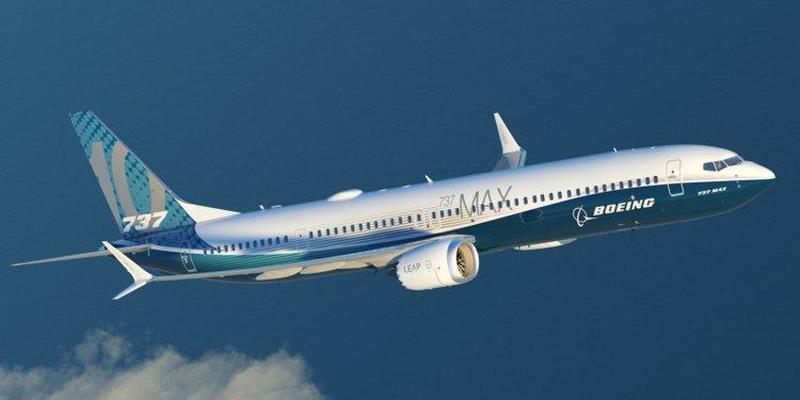
A spokesman for the airline told the newspaper that an investigation had been launched after the incident.

“At Jet Airways, safety of guests, crew and assets is of paramount importance and the airline has zero tolerance for any action of its employees that compromises safety.”

Continue reading
  4381 Hits

Delta 747s operate final charter flights.

From Airline Ratings

delta747_1217

By Steve Creedy

The last Boeing 747 passenger jets operated by a US airline are doing the rounds on Delta Air Lines sports charter flights before heading off to be parked in the desert on January 3.

The handful of NFL charters to airports such as Atlanta, Dallas-Fort Worth, Los Angeles and New Orleans signal an end of an era for US airlines, although the plane lauded as the “Queen of the Skies” will fly on in other parts of the world.

After operating its last scheduled 747 flight between Korea and the US, Delta hosted an “All Hail The Queen” farewell tour for employees and select frequent fliers before Christmas.

The tour included manufacturer Boeing’s Paine Field as well as Atlanta and Los Angeles before ending in the former Northwest Airlines hub of Minneapolis-St Paul.

It ended in style with an officially-sanctioned “missed approach” by a Boeing 747-400 after circling the twin cities at low -altitude.

But the airline says planespotters and other enthusiasts will still have a chance to see a Delta 747-400 through January 2 as four of the big jets visit several airports on charter duties.

Remaining destinations are available on @DeltaNewsHub on Twitter and after that, Delta notes, the big planes will disappear from the skies.

“It’s only fitting that the Queen of Skies finishes her career with Delta carrying teams on to victory, said Bill Wernecke, Delta’s managing director, charter sales and operations. “The 747 has been an excellent ambassador to our military, sports teams, and corporate customers, and it has been an honor for our employees that flew, served, loaded, maintained and sold flights on this aircraft.”

The 747 was the first widebody to sell 1500 units and was instrumental in making air travel more affordable for millions of travelers by allowing airlines to fly more people for less cost.

But giving life to the plane that changed the world was a challenge that brought Boeing, the world’s biggest aerospace company, the then-biggest engine maker Pratt &Whitney and the legendary Pan American World Airways to their knees.

Boeing was immersed in an attempt to build an ill-fated supersonic transport, dubbed the Boeing 2707, and the 747 was considered an interim solution that might carry passengers for five to 10 years until supersonic transports took over.

It was the combined dream of Pan Am founder Bill Trippe and Boeing chief Bill Allen that brought the plane to fruition.

Boeing announced plans to build a 490-seat plane in April 1966, at a new plant in Everett, Washington.

The first Boeing 747-100, City of Everett, rolled out of the plant on September 30, 1968, and made its first flight the following February.

Pan Am operated the first commercial flight from New York to London on January 21, 1970, and Continental Airlines put it on domestic routes in June that year.

In following years, B747s would break records, carry space shuttles and transport US presidents.

Delta received its first 747 in 1970 and like many airlines of the day introduced luxury on-board lounges, including a six-seat space known as the Penthouse which came with its own dedicated flight attendant.

The 747 was also the first of the carrier’s aircraft with overhead bins for carry-on bags instead of open racks.

The airline would retire the last of its 747 fleet in 1977 and would not operate them again until it acquired a new fleet of 747s from its merger with Northwest Airlines in 2008. The merger would give Delta 16 747-400s, two 747-200s and 747-200 freighters.

Northwest had been the first airline to operate the Boeing 747-400 in 1989 and the enhanced version of the 747 would go on to be the biggest selling variant of the Queen of Skies. It included a two-crew glass cockpit, improved engines, optional additional fuel storage and a more efficient airframe.

Its reign has been ended by the emergence of fuel-efficient twin-engine planes with which it could no longer compete.

In Delta’s case, the 747s are being replaced by Airbus A350s. However, Boeing’s 787 and 777 aircraft have also done as much to hasten the demise of the plane.

The US manufacturer has continued to produce a new, more fuel-efficient iteration of the 747, the 747-8, in both passenger and freighter versions.

But it last year hinted it may end production if it failed to receive more orders for the program.

Continue reading
  5106 Hits

AeroUnion Boeing 767 Engine Catches Fire in Los Angeles

From Aviation Voice

au767_1217

AeroUnion Boeing 767-200 freighter, performing freight flight from Los Angeles to Guadalajara with 2 crew, was in the initial climb out of Los Angeles when a crew about to taxi into position called out “engine on fire”.

Tower immediately followed advising AeroUnion of smoke coming from their right hand engine (CF6). The crew advised they would continue on runway heading, tower offered a right turn onto runways 06 or 07 on pilots discretion, the crew decided to stop climb at 1500 feet and return to runway 25L.

The aircraft joined a right downwind for 25L, tower instructed one aircraft on final for 25L to go around and another one to immediately change to approach frequency again. The 767-200 landed safely on runway 25L about 8 minutes after departure, emergency equipment checked the aircraft and reported pretty heavy smoke from the engine, the crew advised they had already discharged one bottle of fire agent.

The occurrence aircraft is still on the ground in Los Angeles about 24 hours after landing back.

Continue reading
  5173 Hits

Japan Airlines Commits to Boom Supersonic Aircraft

From Airline Ratings

boomsst_12517By Geoffrey Thomas

Japan Airlines and US-based Boom Supersonic have announced a strategic partnership to bring commercial supersonic travel to passengers with a commitment to 20, 55-passenger supersonic jets.

Through this agreement, JAL will provide its knowledge and experience as an airline to support Boom in developing the Mach 2.2 aircraft.

As part of the agreement, JAL has made a strategic investment of $10 million in Boom and is collaborating with the company to refine the aircraft design and help define the passenger experience for supersonic travel.

“We’ve been working with Japan Airlines behind the scenes for over a year now,” said Blake Scholl, founder, and CEO of Boom Supersonic.

“JAL’s passionate, visionary team offers decades of practical knowledge and wisdom on everything from the passenger experience to technical operations. We’re thrilled to be working with JAL to develop a reliable, easily-maintained aircraft that will provide revolutionary speed to passengers. Our goal is to develop an airliner that will be a great addition to any international airline’s fleet.”

“We are very proud to be working with Boom on the advancement in the commercial aviation industry. Through this partnership, we hope to contribute to the future of supersonic travel with the intent of providing more time to our valued passengers while emphasizing flight safety,” said Yoshiharu Ueki, President of Japan Airlines.

The JAL Group will continue to embrace new technology to deliver greater customer convenience and comfort, enhance its networks, and improve the quality of its products and services.

Including the JAL commitment Boom as 76 options for its supersonic airliner.

Virgin Atlantic announced 10 options in mid-2017 and there are three other operators for the other 46 aircraft.

Continue reading
  4432 Hits

First A330-300P2F Enters Service With DHL

From Aviation Tribune

dhla330_1217

DHL Express has become the first operator to take delivery of the A330-300 Passenger-to-Freighter (P2F) converted aircraft from Elbe Flugzeugwerke (EFW), the joint venture between ST Aerospace and Airbus.

This delivery, which took place at EFW’s freighter conversion facilities in Dresden, follows the successful completion of test flights in October and awarding of the Supplemental Type Certificate (STC) by the European Aviation Safety Agency (EASA) in November. DHL Express has firm orders for eight A330-300P2F units in total, with additional options to receive another 10.

“DHL Express is very excited to be bringing the first A330-300 P2F into commercial operation within our international air network,” said Geoff Kehr, SVP, Global Air Fleet Management, DHL Express.

“The first aircraft is scheduled to strengthen our Asia Pacific air network, bringing added capacity and increased efficiency to a market where we are seeing dynamic express volume growth.”

“We congratulate DHL on the delivery of its first A330-300P2F. We are confident that this new-generation and efficient mid-sized freighter will bring significant benefits to DHL’s international express operations,” said Christopher Buckley, Airbus EVP Sales.

“With its large internal volume and unbeatable economics, the A330-300P2F allows operators to step up capacity in markets where existing mid-sized freighters are becoming too small.”

The A330P2F conversion programme, launched in 2012, is a collaboration between ST Aerospace, Airbus and their joint venture EFW. ST Aerospace, as the programme and technical lead for the engineering development phase, is responsible for applying for the STCs from EASA and the US Federal Aviation Administration (FAA). Airbus contributes to the programme with OEM data and certification support, while EFW leads the industrialisation phase and marketing for the freighter conversion programme.

The A330P2F programme has two variants – the A330-200P2F and the larger A330-300P2F. The latter is ideal for serving the international express B2B and e-commerce cargo markets, which typically have a higher volume and lower density. The aircraft can carry up to 62 metric tonnes over 3,650 nautical miles, while offering 20 percent more cargo volume and lower cost-per-tonne than other available freighter aircraft types with a similar range.

Continue reading
  4373 Hits

Autonomous Commercial Aircraft - Who Asked For It Technology

From Blue Hawk Aviation

a350_cockpit

In the seemingly unstoppable rollout of who-asked-for-it and what’s-next technology, automated commercial airliners seems to be a hot topic these days. To this end, a just released UBS study argues that a vast savings realized from putting pilots out of work will overcome our demonstrated reluctance to not having a Sully Sullenburger, or anyone for that matter, in the cockpit when the poop hits the fan.

Fortunately, writing for Forbes Dan Reed penned a much more cogent and ordered response to this “Wall Street knows best” report than I am able to for this blog. Read it here: https://www.forbes.com/sites/danielreed/2017/08/11/heres-why-technology-artificial-intelligence-arent-good-answers-for-the-growing-pilot-shortage/#5006b9ef3527

Mr. Reed argues that any lower consumer costs can only get us so far up this particular mountain because there are very significant barriers to autonomous airliners, especially when one considers that in commercial air travel, the safety “bar” is set at a zero failure rate (i.e. no fatalities). These barriers include: nowhere near ready for primetime technology, as of yet undreamed of regulatory requirements and schemes, conveniently and vastly underestimated financial barriers, and a widespread and persistent lack of consumer acceptance that will likely span generations.

The technology piece is probably the lowest of these hurdles to leap, which isn’t to say it will be anything approaching easy. In high reliability industries like commercial aviation and nuclear power generation, outright adoption of disruptive technology doesn’t just happen because a tech billionaire has a wet dream. Technological change is stepwise, and even glacial, and with very good reason. These are industries where even the smallest of human errors can result in catastrophic and outsized loss of life and property. Proponents speak as if many pieces necessary for autonomous control of aircraft are on the shelf and ready to go. Tell me how Equifax just lost the most personal information of fully half the American population to hackers, yet we are somehow ready now with AI and to harden and protect the IT, control systems, spectrum and data links needed to control and back-up an autonomous commercial airliner? There is a nice looking, slightly used CIA RQ-170 drone now owned by Iran that might tell a very different story.

Predictably, UBS envisions that the incentives to autonomous airliners will revolve around money. The UBS report concludes that lower expenses for the airlines will inevitably mean lower ticket prices for consumers, which in turn will inexorably drive demand in our relentlessly cost conscious society. Reed however, wisely touches upon the cost of R/D, certification and investments in consumer acceptance as just some of the expense categories which don’t seem to be addressed in the UBS report.

Boeing and Airbus will have to spend untold billions developing and certifying fully autonomous airliners, but to what end? Simply lowering Delta’s costs out of the goodness of their corporate hearts? No chance. Anything to do with airplanes, especially their development and certification is very, very expensive and these staggering costs will be passed along in the sticker price of the airplanes eventually delivered. Further, we aren’t just talking about the certification of a new airplane, which is already an expensive and risky undertaking (787 anyone), but equally importantly will be the necessary development of an entirely new operational and regulatory paradigm for commercial aviation, something that will need to be paid for and proven to be as safe as the current one, a mark that is currently well in excess of 99.9% safe for the major US air carriers. Untold years of development, testing and certification await. None of this comes cheap and consumers will be expected to pay, if they can even be found to fill the seats.

Speaking of reluctant consumers, one can envision the airlines flying empty autonomous planes around until the concept is proven to be as safe as our current commercial aviation model. Also, Boeing and Airbus will likely have trouble finding companies willing to be on the pointy end of this particular spear because the United, American and Delta’s of the world understand the existential risk of crashing even one airplane. If history is any guide though, it’s a safe bet that airplane manufacturers will do what any industry with an army of lobbyists and an expensive and untested new product facing a questionable market would do: lobby the government to provide financial, regulatory and liability assistance with the development and certification of the aircraft and to deliver tax and liability incentives to early adopters of the new technology.

Put another way, we’ll all get to pay for technology the vast majority of us don’t want, won’t be fundamentally better than what it is replacing and won’t meaningfully lower consumer prices for a long, long time, if ever.

We are living in a golden age of aviation safety. In fact, from 2010 to the present there have been zero fatalities on US passenger airlines. That is not to say however, there haven’t been accidents, errors and mistakes made by humans, pilots included, during the past seven years. Yet high reliability industries like commercial aviation have developed an incredible safety system which recognizes and accounts for the centrality of humans to the process of keeping airplanes out of the dirt. This safety system employs a many layered approach built around humans’ inherent strengths and innate weaknesses.

Put another way, it’s because of well trained and proficient pilots that commercial airplanes don’t crash more often, not despite them. As the saying goes, the pilot is always the first person at the crash scene. Self-preservation has been a prime and generational motivator when it comes to the marvel that is aviation safety. The same cannot be said about the drone operator, computer programmer or Boeing and Airbus’ CEOs – they will all go home to their families at the end of a bad day, regardless of how many mistakes they make at work. And if a computer was controlling US Airways flight 1549 in January 2009, it wouldn’t have even registered the loss of 155 lives stemming from its inability to conceive of reacting the way Captain Sullenberger and First Officer Skiles did to save those people and themselves on that cold day.

It’s instructive to note that the US Department of Defense reports that it lost at least 140 unmanned aerial vehicles, and probably many more that we don’t know of, during the last seven years. This is an astounding accident rate. To be sure, a few of these were lost to enemy fire, which is a risk airliners generally don’t face. However, the overwhelming majority were not. Every one of those drone operators packed up his or her gear and went home to their families after the aircraft they were flying turned into a smoking hole somewhere. Self-preservation is a powerful motivator.

It’s possible that some disruptive technology is just a waste of money. The problem, to my mind is when the money wasted is mine (in the form of tax dollars), the return on investment doesn’t justify the expense and most importantly in aviation, safety is compromised. Perhaps the time, money (private and public) and brain cells that will have to be spent on developing, testing and certifying autonomous airliners that few consumers will want to fly in could be directed towards a more noble pursuit. Let’s get back to developing airplanes that fly higher, faster, farther, cleaner, quieter and ever more safely. We should also develop systems that enable pilots to more intuitively interface with the important and necessary automation that will help them fly these future airplanes more safely and with less fatigue.

I cannot fully envision the cockpit of 100, or even 50 years from now, but I hope it will be a marvel, blending augmented reality and seamless man-machine interfaces all focused on perfect safety – and I definitely see pilots in it. Simply put, if I’m sitting in the back, then someone’s ass needs to be on the line up front.

Copyright©Blue Hawk Aviation

And..... for a little more:  Pilotless Commercial Airplanes? No Thank you.

Continue reading
  4542 Hits

ATR-72 Veered Off Runway After Captain’s Seat Moved Fully Backwards

From Aviation Safety Network

starbow_atr1217

Starbow flight S9 104, an ATR 72-500, suffered a runway excursion during takeoff from Accra-Kotoka Airport in Ghana.

During take off roll from runway 21 and before reaching a speed of 70 kts, the captain's seat suddenly moved full backwards violently and shifted to the left. Whilst controlling the aircraft with the nose wheel steering, the violent seat movement led to the captain turning the tiller to the left causing the aircraft to veer off the left side of the runway. The captain could not gain control of the aircraft until it came to a stop close to the perimeter fence after efforts by the copilot to retard the power levers.

All propeller blades of the no.1 engine were damaged with some prop tips severed after impacting barbed wire at the airport perimeter fence.
Five occupants sustained minor injuries.

The aircraft, 9G-SBF, had only been delivered to Starbow on 22 November 2017.


starbowatr1_1217

Continue reading
  4411 Hits

Airbus To Lead BAe 146 Electric Propulsion Demonstration

From AIN Online

electric_engine1117

Using a BAe 146 airframe, the E-Fan X demonstrator would fly with one of four engines replaced with an electric motor some time in 2020. (Image: Airbus)

By Gregory Polek

Airbus, Rolls-Royce, and Siemens will collaborate on a hybrid-electric technology demonstrator expected to fly in 2020 called the E-Fan X, the companies announced Tuesday at the Royal Aeronautical Society in London. The partners plan to replace one of the four gas turbine engines in a BAe 146 test bed with a two-megawatt electric motor. Plans call for the replacement of a second gas turbine with an electric motor once the program achieves sufficient system maturity, said Airbus.

“The E-Fan X is an important next step in our goal of making electric flight a reality in the foreseeable future,” said Airbus chief technology officer Paul Eremenko. “The lessons we learned from a long history of electric flight demonstrators, starting with the Cri-Cri, including the e-Genius, E-Star, and culminating most recently with the E-Fan 1.2, as well as the fruits of the E-Aircraft Systems House collaboration with Siemens, will pave the way to a hybrid single-aisle commercial aircraft that is safe, efficient, and cost-effective.”

The E-Fan X demonstrator will explore the challenges of high-power propulsion systems, such as thermal effects, electric thrust management, altitude and dynamic effects on electric systems and electromagnetic compatibility matters. The program aims “to push and mature” the technology, performance, safety and reliability for quick progress on the hybrid electric technology. It would also establish the requirements for future certification of electrically powered aircraft while training a new generation of designers and engineers on the technology.

Under the development plan, Airbus will assume responsibility for overall integration and the control architecture of the hybrid-electric propulsion system and batteries, along with its integration with flight controls. Rolls-Royce, meanwhile, will contribute the turboshaft engine, two megawatt generator and power electronics. Along with Airbus, Rolls-Royce will also work on the fan adaptation to the existing nacelle and the Siemens electric motor. Finally, Siemens will deliver the two megawatt electric motors and their power electronic control unit, as well as the inverter, AC/DC converter, and power distribution system. The Siemens contribution adds to the E-Aircraft Systems House collaboration between Airbus and Siemens, which aims at development and maturation of various electric propulsion system components and their terrestrial demonstration across various power classes.

“In April 2016 we opened a new chapter in electric-mobility with the collaboration with Airbus,” said Siemens chief technology officer Roland Busch. “Building up electric propulsion for aircraft, we are creating new perspectives for our company and also for our customers and society. With the E-Fan X partnership, we now take the next step to demonstrate the technology in the air.”

The companies see the studies as a step toward meeting the EU technical environmental goals of the European Commission’s Flightpath 2050 Vision for Aviation, which calls for a reduction of CO2 by 60 percent, a reduction of NOx by 90 percent and noise by 75 percent. “These cannot be achieved with the technologies existing today,” said Airbus. “Electric and hybrid-electric propulsion are seen today as among the most promising technologies for addressing these challenges.”

Continue reading
  5090 Hits

A Good Laugh Is Needed Sometimes

From AVWeb

laugh_1117

DHS Hacked Airliner Systems

By Russ Niles

The Department of Homeland Security has reportedly told a cyber security conference it was able to hack the internal systems of a Boeing 757 sitting on the ramp at Atlantic City Airport with no help from anyone on board or anywhere near the aircraft. “We got the airplane on Sept. 19, 2016. Two days later, I was successful in accomplishing a remote, non-cooperative penetration,” DHS cyber security expert Robert Hickey is quoted as saying by Avionics Today. “[Which] means I didn’t have anybody touching the airplane, I didn’t have an insider threat. I stood off using typical stuff that could get through security and we were able to establish a presence on the systems of the aircraft.” Hickey was speaking at the CyberSat Summit in Virginia Nov. 8.

How the hack was done is classified but Hickey suggested it gave the hackers comprehensive access to the aircraft’s systems. Hickey noted that newer aircraft like the Boeing 737 MAX and 787 and Airbus’s new A350 have more robust security but 90 percent of the fleet has the same vulnerabilities as that 757. Two years ago a security researcher claimed to have gained access to an airliner's flight systems through its entertainment system but those claims were never verified.

Continue reading
  4074 Hits

Engine Failure Takes Out Two Engines of SA Airlink RJ85

From Aviation Voice

Airlink_1117SA Airlink Avro RJ-85, performing flight from Harare to Johannesburg with 34 passengers and 4 crew, was enroute nearing the top of descent towards Johannesburg when the #2 engine suffered an uncontained failure ejecting parts of the hot section and turbine towards the #1 engine causing the engine to fail, too.

The aircraft continued to Johannesburg, was vectored for an approach to runway 21R (runways 03 were active) while other aircraft were pulled off the approaches to runways 03 and landed without further incident, vacated onto taxiway L and taxied to the apron followed by the emergency services awaiting the aircraft.

The airline reported all passengers remained uninjured and wrote: “While en route one of the four engines suffered an uncontained failure which then caused damage to its adjacent engine. Upon assessing the damage and status of the aircraft, the crew elected to continue to Johannesburg where it landed safely under the power of its remaining two engines.

At no point was the safety of the passengers or crew in jeopardy. Airlink has notified the South African Civil Aviation Authority, which will launch an investigation into the event in order to determine its likely cause. Airlink will provide whatever technical assistance is requested by the SACAA.”


rj85engines_1117

Continue reading
  4554 Hits

When Automation Fails, Qantas Pilot Employs Military Training

From AIN Online

quantas_a330

By Pete Combs

When the autopilot suddenly switched itself off aboard Qantas Flight 72 on Oct. 7, 2008, pilot Kevin Sullivan was puzzled. The Airbus A330, on a flight from Singapore to Perth, was approaching the coast of northwest Australia near the town of Exmouth. The weather was clear and the aircraft seemed to be operating normally.

The mystery was compounded by the jarring sound of the stall warning. Odd, Sullivan thought. He was in cruise configuration at 37,000 feet on a clear day. Whatever the A330 was doing, it wasn’t stalling. A moment later, Sullivan found himself staring straight ahead at the Indian Ocean and his world changed forever. The aircraft’s complex automation had malfunctioned and the only thing that stood between Qantas Flight 72 and the deep blue sea was Sullivan’s extensive experience.

“It was an aggressive pitch-down—violent, without warning,” Sullivan told AIN. “I had to brace myself on the glareshield. There are no warnings that say the airplane can maneuver violently on its own. But it did.”

Sullivan hauled back on the sidestick, pulling it almost to the stop. Nothing happened. So he reverted to his training as a high-time U.S. Navy fighter pilot. He neutralized the controls.

“I was looking at the Indian Ocean filling my windscreen. My control input was not effective. I was basically a passenger at that point, not a good place to be if you’re pilot-in-command. So I let go of the stick,” he said.

At the moment of the pitch-down, the Airbus had been holding a nose-high attitude of +2 degrees. Two seconds later, the nose had dropped -8.4 degrees. The wings sliced through the air with an audible rushing sound as the aircraft went from +1g to -.8g.

VIOLENT PITCHING

In the back of the airplane, dozens of passengers who were standing or seated without wearing their seatbelts were thrown up to and in some cases, through the carry-on bins and ceiling panels.

“What the hell just happened?” asked Sullivan’s second officer, who was flying right seat.

“That’s when the startle hit,” said Sullivan, a veteran pilot who had logged more than 17,000 flight hours. He didn’t know what happened, but he figured the A330’s computers were reacting to something. He noted a fault in one of the flight control primary computers (FCPC). Sullivan reset the FCPC, known as PRIM3.

Again, without warning, the aircraft violently pitched down. Again, Sullivan was unable to stop it by pulling back on the stick. Again, he let the stick go to neutralize the controls.

“I’m in trouble,” Sullivan remembered thinking. “I don’t know what’s happening and the airplane isn’t communicating with me. I’m getting master caution chimes. But every time they sounded, a message would flash on the computer monitor and quickly disappear. We couldn’t discern what was wrong.”

Unwilling to trust the A330’s automation anymore, Sullivan left the autopilot off. He disconnected the auto-trim and autothrottles. He declared a Pan (indicating an urgent situation that was not immediately life-threatening_ and, moments later, a Mayday.

The closest airport was a sleepy joint military/civilian field called RAAF Base Learmonth, approximately 37 kilometers south of Exmouth. Given the number and extent of injuries on board, Sullivan opted to land there rather than continue another hour-and-a-half to Perth. Exmouth had a small hospital with just two ambulances. ATC told Flight 72 the hospital would need a half-hour to prepare. That was fine with Sullivan. He needed the time to figure out how he would land his crippled A330.

The stall warning continued to sound—as did the master caution and overspeed warnings. The cacophony was terribly distracting, Sullivan remembered. Ignoring them required a special effort, he added, since company policy called for a mandatory response to some of the warnings. Unable to ascertain the extent to which his aircraft was malfunctioning, Sullivan again reverted to his military training.

“In the Navy, we used a ‘high-energy’ approach in single-engine jets when we suspected airframe or engine damage due to combat,” Sullivan said. From 37,000 feet, he would pull the throttles back to idle, then approach the field in a high-angle, high-energy configuration.

Even then, the aircraft refused to cooperate, Sullivan recalled. His first officer had returned to the flight deck by this time, his nose broken in the pitch downs. The first officer tried to enter a non-precision approach to Learmonth. The computer refused to accept it.

Manual Approach and Landing

Flight 72 circled Learmonth, descending until it was abeam the field at 11,000 feet. That’s when Sullivan began his visual approach. He recalls his thoughts during the experience.

Thrust to idle.

Nose down.

We need to lose 8,000 feet to arrive at 3,000 feet for a ten-mile final.

Sullivan turned to base at 5,000 feet, constantly worried that the aircraft would again pitch down. Using the radio, the Second Officer activated the PAPI as Flight 72 turned to final.

“Speed,” warned the first officer.

“Acknowledged,” replied Sullivan. He wanted to be fast as he aimed just shy of the runway threshold.

Gear down. That worked. Good.

Flaps at configuration 2.

Trim manually.

Throttles still idle.

1,500 feet, still descending at 3 degrees, verified by the PAPI.

Threshold.

Touchdown.

From the back of the air plane, the passengers gave Sullivan and his flight crew a rousing cheer. The stall, master caution and overspeed warnings continued to sound even as Flight 72 taxied to the small terminal at RAAF Learmonth.

As medical crews rushed aboard to help the injured passengers and crew, Sullivan walked aft through the passenger cabin. He was “heartbroken” at the devastation. Images of the bruised and bloodied passengers and crew seared themselves into his brain.

Sullivan remained in command of both passengers and airplane until all of the injured had been cared for. He then shepherded the remaining passengers into the terminal. Hours later, two Qantas aircraft landed at Learmonth to fly the passengers and crew back to Perth. Only after they arrived at their original destination, said Sullivan, did he allow himself to relax.

Post-flight analysis by the Australian Transportation Safety Bureau (ATSB) showed one of the A330's three air data inertial reference units (ADIRUs) was sending faulty information to the FCPCs in spikes every 1.2 seconds. The flight control computers misinterpreted that data, causing them to react as though the aircraft was in a nose-high stall. That led to the pitch downs.

Sullivan and his crew were commended by the ATSB for their professionalism

In all, 110 passengers and eight crewmembers were injured in the pitch-down incidents—some severely.

And you can add one more casualty to the list.

Plagued by post-traumatic stress syndrome and the memory of those who were so badly hurt, Sullivan attempted several times to resume his career as a pilot. But after seven torturous years, he gave up in 2015, convinced that his future lies somewhere other than in the cockpit.
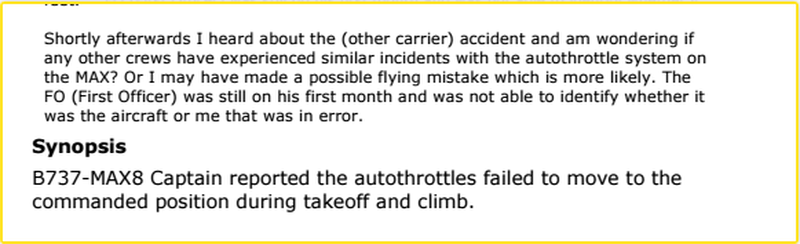
Continue reading
  4575 Hits

747 Flies Final U.S. Passenger Flight

From AvWeb

United747

Boeing’s 747, the iconic humped two-decker jet, flew its last flight for United Airlines on Tuesday. The four-engine widebody has lost ground to more-efficient modern aircraft. A United Airlines crew flew the final trip, from San Francisco to Honolulu, tracing the same route as the first United 747 flight in 1970. “From a 1970s-inspired menu to retro uniforms for flight attendants to inflight entertainment befitting of that first flight, passengers will help send the Queen of the Skies off in true style,” United said in a news release. The 747 will remain in Honolulu, United said, and passengers on the final flight were booked to go home on a different airplane. United was the airplane’s last U.S. operator in the passenger capacity. Delta retired its last 747 on Sept. 7.

British Airways, Korean Air and a few other international airlines still fly the jets on passenger trips. Boeing will continue to produce the 747-8F, exclusively for freight operators. The freighter can carry up to 224,900 pounds, with a range of 4,120 NM, and the ability to open up the whole nose of the airplane is a key feature when loading large items.

Continue reading
  4055 Hits

Canada Dropping Checks On Check Pilots?

From AvWeb

pilots_1117

By Russ Niles

Transport Canada might leave all pilot proficiency checks on airline pilots up to the airlines themselves, according to documents obtained by the union representing government inspection pilots. The Canadian Federal Pilots Association, which represents mostly federal government pilots, says its reading of the documents suggests airline check pilots will no longer be evaluated on their competence to assess the skills of line pilots as of next spring. The change is scheduled for April 1, 2018, for aircraft carrying 50 or more passengers.

"I think it's very, very important that people understand we are getting closer to self-regulation all the time," said union president Greg McConnell. "It's just more cutting, more dismantling of the safety net.” It’s also a shift away from international standards but the documents, obtained under a freedom of information request, appear to suggest that Canada will get away with it.
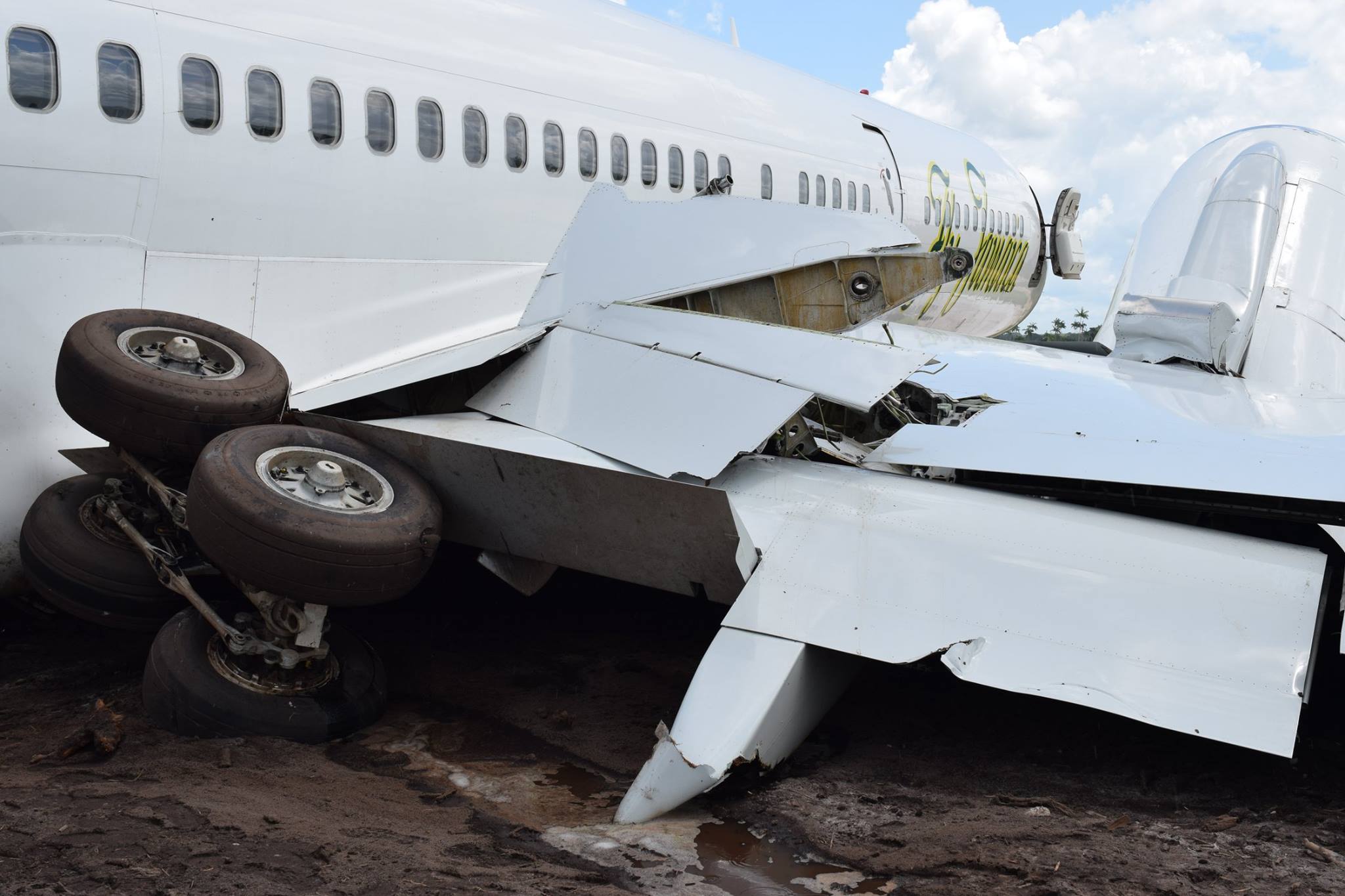
The International Civil Aviation Organization, which is based in Montreal, mandates regular pilot evaluations by the 190 member states’ regulatory agencies. But in their risk assessment document accompanying the proposal, Transport Canada staff say check pilots almost never fail their evaluations and inspection staff time would be better spent on higher risk areas of aviation. "It could be argued that Canada's experience and relative maturity with systems-based surveillance will adequately complement this shift of responsibilities ... and therefore mitigate any concerns other states or trade associations may have with response to such a departure from globally accepted practices," the risk-assessment document says. The documents also say that Transport Canada is having trouble hiring qualified inspector pilots.

Continue reading
  4085 Hits

Mexican airline interested in buying Russian MC-21 passenger jet

From RT

MC21The Mexican carrier Interjet is interested in acquiring Russian MS-21 aircraft, company president Miguel Aleman Velasco told RIA Novosti.

"We are very interested in the MC-21, because its components are lighter, it consumes less fuel… Its engines are from North America, but we hope that Russia will make its own engines, which will make the jet even lighter," he said after a meeting with the Russian Minister of Industry and Trade Denis Manturov.

Russia has been working on the Irkut MC-21, a twin-engine short- to medium-haul jet airliner that can carry 151 to 212 passengers depending on the model and seating configuration. The jet is designed for the mass-market travel industry to compete with Boeing's 737 and Airbus' A320.

The producer hopes the plane will replace the aging fleet of Soviet-made passenger aircraft and compete for a share of the global market, thanks to its relatively low price and higher cruising speed.

The first examples of the airliner are to be powered by Pratt & Whitney PW1400G engines, while those for the domestic market will use the new PD-14 engine.

The plane maker promises significantly more space for passengers given the MC-21 has the widest fuselage in its class. It also has extra-large windows. According to the maker, there are orders for 175 MC-21 jets, mostly from Russia’s largest carrier Aeroflot.

The MC-21 maiden flight took place in Russia's Irkutsk in May.

Continue reading
  4039 Hits

FAA: Ban Laptops From Baggage Holds, Not Cabins

From AvWeb

laptop_1017

By Paul Bertorelli

Just months ago, government security agencies were contemplating a ban of electronic devices larger than a cellphone from airliner cabins, but this week, the FAA is calling for the opposite. In a paper filed with the International Civil Aviation Organization, the FAA said its tests show that large electronic devices such as laptops can cause fires that could overwhelm the fire suppression system airline baggage holds are equipped with. The paper said such a fire could be serious enough to result in a hull loss.

Last summer, the Department of Homeland Security was considering banning laptops from airliner cabins of inbound international flights because of what it described as potential terrorist threats. The agency encountered plenty of pushback and decided not to pursue the ban, which would have displaced laptops from the cabin to baggage holds. The FAA's proposed baggage hold ban will be on the agenda at an ICAO conference on dangerous goods to be held in Montreal next week.

Continue reading
  4015 Hits

Complex Three-Engine Ferry For A380

From AvWeb

af_a380_1017

By Russ Niles

Air France plans to ferry a damaged A380 back to France from Goose Bay, Newfoundland and Labrador on three engines but before it can do that it has to install a new engine that won't be running. The aircraft lost the front section of its No. 4 engine, including the 10-foot fan, over Greenland on Sept. 30 and made an emergency landing at the Cold War-era air force base at Goose Bay, stranding 521 passengers and crew for 12 hours until two aircraft could be dispatched to pick them up. Besides the engine, the aircraft suffered pylon and wing damage and the combination has greatly complicated the effort to repatriate the Super Jumbo.

The wrecked engine will be removed and sent to Wales for inspection by the manufacturer Engine Alliance. For balance and aerodynamic stability a new engine will be installed but because of the other damage it can’t be hooked up and made operable. While there is plenty of power from the remaining engines for takeoff (Goose Bay has 11,000 feet available) the flight planning and crew training requirements for the ferry flight are extensive. We can’t verify the information supplied by Capt. Dave Wallsworth, a British Airways A380 captain, who maintains a regular Twitter feed about his job, but by his account, the rescue mission is a monumental effort.

From Captain Dave on Twitter

 notes_1017

Continue reading
  4520 Hits

ATC Proposal Dominates NBAA

From AvWeb

tower_1017

By Russ Niles

Aviation leaders presented a united front Tuesday in their resolve to kill a bill that would turn air traffic control services over to a nonprofit corporation. At the annual media breakfast at the NBAA-BACE convention being held in Las Vegas, the leaders of most general aviation groups urged delegates to flood the inboxes of their elected representatives with messages of opposition to the proposal. They were also told the bill currently in play, H.R. 2997, doesn’t have the votes to go through but that shouldn’t stop them from letting their representatives know about their opposition. A video featuring well-known aviation leaders appears below.

The main issue is the makeup of the 13-member board of directors they say is weighted toward airline representation. The fear is that access to and availability of airspace will be prioritized for airlines at the expense of general aviation. EAA Chairman Jack Pelton acknowledged that “fatigue” over the frequent call by he and his colleagues for grass-roots political support is a real factor in this current battle but he also noted the process is simple. NBAA President Ed Bolen said the process he and the others have been through in fighting the bill is an example of why the current system should be preserved. The leaders have had numerous meetings with elected officials to make their case and they’ve been received without reservation. He said if the 13-member board of directors takes over, they will be under no obligation to hear from those affected by their decisions.

Continue reading
  3966 Hits

Damaged A380 Diverts To Goose Bay

From AvWeb

a380_1017By Russ Niles

Air France is facing a daunting technical challenge to repair an extensively damaged A380 at one of Canada’s most remote airports. Flight 66 from Paris to Los Angeles was almost across the Atlantic when the No. 4 engine had an uncontained failure that blew off the cowl and the crew diverted to Goose Bay, Newfoundland and Labrador. Twitter photos show extensive damage to the engine and it appears the pylon and perhaps the wing are also affected. Passengers reported hearing a loud noise followed by vibration and an hourlong flight to Goose Bay. It's the second uncontained engine failure on an A380 but the first one, on a Qantas super jumbo in 2010, involved a Rolls-Royce engine. The engine that blew on Saturday was made by Engine Alliance, a joint venture by GE and Pratt & Whitney. The aircraft had about 520 passengers and crew on board and the airport is not equipped to handle that kind of influx so passengers were kept on the airplane waiting for other aircraft to be sent to pick them up. The A380 likely isn’t going anywhere soon.

Goose Bay is a former U.S. Air Force Base used in the Cold War as a nuclear weapons staging base and it has 11,000-foot and 9,000-foot runways. These days only a small Royal Canadian Air Force helicopter squadron is based there. Only regional airlines offer scheduled service so it doesn’t have facilities to do major repairs on an A380. The airline will have to ship in the parts and create temporary facilities to fix the plane. Last February a Swiss Global Airlines Boeing 777 had to land in Iqaluit, Nunavut, due to engine problems and the airline swapped the engine in a large tent. But there was no secondary damage to the aircraft in that incident and the A380 repairs are likely to be more involved.

Continue reading
  4535 Hits

US airlines say goodbye to the iconic Boeing 747

From Airline Ratings

United 747By Steve Creedy

The last US airlines operating the passenger version of the Boeing 747 are in the process of saying goodbye to the “Queen of the Skies” with United Airlines’ last flight scheduled for November 7.

Delta Air Lines and United are moving to retire the iconic US-made jumbo jet after almost four decades in service.

United’s farewell 747 flight will be from San Francisco to Honolulu and its last international 747 flight will head to Seoul, Korea, from San Francisco on October 29.

Delta will retire its fleet by the end of 2017 to replace them with Airbus A350s made by Boeing rival Airbus. Delta will take delivery of five A350s in 2017 with more coming in 2018.

Delta customers and employees have started their farewells to the big plane after the aircraft operated its final Tokyo-Narita to Honolulu flight and made a rare appearance on two domestic legs earlier this month.

United’s final flight will recreate the airline’s first 747 flight in 1970 with a seventies-inspire menu, retro uniforms and inflight entertainment “befitting of that first flight”. It will be named “Friend Ship” after the first United aircraft.

Seats on the flight went on sale through united.com September 18 but will not include those on the upper deck, giving all passengers the opportunity to enjoy a space once used for spacious bars and lounges. However, customers in first and business class will go into a draw to occupy a select number of upper-deck seats.

United will begin the final journey at 9am San Francisco time with a gate celebration featuring speeches, a Boeing 747 gallery and remarks from United employees and executives.

The flight is due to depart at 11am and arrive in Honolulu 2.45pm local time to more farewell celebrations.

The 747 OPENED UP AIR TRAVEL FOR MILLIONS

The 747 was the first widebody to sell 1500 units and was instrumental in making air travel more affordable for millions of travellers by allowing airlines to fly more people for less cost.

But giving life to the plane that changed the world was a challenge that brought Boeing, the world’s biggest aerospace company, the then-biggest engine maker Pratt and Whitney and the legendary Pan American World Airways to their knees.

Boeing was immersed in an attempt to build an ill-fated supersonic transport, dubbed the Boeing 2707, and the 747 was considered an interim solution that might carry passengers for five to 10 years until supersonic transports took over.

It was the combined dream of Pan Am founder Bill Trippe and Boeing chief Bill Allen that brought the plane to fruition.

Boeing announced plans to build a 490-seat plane in April, 1966, at a new plant in Everett, Washington.

The first Boeing 747-100, City of Everett, rolled out of the plant on September 30, 1968, and made its first flight the following February.

Pan Am operated the first commercial flight from New York to London on January 21, 1970, and Continental Airlines put it on domestic routes in June that year.

United received its first 747-100 on June 26 and made the first San Francisco-Honolulu commercial flight on July 23.

In 1985, United announced plans to acquire Pan Am’s Pacific routes as well as 11 Boeing 747SP planes. The 747SPs, regarded as sports cars of the range, were shorter and could fly higher, faster, and farther than standard 747 models.

In January, 1988 Friendship One, a Boeing 747SP owned by United Airlines, set the around-the-world air speed record of 36 hours, 54 minutes, and 15 seconds in a children’s charity flight. Passengers on the flight included astronaut Neil Armstrong, famed test pilots Bob Hoover and Lieutenant General Laurence C. Craigie, and Moya Lear, the widow of Lear Jet founder Bill Lear, as guests.

United received its first longer-range B747-400 in June, 1989.

The big jet has also been used by NASA as a carrier vehicle for the space shuttle and as a platform for an infrared telescope.

The first of two specially modified B747-200Bs was delivered in August, 1990, to take over the role of Air Force One from the Boeing 707.

Boeing has continued to produce a new, more fuel-efficient iteration of the 747, the 747-8, in both passenger and freighter versions.

But it last year hinted it may end production if it failed to receive more orders for the program.

Continue reading
  4338 Hits

Horizon Cancels Route In Pilot Shortage

From AvWeb

horizon_917

By Russ Niles

Horizon Air says it can no longer fly to Colorado Springs from Seattle because it doesn’t have enough pilots. The airline, cancelled six percent of its flights in June because of its pilot shortage but this might be the first time a route has been abandoned because of it. Horizon says it faces a pilot shortage for at least another year according to a news release from the Colorado Springs Airport. The release quoted airline officials as saying shortages “are expected to continue for some time.”


Meanwhile, while Horizon is a subsidiary of Alaska, the parent company is shifting some of its regional capacity to Skywest Airlines and essentially allowing the independent regional carrier to compete with its own company. Skywest flies 20 new Embraer E175 jets for Alaska and while Horizon has ordered 30 similar aircraft, it only has two in the air and recently deferred delivery of six of the Brazilian airliners. Horizon flies mainly well-used Bombardier Q400 turboprops. Skywest has ordered five more E175s to use on Alaska routes and Horizon’s pilot union filed a lawsuit disputing Horizon’s deferral of its E175 delivery.

Continue reading
  3865 Hits

Airport Worker Hurt After Being Hit by Airliner

From Travel Pulse

American_Eagle_Flight_ 5233

By Donald Wood

An American Airlines regional flight that landed at Charlotte Douglas International Airport struck a pushback tractor as it was being taxied to the gate, leaving the driver of the vehicle injured.

According to Fox Charlotte, American Eagle Flight 5233 arrived Wednesday in North Carolina from Yeager Airport in Charleston, West Virginia, when it started to taxi to the gate. At around 4 p.m. local time, the plane struck the tug near the north side of the E terminal.

None of the thirty-one passengers and three crew members on board the plane at the time of the incident reported injuries. As for the driver of the pushback tractor, he was taken to a local hospital where he was listed in stable condition.

The airport fire department and medical personnel were called to the scene and acted quickly to get the driver out of the damaged vehicle and to the hospital.

As a result of the collision, planes near Terminal E were not permitted to move until the investigation was completed. Passengers on departing and arriving flights were told to expect delays.

Officials from the Federal Aviation Administration lifted a ground stoppage at 5:26 p.m. local time and flights resumed. A short time later, the airport said it was “open and operational” on social media.

Continue reading
  3918 Hits

TIRE FAILURE DAMAGES JETSTAR DREAMLINER WING

From Airline Ratings

tire_failure_917

By Steve Creedy

A Jetstar Boeing 787 was forced to return to Singapore’s Changi Airport after debris from a shredded tyre damaged a wing and caused flaps to malfunction.

The plane was headed to Melbourne with 231 passengers and 11 crew on board when the pilots received an alert that the wing flaps were not retracting evenly.

Flaps are moveable flight surfaces on the wing designed to increase lift at lower speeds during landing and take-off. The forces affecting an aircraft become unbalanced if the flaps on both wings do not deploy and retract together.

An Australian Transport Safety Bureau report into the May 13, 2017 incident found the left wing flaps were unable to move due to damage to a “torque tube” broken when debris from the tyre smashed through a panel on the underside of the wing.

The damage caused a misalignment with the right wing flaps, prompting the aircraft to shut down the flap drive system and generate a fault message.

The pilots notified air traffic control, put the jet into a holding pattern at 6000ft and decided to return to Singapore, opting not to dump fuel because of the proximity of other aircraft.

This was in accordance with procedures the Jetstar crew were following to land the aircraft safely.

“While the crew did not know about the tyre damage, the aircraft protective systems and crew actions allowed for a safe return and landing, despite the aircraft being overweight and at a higher than normal landing speed,’’ the report said.

TIRE DELAMINATION

The ATSB found the flap problem was a result of the delamination of the number 6 wheel tyre, likely at the southern end of runway 20C when the wheel was at high speed.

This gave the debris sufficient energy to penetrate the underwing panel, break the torque tube and interrupt the flap drive system.

The incident occurred before the tyre reached its expected service limit and the manufacturer concluded it had operated on an “aggressive” surface such as a grooved runway. It found the tyre experienced wear on the shoulder which led to cracking and undercutting of the tread.

The tyres had been certified as inspected according to the manufacturer’s requirements ahead of departure but no faults were recorded.

Nonetheless, Investigators said it was possible the tread was already damaged before departure.

“The arrival inspection likely occurred during daylight hours, but the aircraft may have been parked with the tyre tread positioned such that the initiation site was not visible to the inspector,’’ the report said “However, this was not confirmed by the ATSB.”

Jetstar has told its pilots and engineers to pay particular attention to the shoulder area of B787 tyres during inspections. 

Continue reading
  4667 Hits

UK Study Slams Seat Spacing

From Airline Ratings

seats_817

By Geoffrey Thomas

As the US Federal Aviation Authority moves to examine spacing between airline seats, AirlineRatings.com has uncovered a 2001 UK study which warned about the safety consequences of shrinking airline seating.

The UK study “Anthropometric Study to Update Minimum Aircraft Seating Standards” was initiated by the Joint Aviation Authorities (JAA) under United Kingdom (UK) Civil Aviation Authority (CAA) funding and found that many economy-class passengers do not have enough space to assume the correct “brace” position for emergency landing. It also found the seats themselves are obstacles to quick emergency evacuation of the cabin.

The study’s findings into the distance between seats (seat pitch) adds significant weight to a US Court ruling forcing the US Federal Aviation Authority to look at minimum standards for seat pitch and width on commercial airliners.

The United States Court of Appeals For the District of Columbia, considered by some to be the second most influential court in the land, was responding to a petition by lobby group Flyers Rights.

The court said the consumer group contended narrower seats and closer spacing were “endangering the safety, health, and comfort of airline passengers.”

“This is the Case of the Incredible Shrinking Airline Seat,” wrote Judge Millett. “As many have no doubt noticed, aircraft seats and the spacing between them have been getting smaller and smaller, while American passengers have been growing in size.”

The fundamental rule the FAA uses before certifying an aircraft to carry passengers is the ability to evacuate all passengers within 90 seconds, in low visibility with half the exits blocked.

However, the UK study conducted by ICE Ergonomics Ltd found that cramped seating can trap and trip passengers during an emergency evacuation and it found that more space was needed for today’s overweight and taller passengers.

The study was safety-focused and did not comment on the comfort of passengers but it found that “economy-class passengers are so tightly packed together that they cannot assume a correct brace position for emergency landing”.

The study concluded that the minimum dimensions need to be expanded by at least 3 inches (7.62cm) in terms of seat pitch from about 28 inches to 31 inches. The report also said that “the current widths of typical economy class seats, and in particular the distances between the two armrests, are totally inadequate to accommodate larger bodied passengers.”

Most low-cost airlines have seat pitches between 28 and 30 inches, while traditional carriers typically offer 31 to 33 inches spacing.

Many low-cost airlines now offer extra spacing for a small cost – but find that thrifty passengers are reluctant to spend the extra required.

The CAA recommended increases in pitch and width but that went into limbo after the responsibility was taken over in September 2003 by the European Aviation Safety Agency (EASA).

Airlines – and their passengers – have been squeezed by the constant demand for cheaper fares and the increased height and weight of the population.

In 2000, it was estimated by the American Journal of Preventative Medicine that airlines in the US had to use an additional 300 million gallons of fuel to carry the increasing weight of passengers.

More than one-third (36.5 per cent) of U.S. adults are now classified as obese, something that prompted the FAA on August 12, 2005, to increase the weighting of passengers.

The FAA lifted the male passenger with carry-on weighing from 185 to 200lbs for summer and 190 to 205lbs for winter.

The averages for women – who are also weighing in heavier – increased from 145 to 179lbs in summer and 150 to 184lbs in winter.

But this is not just a US problem. Downunder, The Australian and New Zealand Obesity Society has shown that the image of the lean athletic bronzed Aussie is a myth, citing a 2014-15 Australian Bureau of Statistics figures showing that 63.4 per cent of Australian adults were overweight or obese (11.2 million people). This is a big jump from the 56.3 per cent in 1995.

Height is the other issue. According to R W Howard’s “Interrelating Broad Population Trends”, the world’s population has grown almost 3 inches (7cm) from 1945 to 2000 because of better nutrition and health.

According to research led by scientists from Imperial College London, the average human height has gone up in industrialized countries over the past 100 years ranging from the United Kingdom to the United States to Japan, with gains of up to 10 centimeters (4 inches).

But the gains are uneven.

The research found that South Korean women and Iranian men have the biggest increases in height over the past 100 years. Iranian men have increased by an average of 6.4 inches (16.5cm), and South Korean women by 7.95 inches (20.2cm).

The evacuation of aircraft has also come under close scrutiny for another reason – the insistence of passengers to take their carry-on baggage with them in an emergency.

Airfares would have to triple if aviation regulators were to re-certify aircraft to the reality of recent chaotic passenger evacuations that are taking up to 6 minutes – not 90 seconds.

Passengers are risking their lives, and those of fellow passengers, with the obsession of taking cabin baggage with them in an emergency.

If regulators, for instance, were to recertify the long-range Boeing 777 to the reality of what actually happens, the 550-exit limit aircraft would have to be recertified to just 183 passengers – half its typical load.

But for smaller aircraft such as the widely used A320 – and Boeing 737 – which has an exit limit of 195 and a typical configuration of 180 mostly economy passengers the impact would be devastating with a new limit of just 65.

That would mean a tripling of airfares to make the aircraft economically viable.

And authorities are already stirring. Last year, after a British Airways incident at Las Vegas the highly respected British Civil Aviation Authority issued a blunt warning to its airlines: Stop passengers taking their hand luggage off with them in an emergency evacuation.

Continue reading
  4660 Hits

Ditching Pilot Charged With Fraud

From AOPA

conartist_817

Texas pilot Theodore R. Wright III emerged from the Gulf of Mexico in 2012 with a story to tell.

By Jim Moore

He had ditched a Beechcraft Baron; filmed himself and his passenger treading water while awaiting rescue; and soon made the rounds on television with his video and harrowing tale of a cockpit fire, emergency descent, and water landing. Federal prosecutors say that was actually the first in a series of acts in a conspiracy to commit insurance fraud and arson by destroying two airplanes, a sports car, and a yacht.

Wright and his passenger from the 2012 Baron ditching, Raymond Fosdick, are among four men who now face decades in federal prison if convicted of all charges in the U.S. District Court for the Eastern District of Texas in Tyler. Wright was arrested June 28, posted bond, then lost his freedom again July 5 when U.S. District Court Judge Ron Clark ordered Wright to be remanded to custody pending a trial scheduled to begin in October.

Once all four accused conspirators had been arrested by late July, the court unsealed the 25-page indictment detailing accusations against the quartet, with much of that case focused on Wright. Fosdick, who was arrested in South Carolina July 21, and Shane Gordon, who was associated with Wright in a variety of business ventures, as well as a registered charity Wright created, are accused of conspiring in various ways. Alleged conspirator Edward Delima was taken into custody in Hawaii, where prosecutors say he insured a 1998 Hunter Passage yacht (which Wright had purchased for $50,150) for $195,000, a few months before it sank at the dock.

Fosdick stands accused of participating in the first act of fraud, the Gulf of Mexico ditching, though Wright alone is named in conjunction with each overt act alleged in the federal grand jury’s indictment. According to that indictment, signed about a month before Wright's arrest, Wright prepared himself to ditch the 1966 Baron, N265Q, attending “water-landing training” in Alabama on three occasions prior to the Baron’s final flight: in April 2012, August 2012, and September 2012.

On Sept. 20, 2012, Wright and Fosdick departed Baytown, Texas, bound for Bradenton, Florida, a flight that ended in the deep water of the Gulf of Mexico, from which the aircraft was never recovered. Wright had purchased the Baron in March 2012 for $46,000, insured it for $85,000 in April 2012, and collected an $84,000 insurance payout Oct. 3, 2012.

“Hopefully we never have to do that again,” Wright told AOPA in a telephone interview on Oct. 9, 2012, offering an account of the experience coping with a purported in-flight fire that had transformed him, if briefly, into a media celebrity. His version of events at the time contrasts sharply with the version put forward more recently by federal prosecutors. According to federal court documents, Fosdick went on to sue Wright for $1 million for injuries and damages sustained in the September ditching. Fosdick settled his claim against Wright's insurance company for $100,000 in December 2013, and the proceeds were eventually divided between the two men and their lawyers.

A month later, Wright bought a 2008 Lamborghini Gallardo with a salvage title for $76,000, insured it, and then drove it into a ditch full of water on March 9, 2014. Wright went on to collect $169,554.83 from the insurance company, a check deposited by Gordon.

Five days after the Lamborghini was flooded, Wright purchased a 1971 Cessna Citation for $190,000, and subsequently insured it for $440,000 through one of several companies Wright and Gordon were involved in as listed corporate officers. Prosecutors say Fosdick flew to Athens, Texas, to destroy the jet on Aug. 29, 2014. Excerpts from a text message conversation between Wright and Fosdick are included in the grand jury indictment:

“Just don’t look suspicious there,” Wright warned in an iMessage exchange. He offered advice to Fosdick, who reported trouble with engine start. Later, Fosdick advised he had company:

“Old man just showed up,” Fosdick wrote, drawing an expletive from Wright in reply.

Prosecutors say Fosdick left the Citation at the airport on Aug. 30, 2014, and returned Sept. 12, 2014, to finish the job. Wright offered advice on vehicle “switcheroos:”

“Do not get made in that car or it will sink us,” Wright wrote in a text conversation.

Prosecutors say Gordon communicated via phone and email with the fire marshal in Athens, making false representations about the ownership of the aircraft, along with an unmanned “co-conspirator” who came forward to claim ownership. Gordon would later file the insurance claim, and Wright and his alleged co-conspirators received a $440,000 insurance settlement for the destroyed Citation. The check was deposited Feb. 11, 2015, and endorsed by Gordon, prosecutors said. Gordon and Wright then purchased a Gates Learjet Model 35A, serial number 476, on Feb. 27, 2015.

Also in February 2015, the sailboat sank. Wright had purchased the 1998 Hunter Passage in October 2014, and, according to the indictment, “'loaned'” Delima $193,500 to buy the vessel. Delima insured it for $195,000, and Wright paid the premiums, according to court documents. On Feb. 20, 2015, “the vessel was extensively damaged due to partially sinking in a marina in Ko Olina, Hawaii,” the indictment states.

A week later, Delima and Wright had a Facebook chat, also recorded in the indictment, regarding the insurance claim for the sailboat:

“I think you and I should be on the phone together for the claim call, I pretend to be you and give them all the info, then you will hear everything so you know what to say later, and we will be on messenger if we need to communicate while we are on the phone with them,” Wright wrote.

Prosecutors say the insurance company (not named in the indictment) issued a check for $180,023.80 on July 3, 2015.

Federal prosecutors have sought the forfeiture of the Learjet and $938,554.80 in known proceeds from the various crimes. The indictment was signed May 17.

Wright has apparently deleted Facebook and Instagram accounts for which he developed a following, sharing photos and anecdotes of aeronautical exploits. The last remaining trace of the online life Wright presented to the world is a Facebook page for his purported charity, Around the World for Life, which he claimed to have created to inspire children to fly in the October 2012 telephone interview with AOPA. That interview followed appearances on Inside Edition and with CNN’s Anderson Cooper. Wright said at the time that his sudden celebrity should be leveraged to help spread good words about general aviation.

“Let’s get what benefit we can out of this thing,” Wright said.

Wright’s attorney did not respond to an email seeking comment on behalf of his client, who, along with his alleged conspirators, faces a potential prison term of up to 90 years and up to $1 million in fines if convicted.

Continue reading
  4498 Hits