Search Results (Searched for: Thermocouple)

06 Feb 2025 07:55
Replied by Mark on topic Thermocouples
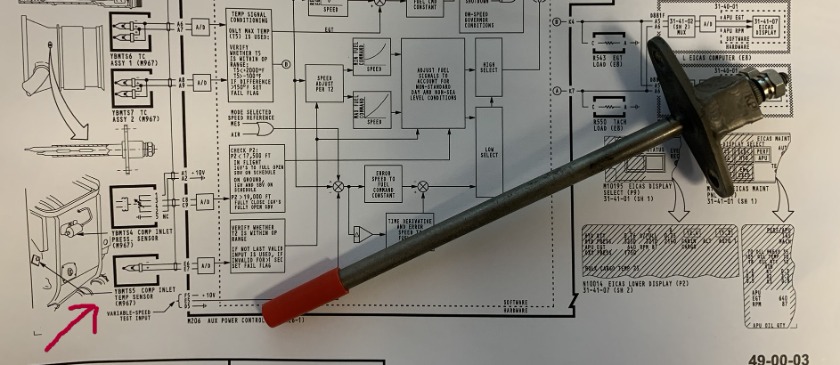
The APU compressor inlet temp sensor is another example of a thermocouple.


11 Jan 2024 15:18
rotate.aero/forum/troubleshooting-tips-g...40-thermocouples#613

Thermocouples create a millivolt output in relationship to heat. If you loose a probe or section..... the output will be "less". Your temperature indication will be "lower" than what it should be.
 
11 Jan 2024 14:53
Help, I’m getting my ass kicked.

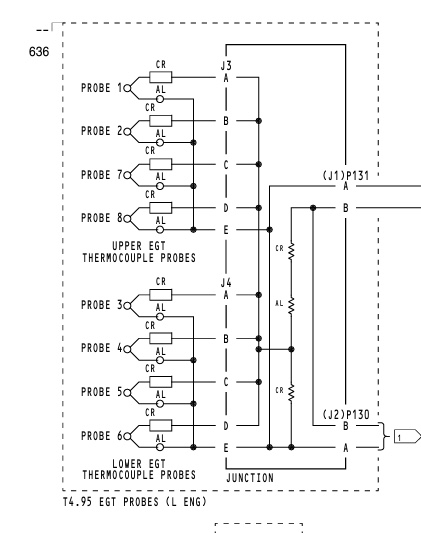
For the life of me, I cannot remember how the EGT thermocouple gang does it’s job. There are 4 probes in parallel all connected to one output on a CF6-80C2. If one probe is removed from the equation, does the temperature indicated go up or down? 

 
27 Jul 2023 10:03
Replied by Mark on topic Thermocouples
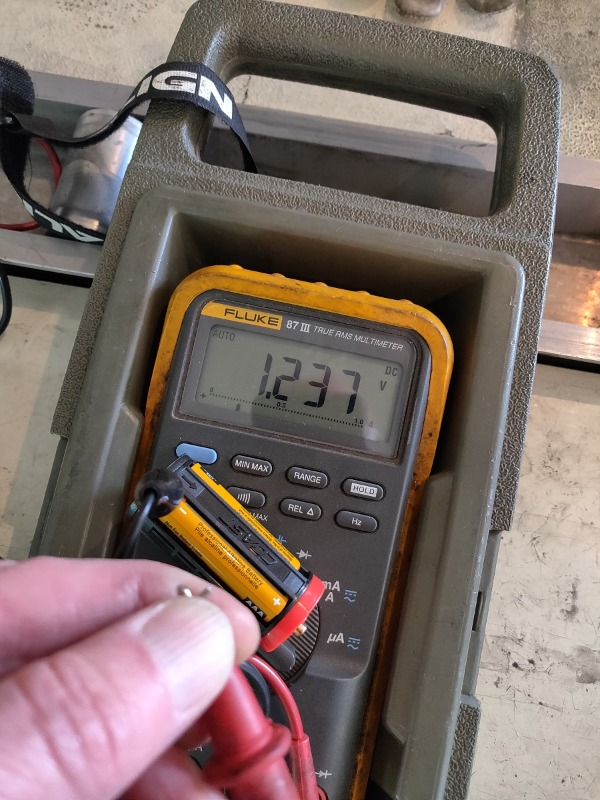
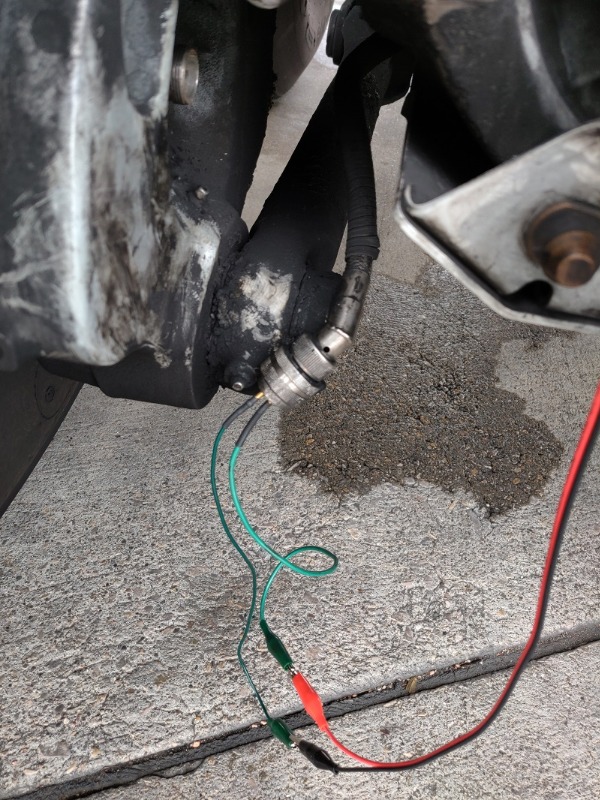
MiliVolt Simulator - Proper Connection


22 Jun 2023 19:12
Replied by Mark on topic Engine thermocouple harness
Not all parts have markings. Some get rubbed off.

A magnifying glass and mirror might be needed.
21 Jun 2023 21:54
Mark, I want to verify the identification data(P/N) on engine, I have found it from EIPC, but I can not find marking on rigid harness metal tube...
21 Jun 2023 11:54
Replied by Mark on topic Engine thermocouple harness
I don't have access to CFM-56 IPC Manuals.
21 Jun 2023 11:09 - 21 Jun 2023 11:48
Mark, do you have any idea on where can I find the identification data, E.g. part number, on rigid thermocouple wiring harness (rigid metal tube) through which the indicator wires are routed?(CFM56)
19 Jan 2023 07:03
Replied by Mark on topic Thermocouples
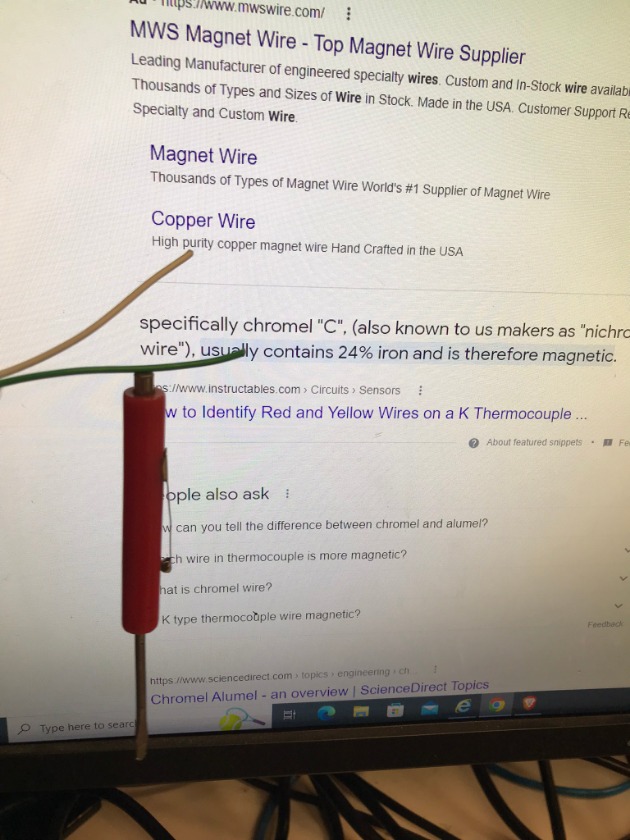
When replacing thermocouple wiring, how do you know what color (green or white) is what material? 


Chromel (green) is magnetic. It should be attracted to a magnet.

We found the opposite for the pins. Alumel pins seemed to have a greater pull to a magnet.
 
10 Nov 2019 06:44 - 10 Nov 2019 20:18
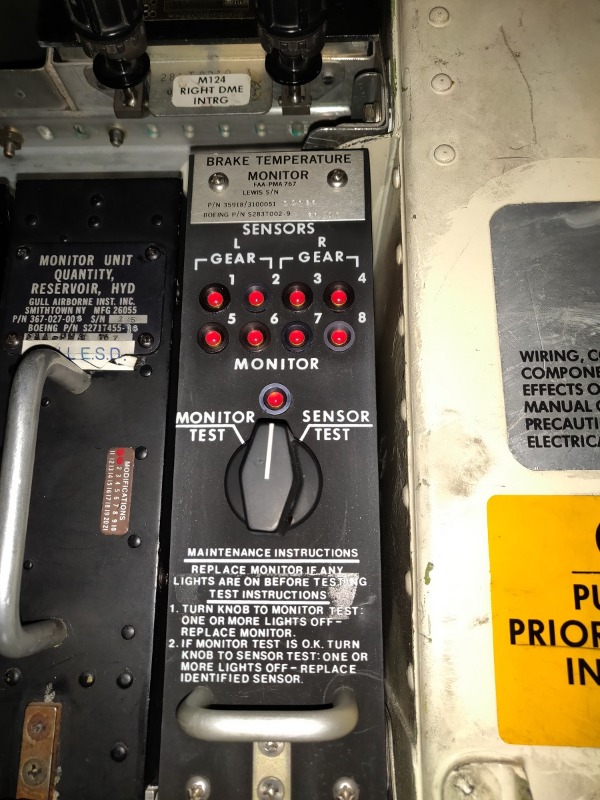
As part of the ongoing troubleshooting of a brake temperature system with a long history of the right side brakes indicating 0's after landing, we tried to verify whether the problem was indication or actual brake actuation.

For brake temperature problems, you normally want to meet the aircraft right after landing to check things out while the brakes are hot. (We finally accomplished that and a forum entry has been made..... rotate.aero/forum/troubleshooting-tips-g...al/340-thermocouples .)

Referencing the above link, we did verify that the problem was with the braking system and not the indication.

Previous to that though, I simulated brake temperature signals from the monitor unit to the EICAS system.


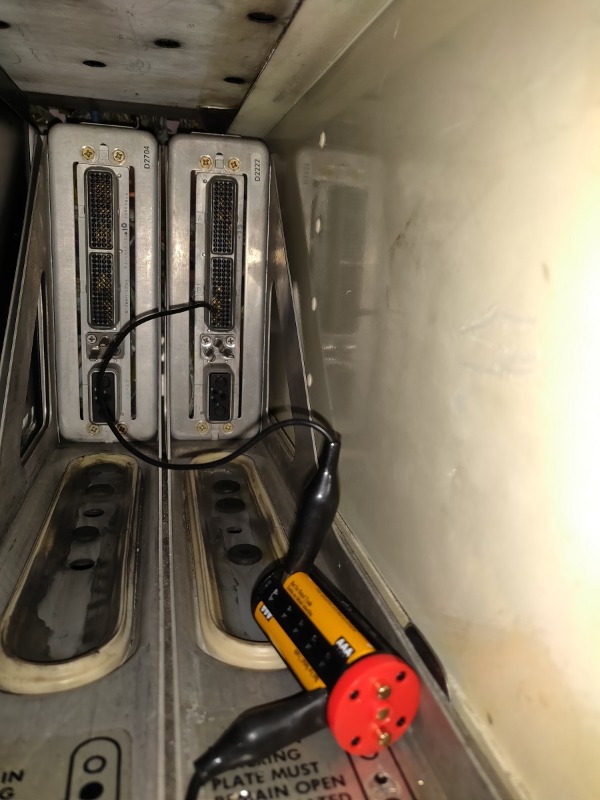
I used a flashlight battery pack that had an output of about 1.2VDC.


I fed this voltage into pins C10, C11, C12, C13, D9, D10, D11, and D12 of plug B at the monitor rack. The negative lead from the battery pack was connected to aircraft ground.


With a 1.2VDC input, each brake indicated 2 on the EICAS system.


767-300 SSM 32-46-01
09 Nov 2019 17:08 - 09 Nov 2019 17:37
Thermocouples was created by Mark
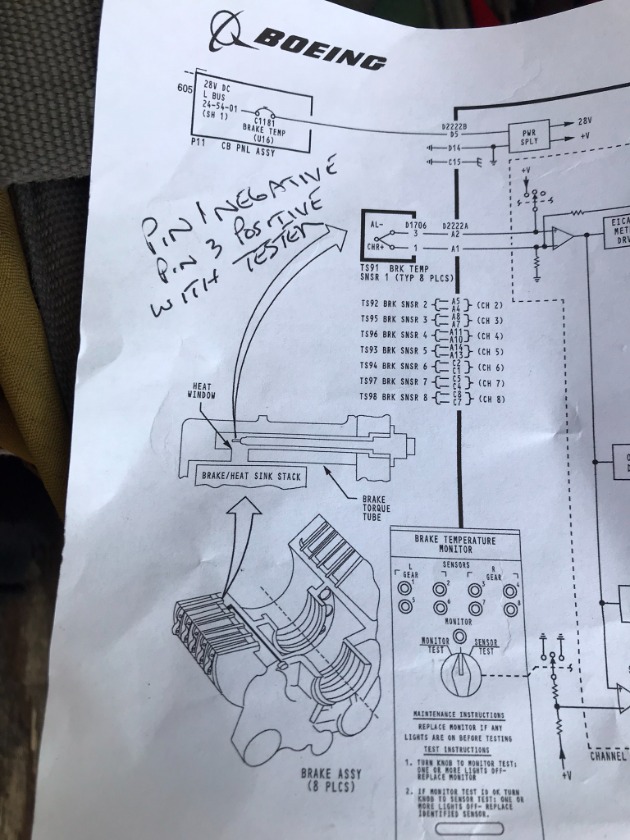
Thermocouples are used on aircraft to measure brake temperatures and engine EGT (Exhaust Gas Temperature). The heating of two dissimilar metals (Chromel and Alumel) creates a small DC millivolt signal. Higher voltages equate to higher temperatures.

We had an aircraft (767-300) with a long history of the right strut brakes indicating "0" (with the left side brakes reading 1 or higher) after landing. The 767 doesn't show actual temps, just a scale 1-9.

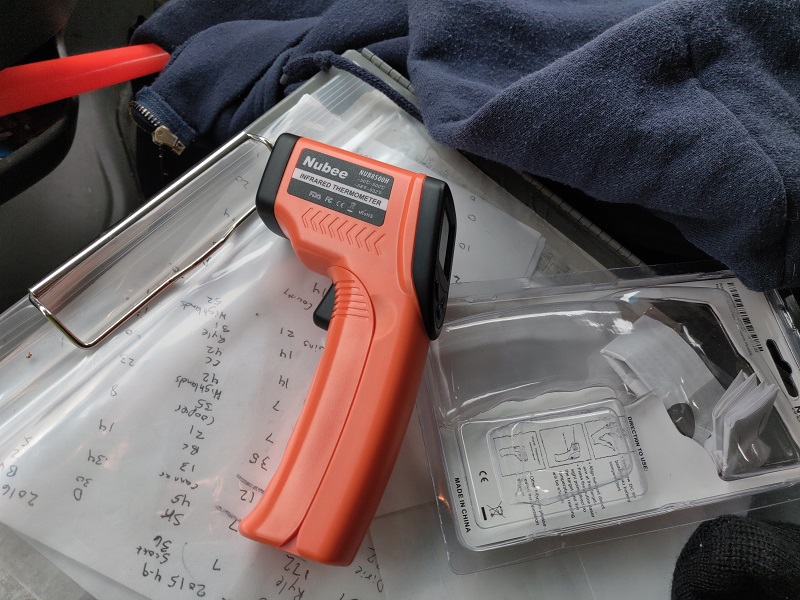
The absolute first thing to do with a brake temp split is to grab a laser temp gun and measure the brake rotors. If the measured temperatures match...... you have an indication problem. If the brake temps do not match...... you've got a control (application) problem.


With this aircraft, the right strut brakes read in the mid 200's Fahrenheit. The left side brakes were over 600F. EICAS indication was 2 for all brakes on the left and 0 for the right.


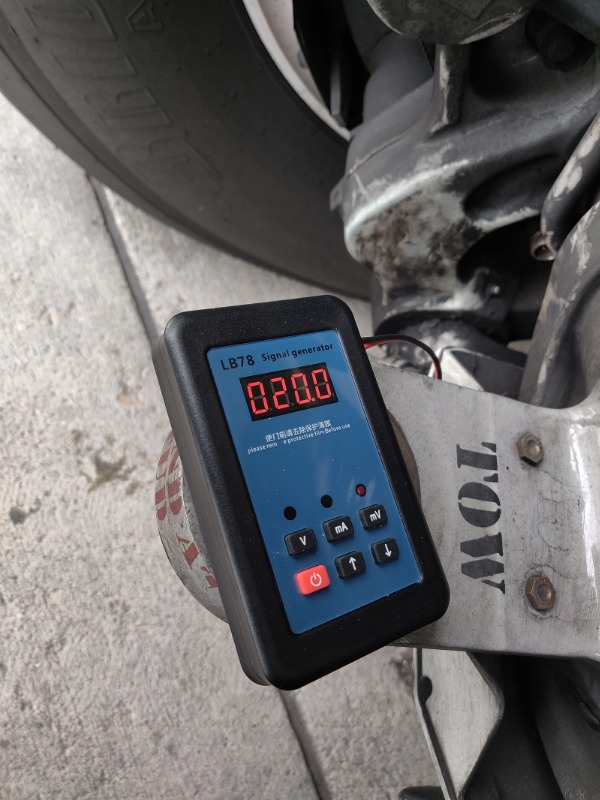
I found a cheap signal generator on Amazon for troubleshooting this problem.


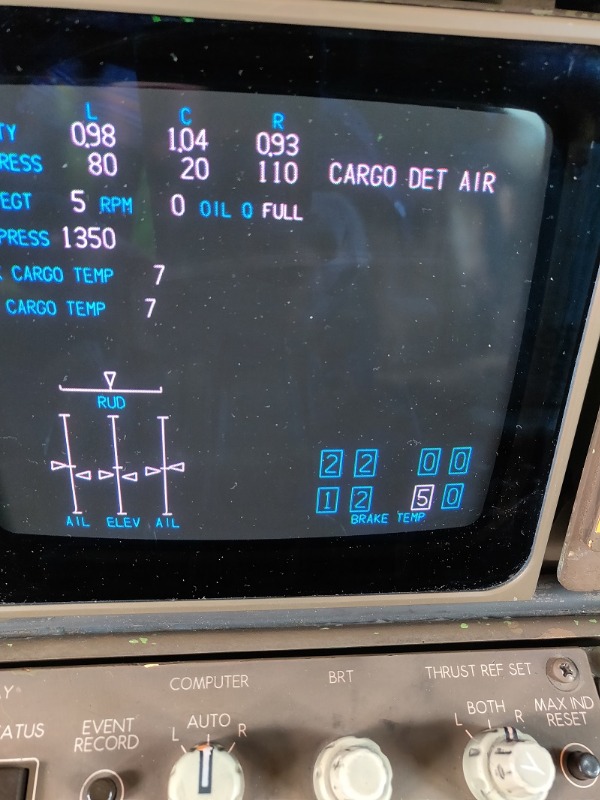
I wasn't sure if the damn thing would even work, but surprisingly it did. I simulated a 20Mv signal and fed that into the #7 brake sensor plug. I used the positive lead on the Chromel pin (1) and negative on the Alumel pin (3).


We had a reading of 5 on EICAS. (A 10Mv signal gave us a 2.)


This simulation, along with with the laser gun readings ruled out indication as the fault.

I'm sure this simulation method will work with engine EGT indications also.
19 Apr 2016 12:05 - 19 Apr 2016 12:07
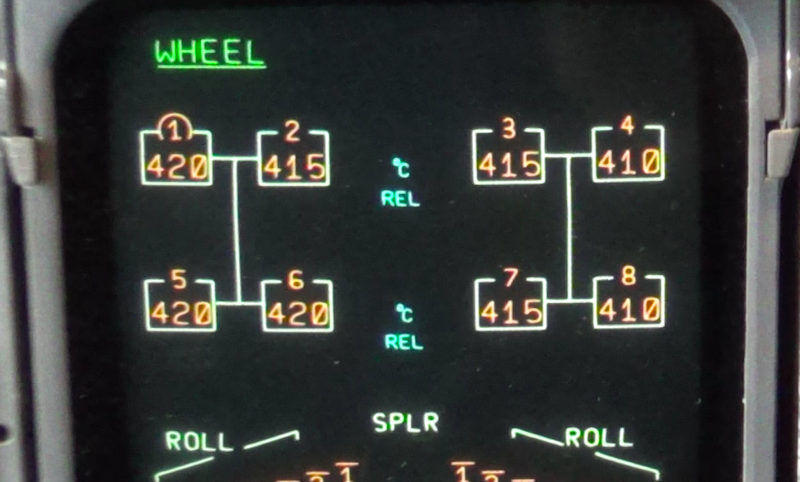
The Airbus brake temperature monitoring system rarely acts up. I came across a problem yesterday with an aircraft that had sat for three days. A good potion of that time had heavy rains coming down.

This is what I had on first power up.


The temps were not steady. They were jumping all over the place from 400 to 20. The brake temp "HOT" light on the cooling switch kept flashing on/off and I got a never-ending set of "bings" from the flight warning system.

After re-seating the BTDU (Brake Temp Detection Unit), the problem had settled down a tad. The bakes we're not in the 400 range, but they were not steady and I still had a "HOT" light flashing.

I attributed the problem to moisture. Not so much on the brake temp sensors themselves, but more likely "in" the detection unit.. I left the aircraft on full power for a couple hours and the problem ceased.

As a quick system rundown:
There are 8 brake temp sensors which are Alumel-Chomel Thermocouples. Each set of four sensors, feeds a Compensator Unit located (which looks to be a bitch) under the strut assembly itself. From the compensators, the signals are fed to the Detection Unit. The output of the detection unit goes to the SDAC for ECAM displays and the Flight Warning Computers for the "HOT" light and aural warnings.


A300-600 AMM 32-47-00, ASM 32-47-00
Displaying 1 - 12 out of 12 results.
Time to create page: 0.733 seconds