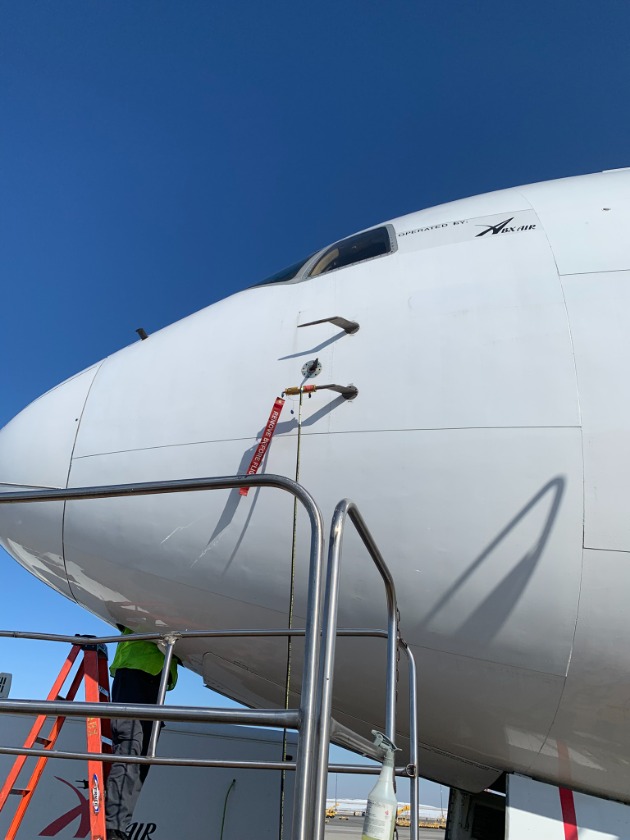
Dealing with static leaks seem to be a never ending battle with the aircraft I work on.
These are all "old and worn" 767's that have a traditional Air Data Computer's.
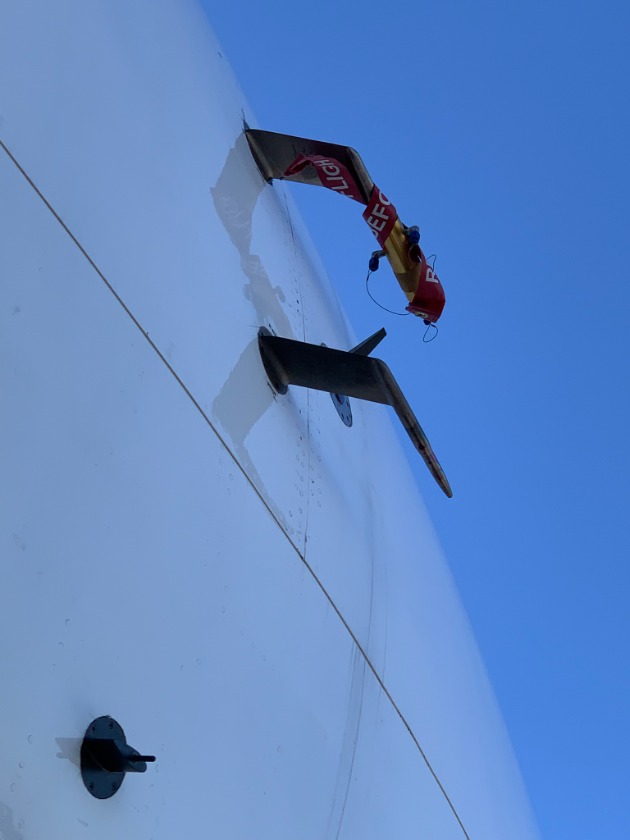
The ADC's have two inputs, Pitot (ram air pressure from the front opening of the pitot probe used for airspeed computation), and Static (static pressure taken from the side of the aircraft or directly from ports on the pitot probe body used for altitude computation).
There is a ton of metal tubing criss-crossing the front end of the aircraft that are used to feed these pressure signals to the Air Data's.
When a tube has a hole or (most often) a "T" or elbow fitting has a crack, cabin pressure enters the line and increases sensed pressure. If a pitot line is compromised, airspeed will read high. If it's a static line, the altimeter will read low.
Finding these leaks can be difficult. We disconnect the Air Data quick disconnects (which spring seals the line shut) and apply pressure into the lines. We then go around spraying lines with leak detector looking for bubbles.
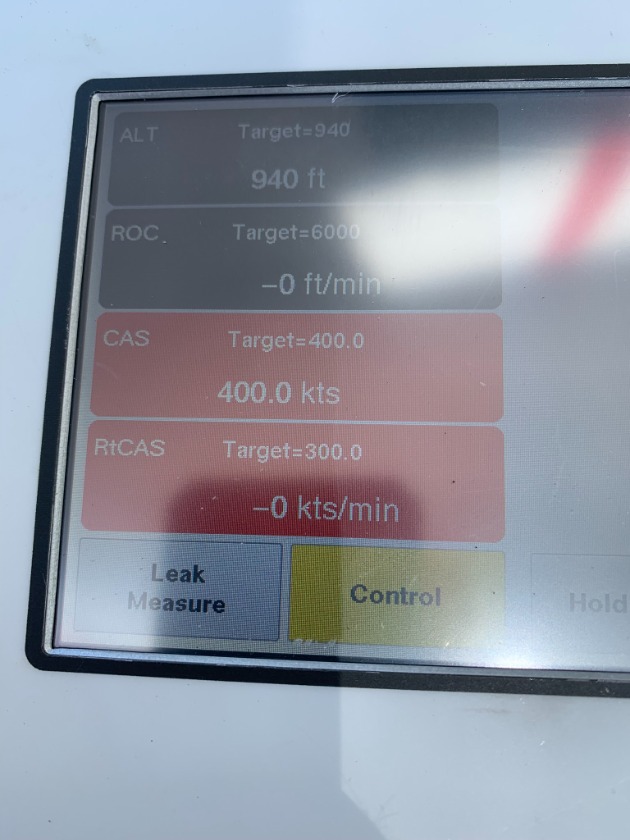
Using airspeed at 400 knots out of the Pitot/Static test box provides about (what we were guessing was about 4 PSI differential).
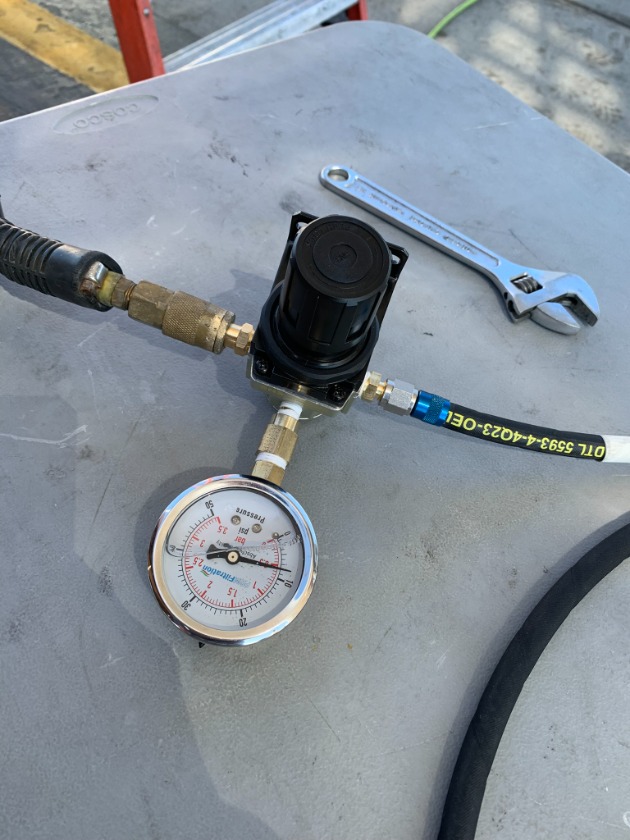
We experimented on our last troubleshooting venture. I have a low pressure regulator (something like
this
) that I cranked full open while connected to the test box at 400 knots.
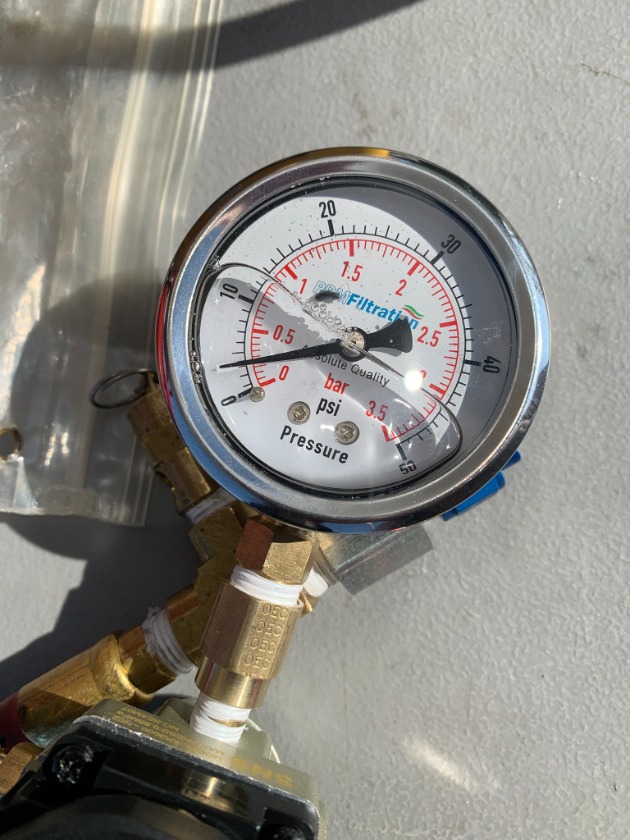
We had a reading of around 3 PSI. This was not a scientific, but it did show we really didn't get that much pressure out of the box.
We tried the regulator on its own with compressor air and dialed it up to 8 PSI. We could have gone higher, but for our find, 8 PSI was enough.
Care should be taken to not apply these higher pressures to sensors with internal mechanical bellows (Elevator Feel Computers being one), as a possible rupture could occur.
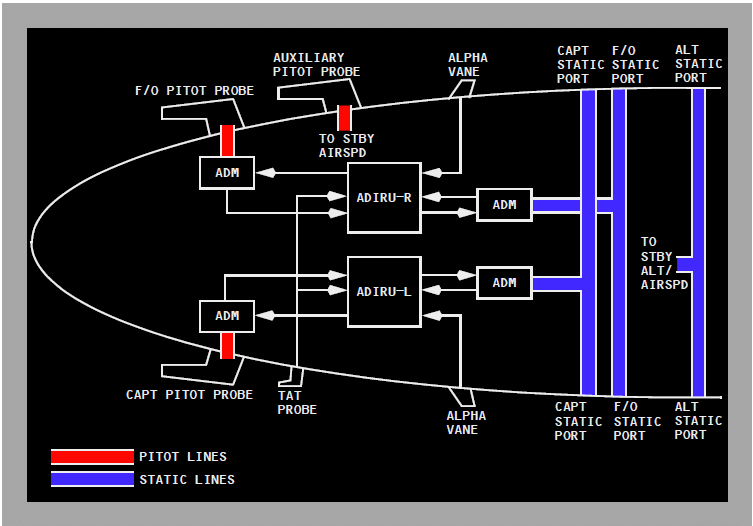
With newer aircraft..... all these lines go away. A combined Air Data and IRU unit called (of course) a ADIRU. The pitot and static ports will have a Air Data Module located near the port. This unit sends data (I'm guessing 429 data bus) to the ADIRU.