Search Results (Searched for: prsov)

05 Mar 2026 13:44
Replied by jochute on topic PRV Exit Pressure sensor
767 at purple promise, ahm is the "real time" boeing aircraft health monitoring system. There are no flight deck effects for this sensor, it just senses the bleed pressure after the pressure regulating valve but before the prsov. It will show -7 psi just about every single leg, with occasional psi spikes. Even with multiple sensors replaced it will still show -7 psi but the cockpit duct pressure uses the same 28vdc, I am just not sure if it is getting to this particular sensor.
30 Jan 2025 16:24
Replied by Mark on topic T/R Not Fully Stowed
From recently completed training: The PRSOV has to have a "Reverse Flow Solenoid" installed for the switch to work.

This is an extra cost during overhaul, so..... more often than not, it is omitted.
24 Jul 2024 07:32 - 24 Jul 2024 08:40
767-200 with 80A engines.

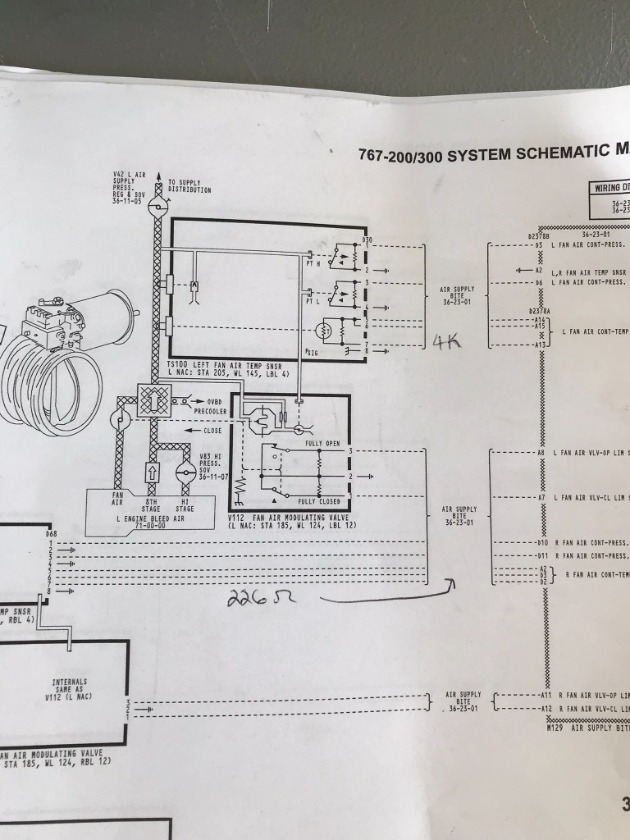
"Bleed Off" light on during flight. Bleed air test box  showed "Fan Air Valve Temp Sensor" fault.

Compared left and right engines.....


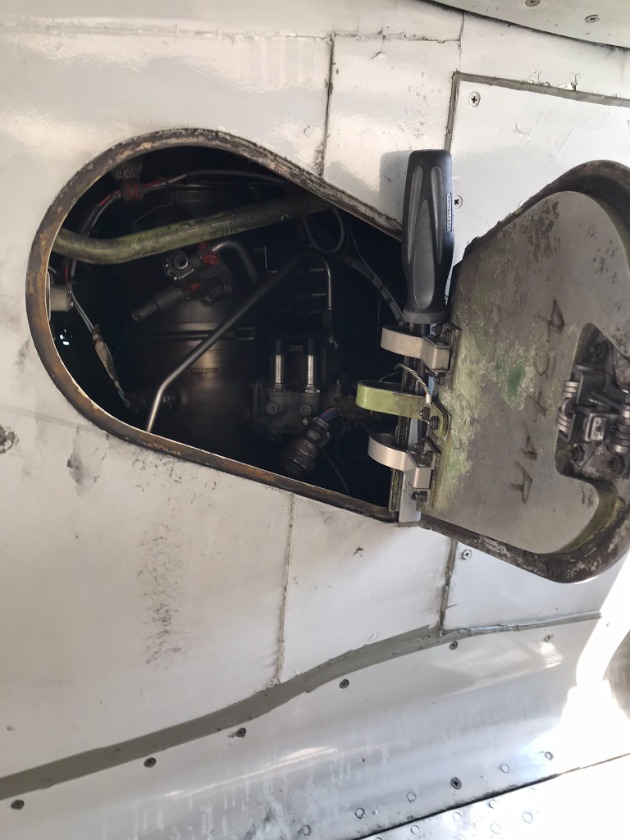
Sensor located behind "D" panel in pylon, just below PRSOV.


Removed.....


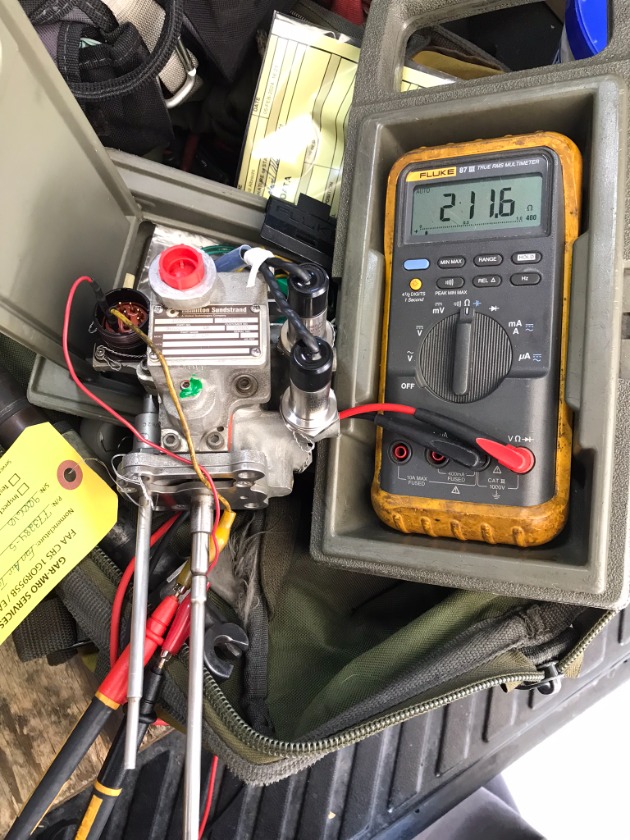
Replacement with resistance measurement.


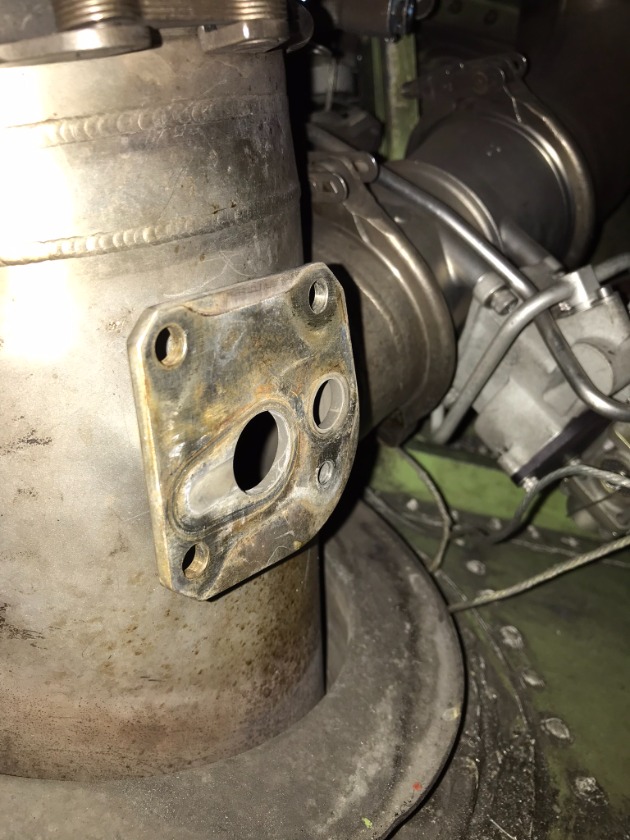
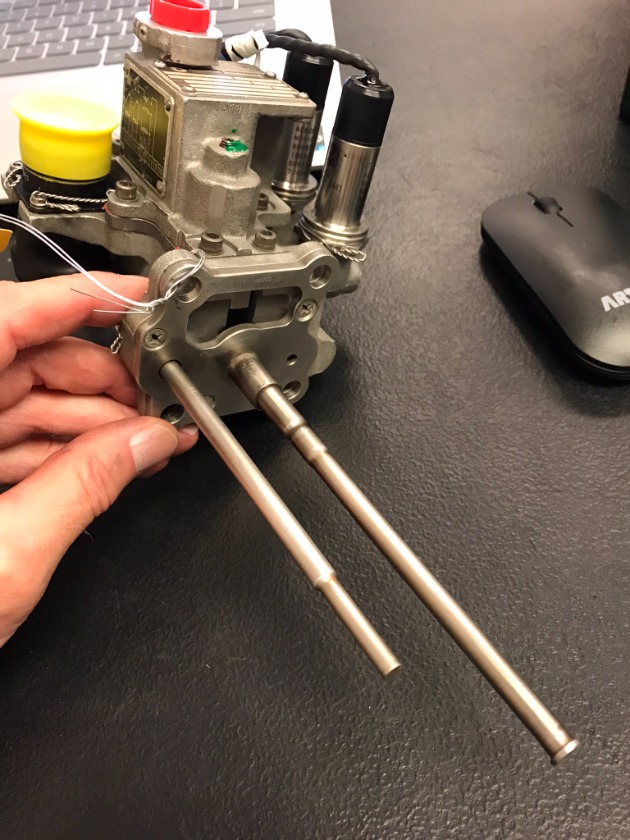
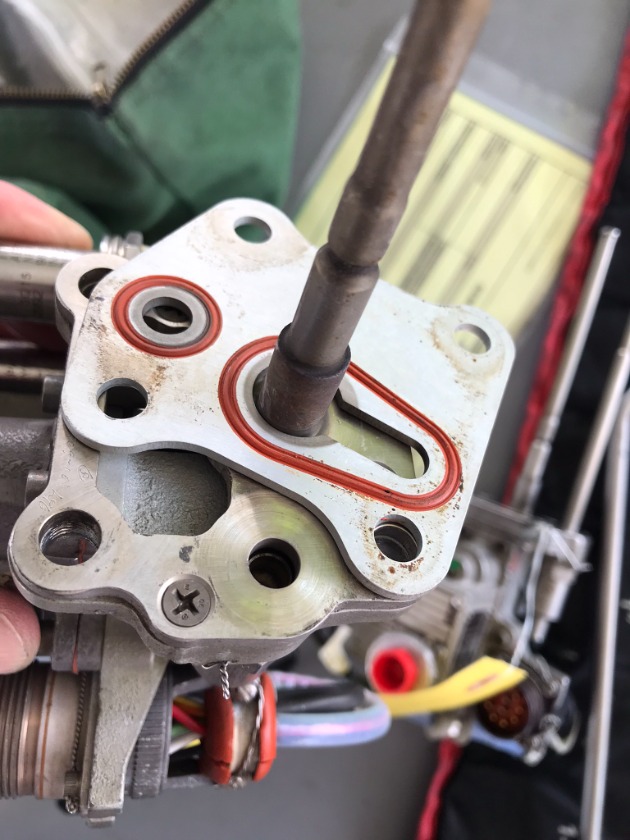
What seems to be missing on removed unit?


The whole temp probe is gone. Sheared right off at the base. Where did it end up?

We looked down with a borescope. It wasn't laying on heat exchanger. It must of been blown up and down-stream..... possibly setting on primary heat exchanger in left pack bay????
22 Apr 2019 15:04 - 11 Nov 2019 06:57
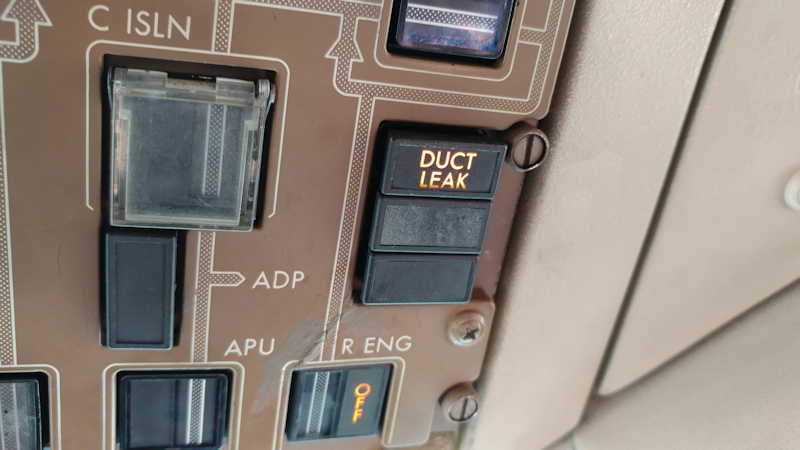
767-200 with a right wing duct overheat system that would not test.


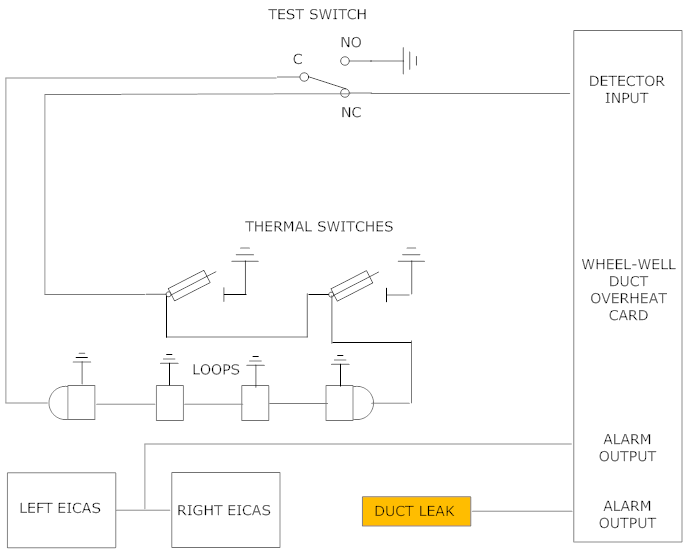
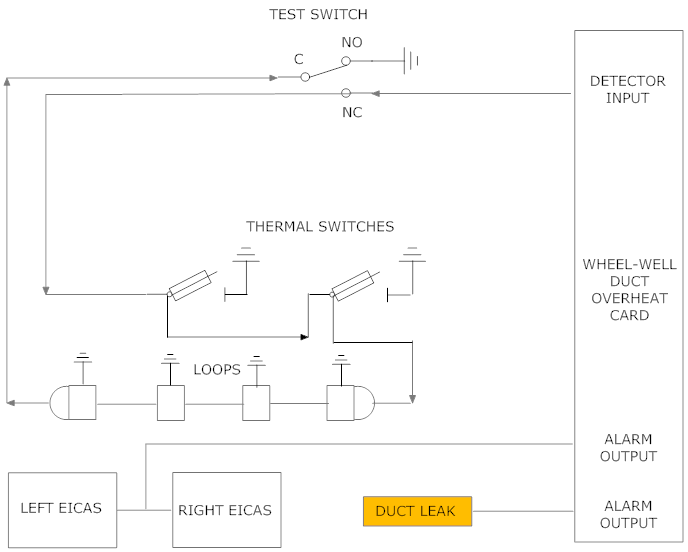
The duct overheat systems (Left, Right, Body) use detector loops and/or overheat switches that provide a ground signal in an overheat condition.


During a system test, integrity is verified by providing a ground signal that must pass through the entire length of loops and wires.


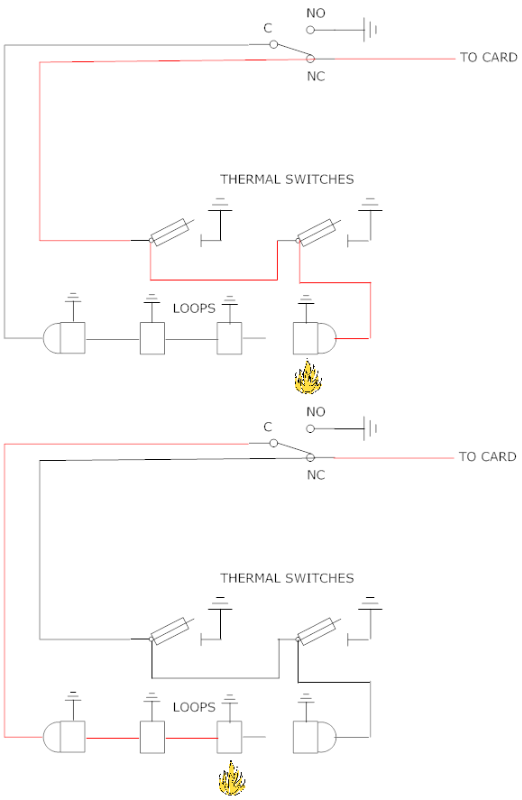
Signal path during test.


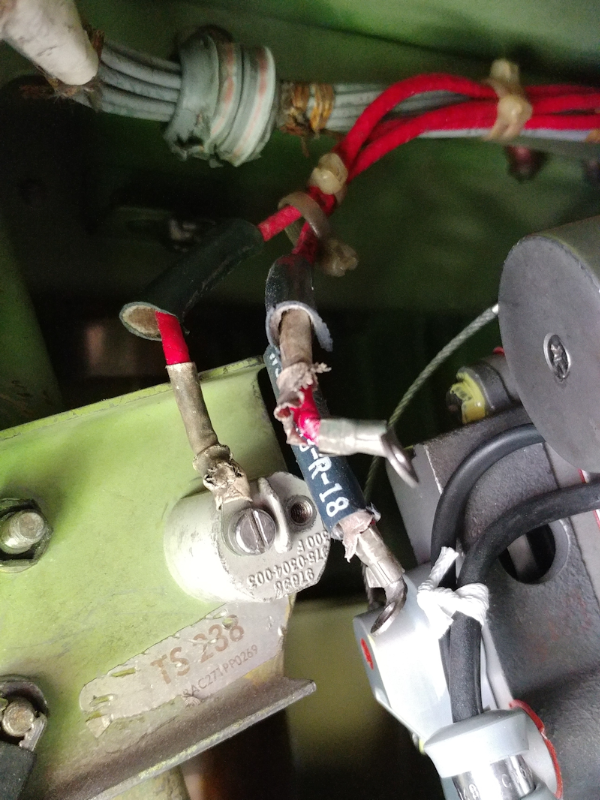
This aircraft had a broken wire on a terminal at one of the overheat switches in the pylon. The switch(s) only use two connections. A single wire hooked to ground and a double wire connection used in the loop path. If the single (ground) wire was broke, the system would test normally, but that switch would have no ground path for warning if it happened to overheat. The broken wire was on the double wire connection. With the signal path open, a proper test could not be confirmed.


The PRSOV (Pressure Regulating and Shut-off Valve) is located in this area. It is VERY difficult to remove this valve and it is almost certain that the terminal in question was broken during a valve change.

A note about the functionality of these systems: Even with a broken loop path wire, in an overheat condition, a warning will still be shown. Each end of the loops are connected together at the test switch. The card only needs to see a ground. That ground can come from either side of a broken loop system. This same theory is used on engine fire systems.


767-200 WDM 26-18-21
15 Dec 2017 17:38 - 15 Dec 2017 21:21
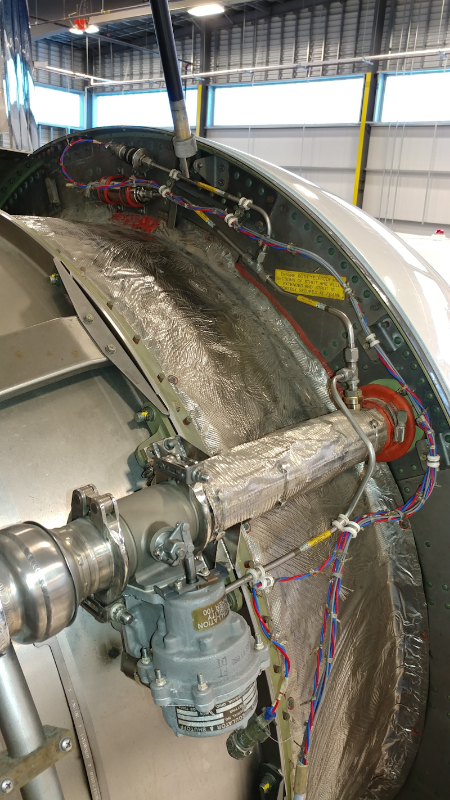
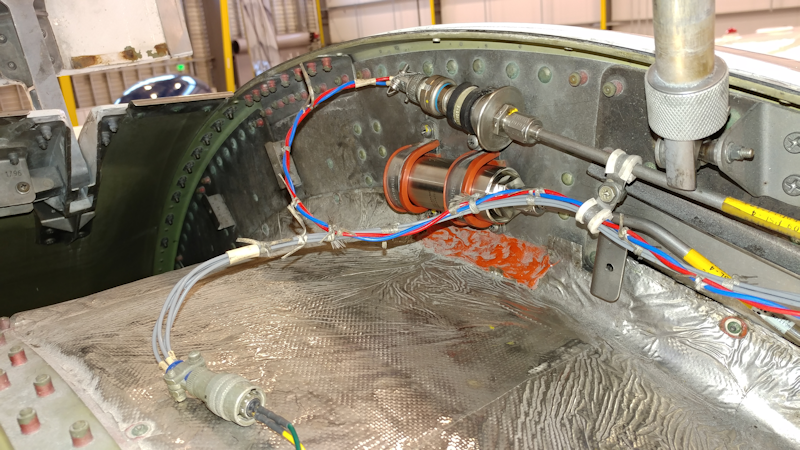
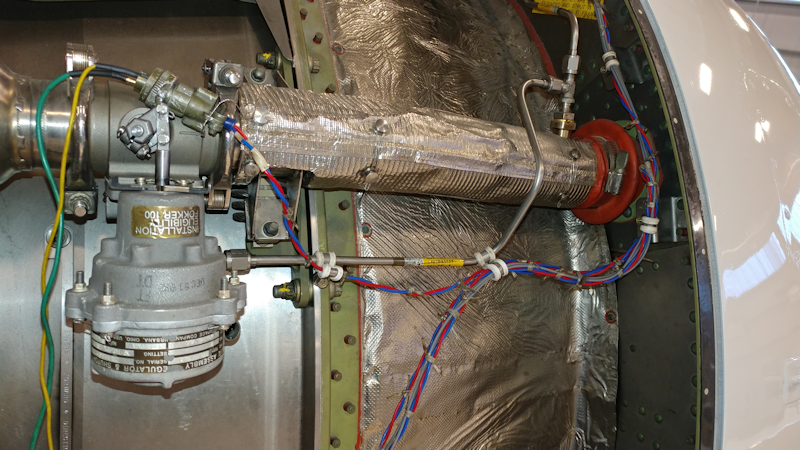
GIV's Rolls-Royce Tay engines use a regulated supply of bleed air for nose cowl anti-icing. The system consists of a pressure regulator shut-off valve (PRSOV), a pressure transmitter, and a pressure switch.


Sense lines fed from a set of "T" fittings downstream from the valve provide bleed air pressure to the transmitter and switch.


Another line is back-fed into the valve as a reference for pressure regulation.


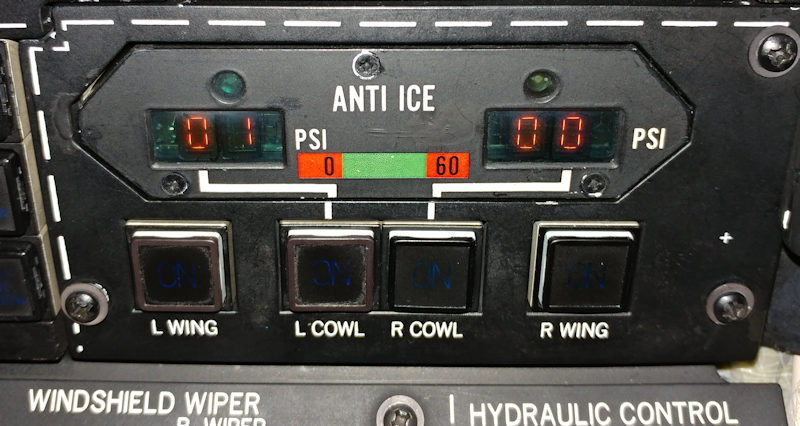
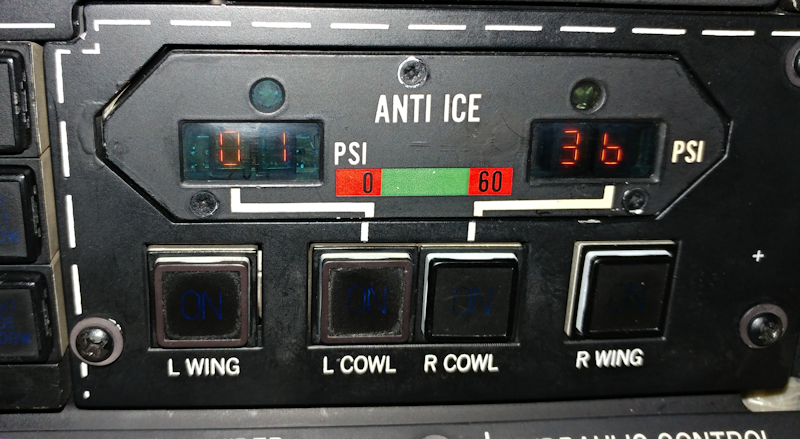
This particular aircraft had a problem with right engine A/I pressure indication in the cockpit. It showed "00" with the system turned on. The crew noted that there was a minor increase in turbine TGT of 10C with the anti-ice commanded on.


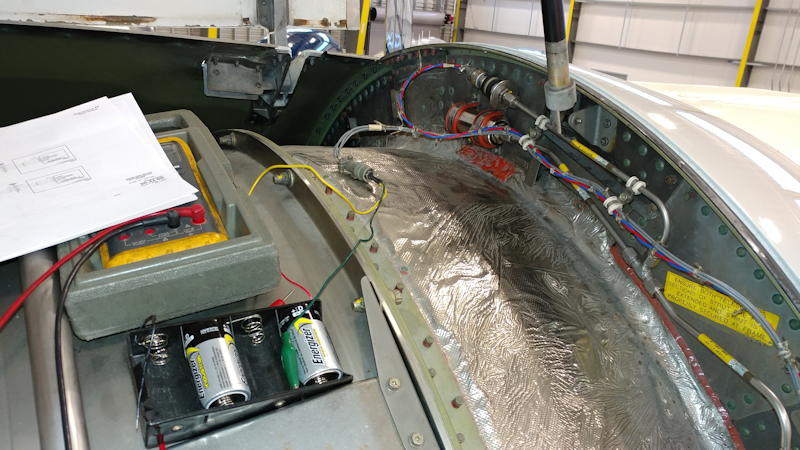
The output signal from the pressure transmitter ranges from 0-5 VDC depending on the actual pressure. To rule out a indicator problem, this output can be simulated with some batteries (or DC power supply).


With 1.5 volts from a single "D" cell battery placed on pins "A" (negative or common) and "B" (signal or positive) of the transmitter plug, a indication of 36 PSI was observed.


Per a crew verbal, normal TGT rise is around 40C when cowl anti-ice is switched on.
A replacement valve was placed order. The assumption was that it was opening, but not to the extent needed to provide the correct indication and actual anti-ice air. The sense lines were planned to be checked for blockage at the time of the valve change.


GIV
AMM 30-02-00
WDM 30-22-00

Displaying 1 - 5 out of 5 results.
Time to create page: 0.840 seconds